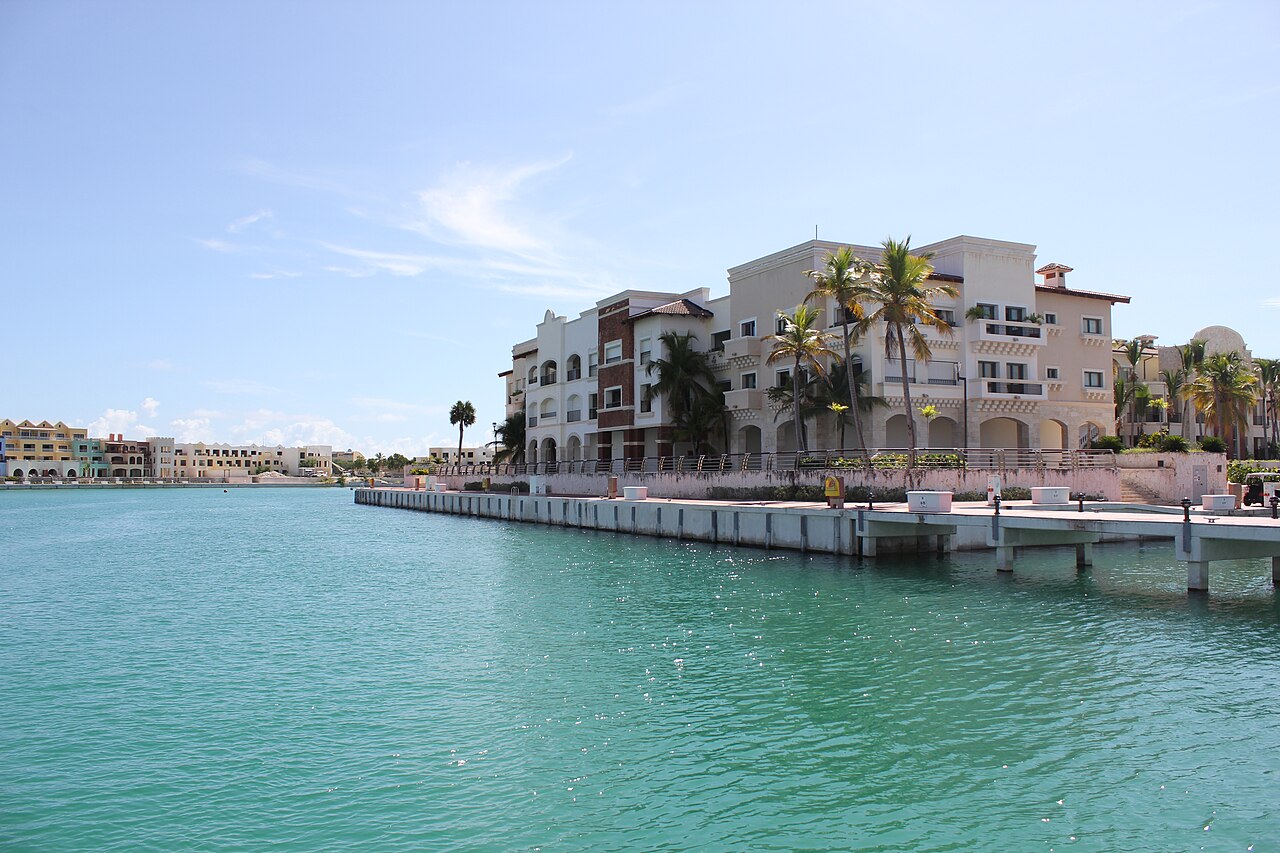
Punta Cana is the Dominican Republic's premier resort zone, occupying the country's southeastern tip where the Atlantic Ocean meets the Caribbean Sea. The combination — palm-lined beaches stretching for 50 km, a coral reef close enough to the shore to keep the waters calm, warm year-round temperatures, and an international airport that brings direct flights from Europe and North America — makes it one of the most visited places in the Caribbean.
This is primarily an all-inclusive resort destination, and it makes no pretence of being otherwise. The resorts are large, the beaches are magnificent, and the activities on offer — snorkelling, scuba diving, parasailing, windsurfing, deep-sea fishing, ATV tours, zip-lines, horseback riding — are plentiful. The reef runs close enough to shore that snorkelling from the beach is possible at many points. Bávaro Beach is the quintessential stretch of the coast; Macao Beach to the north has no reef and genuine surf. More serious diving heads to Isla Saona, where starfish fields and turquoise shallows provide a different kind of underwater experience, and to Isla Catalina.
Punta Cana is honest about its trade-offs: if you want to understand Dominican culture, this is not the right base. The local population works in the resorts but largely lives outside the zone. El Cortecito, the old fishing village at the centre of the strip, gives a glimpse of pre-resort life and has the best independent restaurants. For those who want cultural immersion alongside the beach, day trips to La Romana, Altos de Chavón, and the Basílica in Higüey give a fuller picture of the country. Hoyo Azul and the Indigenous Eyes Ecological Park offer nature escapes within the resort zone itself. For those who want good weather, good water, and a relaxed week, Punta Cana does it efficiently. One practical note: the mosquitos at night can be ferocious, so bring repellent.