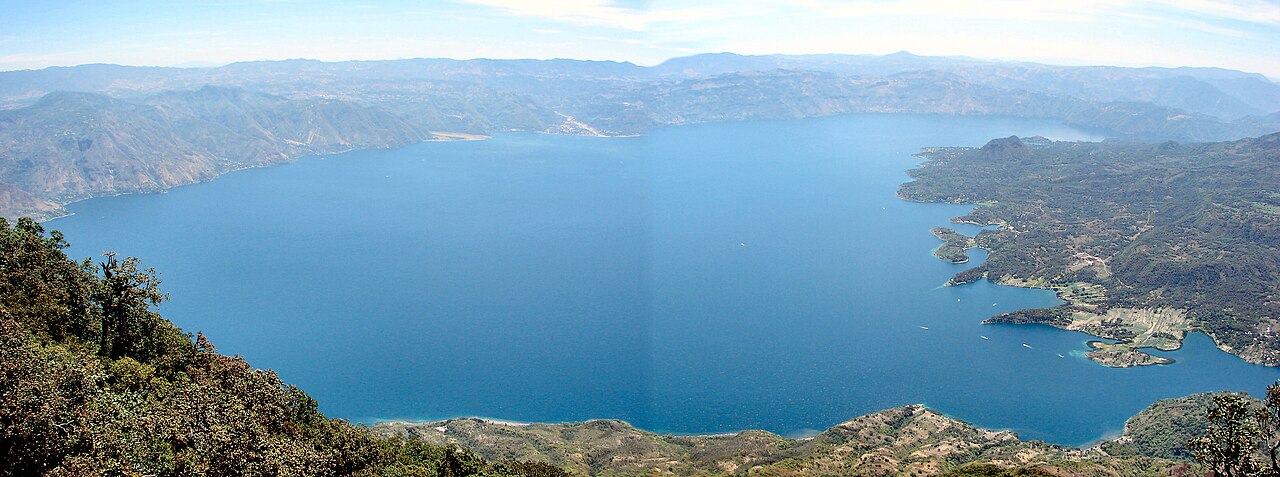
Santiago Atitlán is the largest and most culturally distinctive town on Lake Atitlán, sitting on the southern shore between two of the lake's volcanoes, Tolimán and San Pedro. It is the centre of the Tz'utujil Maya people, who have maintained their language, traditional dress, and customs with more tenacity than almost anywhere else in Guatemala.
The town is famous for Maximón — a syncretic deity who blends Catholic and Mayan traditions, typically depicted as a seated figure in a suit and hat, smoking a cigarette and accepting offerings of rum. His location moves regularly between local cofrades (religious brotherhoods), but asking around town will lead you to him. The encounter is genuinely strange and unforgettable.
Santiago is also known for its textiles: the traditional clothing (traje) worn here, especially the men's striped trousers and women's huipiles, is among the most vivid and recognisable in Guatemala. The Cojolya Association runs a small weaving museum demonstrating traditional backstrap loom techniques and sells work at fair prices. The colonial Church of Santiago Apóstol on the main plaza contains a mix of Catholic and Maya imagery, and marks the site where American priest Father Stanley Rother was martyred in 1990 — beatified by the Pope in 2017. Boats from Panajachel reach Santiago in about 30 minutes.