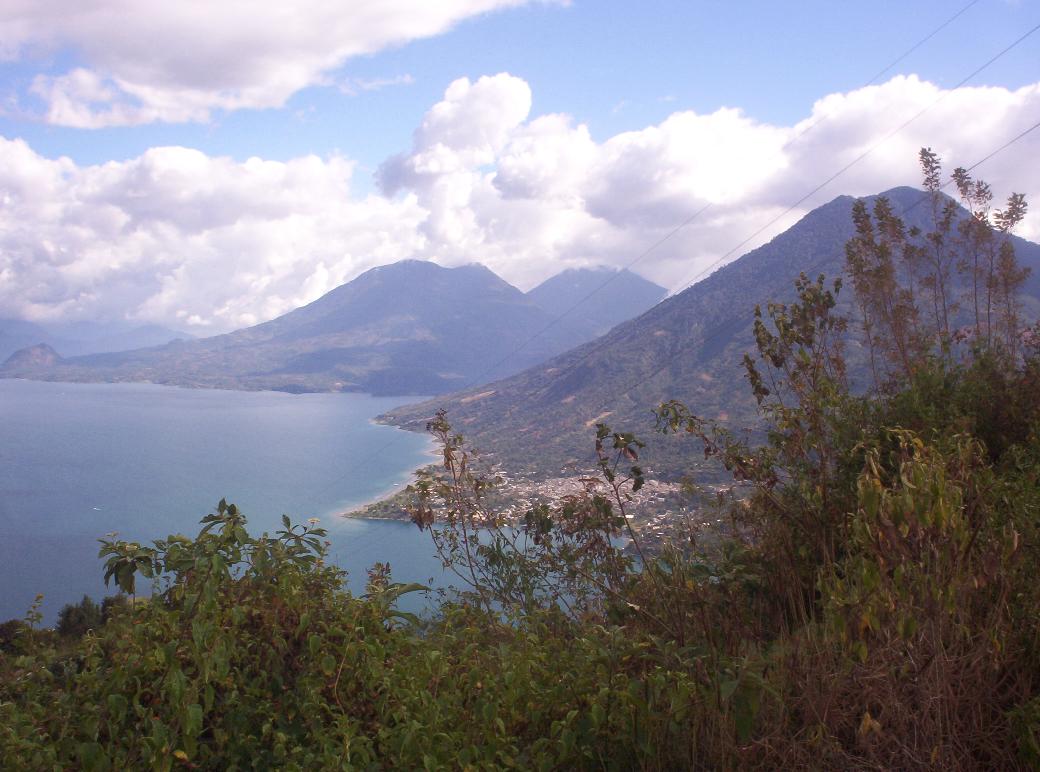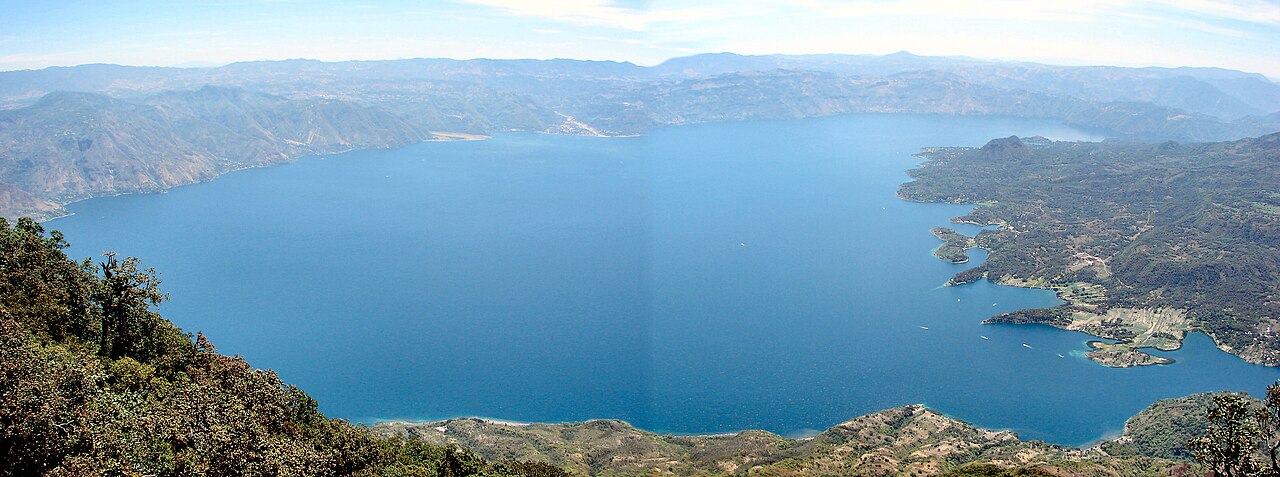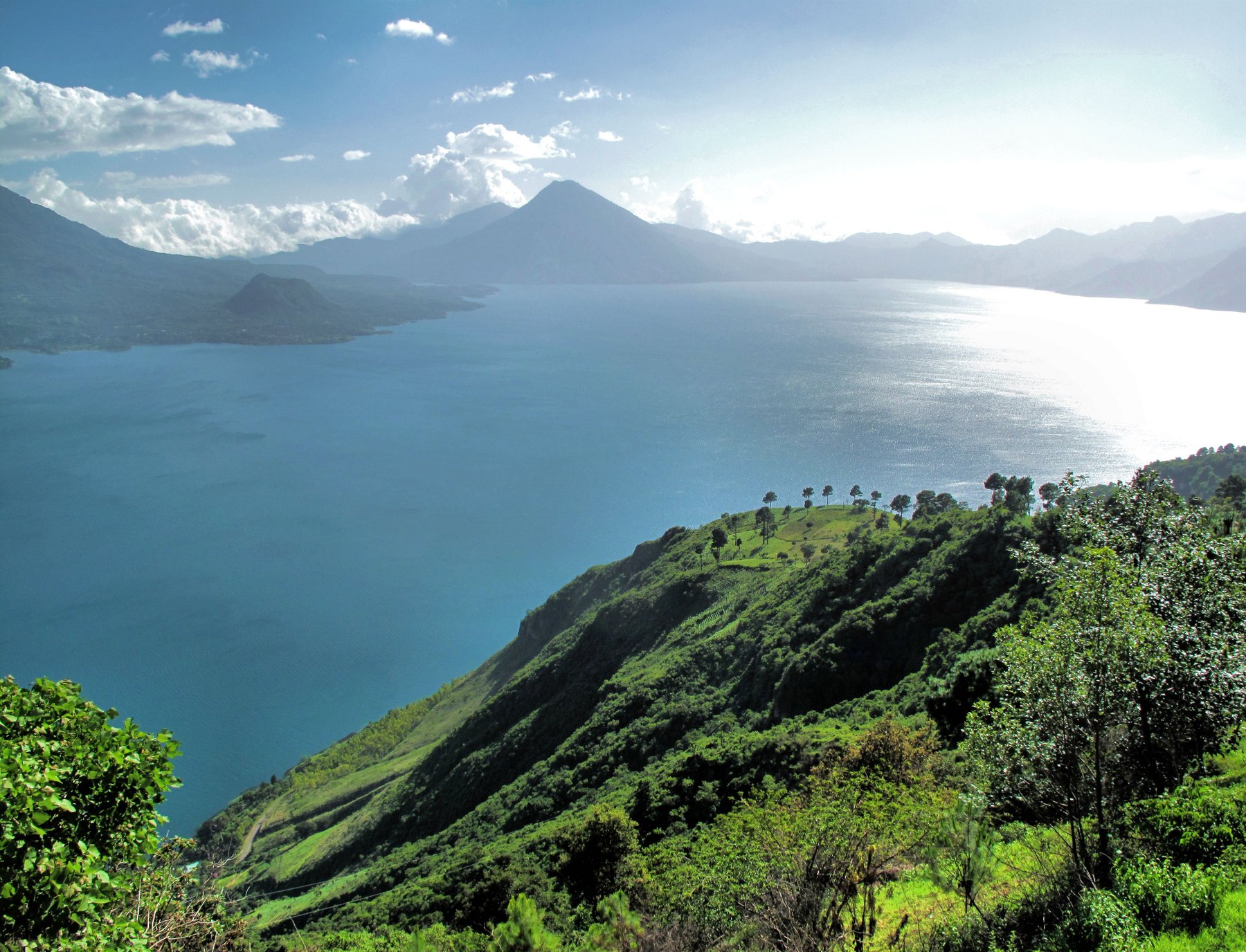
When Aldous Huxley visited in the 1930s he called Lake Atitlán "the most beautiful lake in the world." It still provokes that kind of hyperbole. The lake sits at 1,562 metres in a volcanic caldera, its deep blue water ringed by three volcanoes — Tolimán, Atitlán, and San Pedro — and a dozen Maya villages on its shores.
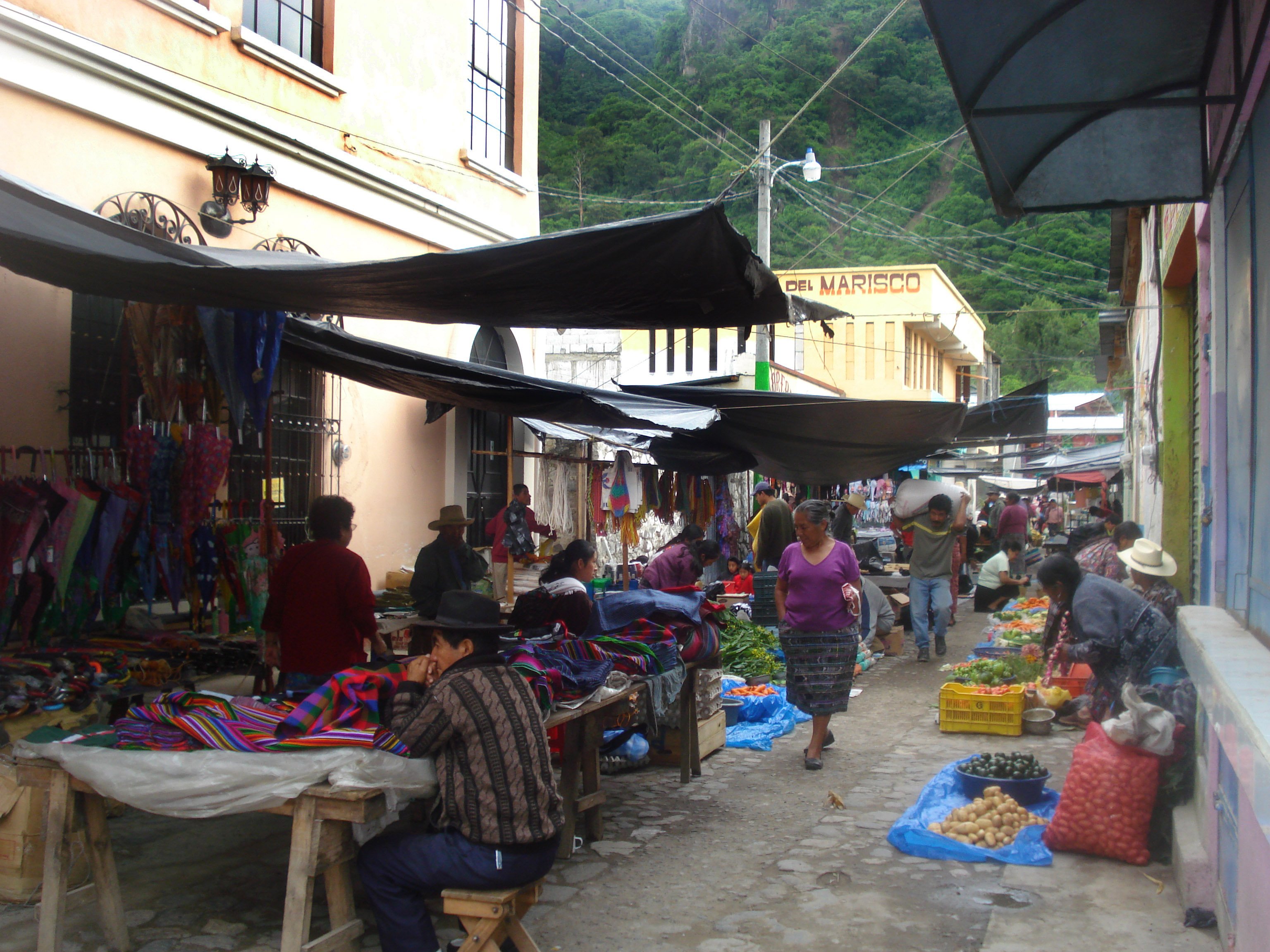
The lake is volcanic in origin. At roughly 18 km long and 12 km wide, it is about 324 metres deep at its maximum, and the water level fluctuates year to year. The scenery is spectacular from every angle, but the lake is also a living working environment — fishing families, market boats, and weaving cooperatives operate alongside the restaurants and yoga retreats that have proliferated since the 2000s.
Panajachel ("Pana") on the northern shore is the main transit hub, with frequent shuttle connections and a waterfront strip of tourist shops. More interesting are the smaller villages: San Juan La Laguna has women's weaving cooperatives selling textiles at fair prices; San Pedro La Laguna is a longer-stay backpacker enclave with cheap accommodation and Spanish schools; Santiago Atitlán on the south shore is the largest indigenous Tz'utujil Maya community on the lake, known for its cult of Maximón, a syncretic folk deity. San Marcos La Laguna attracts spiritual travelers.
The best way to move between villages is by lancha (small motorboat) from Panajachel. Boats run throughout the day to all major villages; shared lanchas are inexpensive, private boats cost more but save time. The lake can develop sudden strong winds in the afternoon — if conditions look rough, wait it out rather than crossing in a small boat.