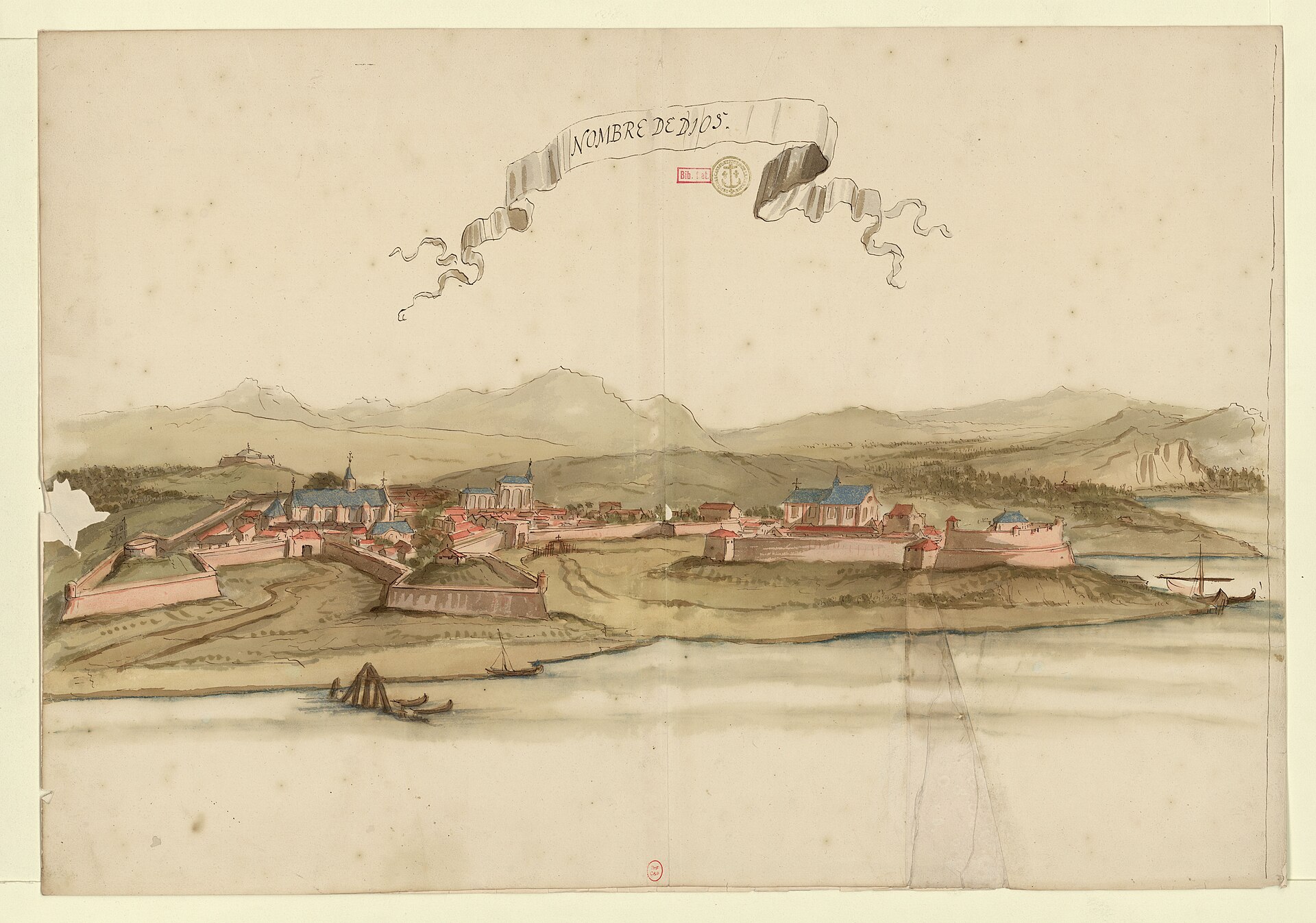
Nombre de Dios
©
Nombre de Dios

Nombre de Dios

Afro-Caribbean village with early Spanish colonial history as the Camino Real's Caribbean terminus.

Nombre de Dios is not big, nor particularly exciting — but it has history layered deep beneath its sleepy surface. This was one of the first Spanish settlements on the American mainland, founded in 1510, and for decades served as the Caribbean terminus of the Camino Real: not a canal, but a punishing overland route of rivers and jungle paths used to haul Peruvian gold and silver to waiting ships. The town was raided by Sir Francis Drake in 1572 and eventually abandoned in favour of Portobelo down the coast.

Today Nombre de Dios is a laid-back Afro-Caribbean village with a distinct reggae atmosphere, a scattering of basic shops, and not much reason to linger beyond the setting — green hills dropping to a turquoise coast. The beach is wide, dark-sanded, and almost entirely tourist-free. The road east along the shore towards Portobelo is rough and adventurous, the last stretch before reaching Colombia by sea.

Guide

Getting There

Nombre de Dios is reached from Colón by following the Caribbean coastal road east. The drive from Colón takes around two hours under good conditions, but the road quality deteriorates significantly east of Portobelo, and sections can become impassable after heavy rain. A 4WD vehicle is strongly recommended.

Public transport exists in the form of infrequent buses from Colón, but services are unreliable and schedules informal. Most travellers with their own vehicle combine Nombre de Dios with a visit to Portobelo on the same day, as the two sit along the same coastal road.

Guide

Things to Do

Nombre de Dios rewards the historically curious more than the comfort-seeking traveller. The real appeal is the layered colonial past — this was once the Atlantic gateway for Peruvian silver — and the relaxed Afro-Caribbean atmosphere of a village that has largely been left behind by modernity.