Portobelo
©
Portobelo

Portobelo

Caribbean port town where Spanish treasure-route forts still guard a rainforest-backed bay.

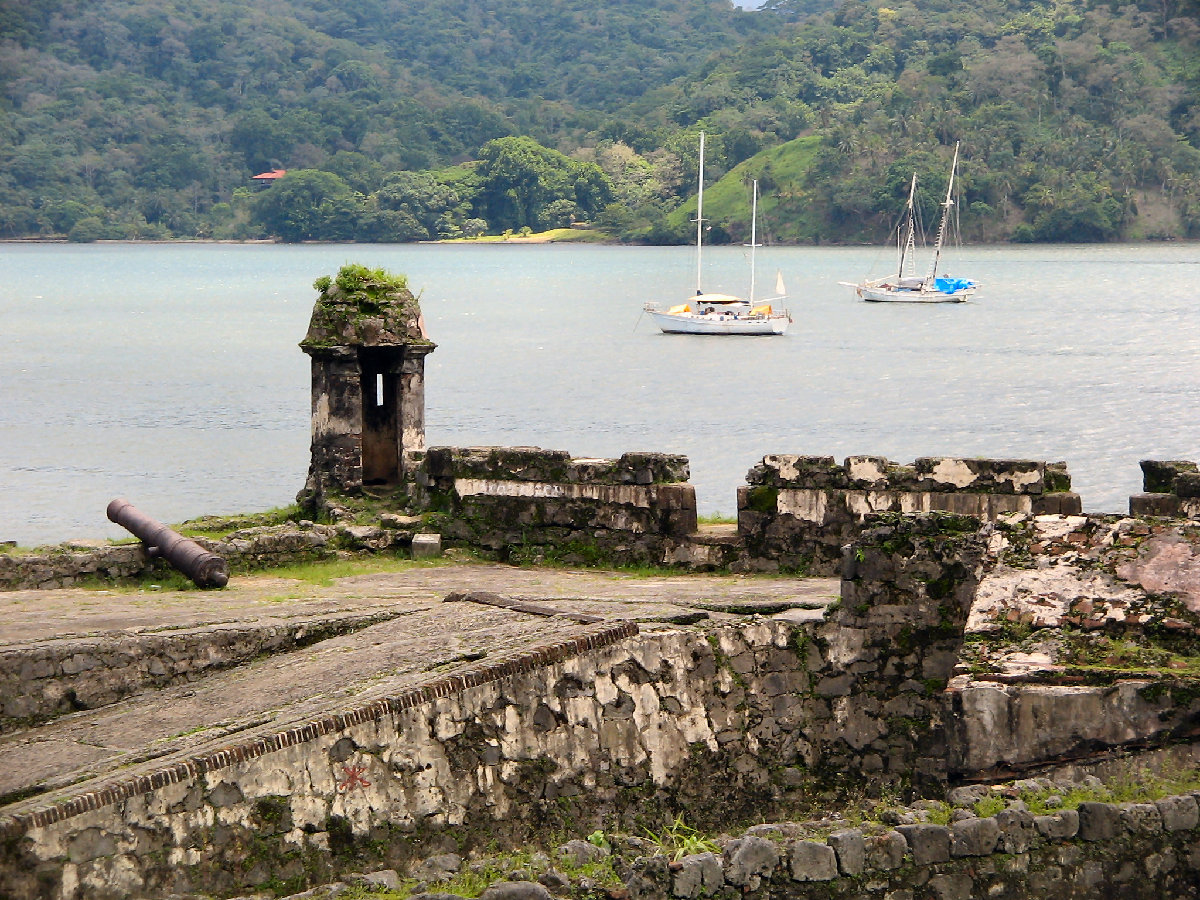
Portobelo is a small Caribbean town on Panama's north coast, about 100 km east of Panama City. It was once one of the most important ports in the Americas — the terminus of the Spanish treasure route, where the silver of Peru and Bolivia was loaded onto galleons for Seville. The ruined forts that defended the bay are a UNESCO World Heritage Site and a vivid reminder of that colonial history.

The town itself is quiet and unhurried, with a laid-back Caribbean feel. The bay is beautiful and the surrounding hills are covered in dense rainforest. Snorkelling and diving in the bay are good — wrecks and coral reefs are accessible to independent divers. The famous Black Christ statue in the church draws thousands of pilgrims every October 21 for a major religious festival.

There is no road connecting Portobelo overland to Colombia. To continue south, you must take a boat or fly from Colón or Panama City.

Guide

Activities

Portobelo's forts are free to walk around and need no guide, though they repay one — the bay was where the silver of Peru was loaded for Spain, and the ruins make far more sense with somebody explaining the raids they failed to stop.

The other thing sold here is the water: diving on the reefs and wrecks in the bay, and boats along the coast to the beaches east of town.

Guide

Bars and Cafes

Portobelo moves at its own pace, and its bars follow suit. On a typical evening you'll find a few waterfront spots where locals and travellers sit with cold Balboas and watch the light fade over the bay and the fort ruins. Things pick up noticeably around October 21, when the Black Christ festival fills the town — bars stay open late and music spills into the street. The rest of the year, evenings are quiet and pleasant.

Guide

Books

A handful of books that give Portobelo — and the Spanish colonial world it was born into — real depth.

Black Flags, Blue Waters by Eric Jay Dolin (2018) covers the golden age of Atlantic piracy with particular attention to the raids on Portobelo. Henry Morgan's audacious 1668 assault on the town, which he took with a fraction of the defending garrison's strength, is one of the set pieces of the book. Dolin is a clear and vivid popular historian, and this is the most accessible account of the pirate era in the Caribbean.

The Sack of Panamá by Peter Earle (1981) reconstructs Morgan's subsequent and even more ambitious campaign — the overland crossing of the isthmus and the destruction of Old Panamá City in 1671. Portobelo was the starting point of that march. Earle had access to Spanish archives and brings a rare bilingual perspective to events that are usually told entirely from the English side.

Open Veins of Latin America by Eduardo Galeano (1971) is the essential counter-narrative to the heroic stories of Spanish exploration. Galeano traces the extraction of silver from Potosí through exactly the route that passed through Portobelo — across the isthmus on muleback, loaded onto galleons in this bay, sent to Seville to finance European wars. It is a polemical book, not a neutral one, but no other work makes the human cost of the treasure fleets as visceral.

General History of the Indies by Gonzalo Fernández de Oviedo y Valdés (16th century) is a primary source rather than popular reading, but excerpts are widely available in translation. Oviedo sailed these waters himself and his chronicles of the early colonial Caribbean — the harbours, the indigenous peoples, the violence of conquest — are irreplaceable. The sections on the Panamanian coast describe a world that Portobelo's ruins still faintly echo.

Guide

Day Trips

Portobelo sits between a provincial port city to the west and a stretch of undeveloped Caribbean coast to the east, with Panama City reachable in a long half-day. All three directions reward a day away from town.

Colón is the closest city, about 45 minutes west by bus or car. It is a rough-edged port town with a complicated reputation, but the free-trade zone on its edge is the largest in the western hemisphere and it has a certain gritty energy. The Zona Libre aside, most visitors come through on their way to the Panama Canal's Atlantic locks at Gatún, which are worth seeing. Stick to the main streets and travel in a group.

Nombre de Dios, further east along the coast road, was the original Spanish treasure port before Portobelo superseded it in the 1590s. It is quieter and less visited, with a small beach and the remnants of an even older colonial past. The road there is rough in places but passable in an ordinary car in dry season. A local boat can also make the journey along the coast.

Isla Grande is not in the location hierarchy but deserves mention: a small island a short boat ride east of Portobelo, popular with Panamanian weekenders for its calm Caribbean water, simple seafood restaurants, and unhurried pace. Boats leave from La Guaira, just east of town.

Panama City is roughly 2.5 hours west by car along the Caribbean highway and then the Transístmica. The journey is easy and the capital repays a full day — the Casco Viejo neighbourhood, the Canal visitor centre at Miraflores, and the Biomuseo (designed by Frank Gehry) are all within reach. Bus connections run regularly from Portobelo via Colón.

Guide

Eating Out

Portobelo's food is simple, fresh, and Caribbean. The staples are whole fried fish pulled from the bay that morning, ceviche with lime and ají, patacones (fried green plantain), and rice and beans cooked in coconut milk. Portions are large and prices are low. A handful of small family restaurants line the waterfront and the main road through town; the cooking is honest rather than elaborate.

Guide

Getting Around

Portobelo is a very small town and entirely walkable. The three main forts, the church, the waterfront, and the handful of restaurants are all within fifteen minutes on foot of each other. No transport is needed within the town itself.

To reach Portobelo from elsewhere, the most common approach is a bus or taxi from Colón, about 35 km to the west. Buses run regularly and are cheap; the journey takes roughly an hour on the coast road. From Panama City you can travel to Colón first (about an hour by bus or train) and connect from there, or take a direct taxi or private transfer, which takes about two and a half hours in total.

To visit Fuerte San Fernando, on the opposite shore of the bay, you need a short boat crossing — a few minutes each way. Local boatmen at the waterfront will take you across for a small negotiated fee.

There is no car needed in Portobelo, and no reason to rent one unless you are continuing along the coast to Nombre de Dios or further east.

Guide

Getting There

You can either walk to Acanti on the Colombian side of the border, or take a boat. It's about 5 miles.

There is no road connecting Portobelo to the rest of Panama. There are (irregular) flights to Colon and to Panama City. There are quite a few boats going in the direction of Colon too, but some of the captains are unwilling to take passengers. Boats run by Cuna Indians are the best option - and your best bet to see some of the San Blas islands which is a unique experience.

Guide

Things to Do

Portobelo's main draw is history made tangible. The ring of ruined Spanish colonial forts around the bay — now a UNESCO World Heritage Site — once made this the most heavily defended port in the Americas, and you can walk their battlements for free. Inside town, the Church of San Felipe holds the famous Black Christ statue, focus of one of the most dramatic religious festivals in all of Panama. The bay itself rewards divers and snorkellers with wrecks and coral reefs a short swim from shore. For a small town, Portobelo punches far above its weight.

Guide

When to Go

October 21 is the single most important date in Portobelo's calendar: the Festival of the Black Christ, when tens of thousands of pilgrims arrive for the procession of the Cristo Negro statue. The atmosphere is extraordinary — music, incense, purple-robed devotees, and a crowd that overwhelms this small town entirely. If you want to witness it, book accommodation months in advance and accept that Portobelo will be unrecognisably busy. If you want a quiet visit, avoid the week of October 21 entirely.

For diving and snorkelling, the dry season from January to April is the best window. Rainfall is low, river runoff into the bay is minimal, and visibility in the water is at its clearest. The Caribbean coast is calmer and less unpredictable than the Pacific side during this period.

May to December is the rainy season. Portobelo is green and lush, the crowds are thin outside the October festival, and prices for the handful of guesthouses are at their lowest. Rain typically falls in heavy afternoon downpours rather than all-day drizzle, leaving mornings clear. It is a perfectly reasonable time to visit if you are not primarily here to dive.

In summary: January to April for the best diving; October 21 for the festival (plan far ahead); any other time for a peaceful, unhurried visit.