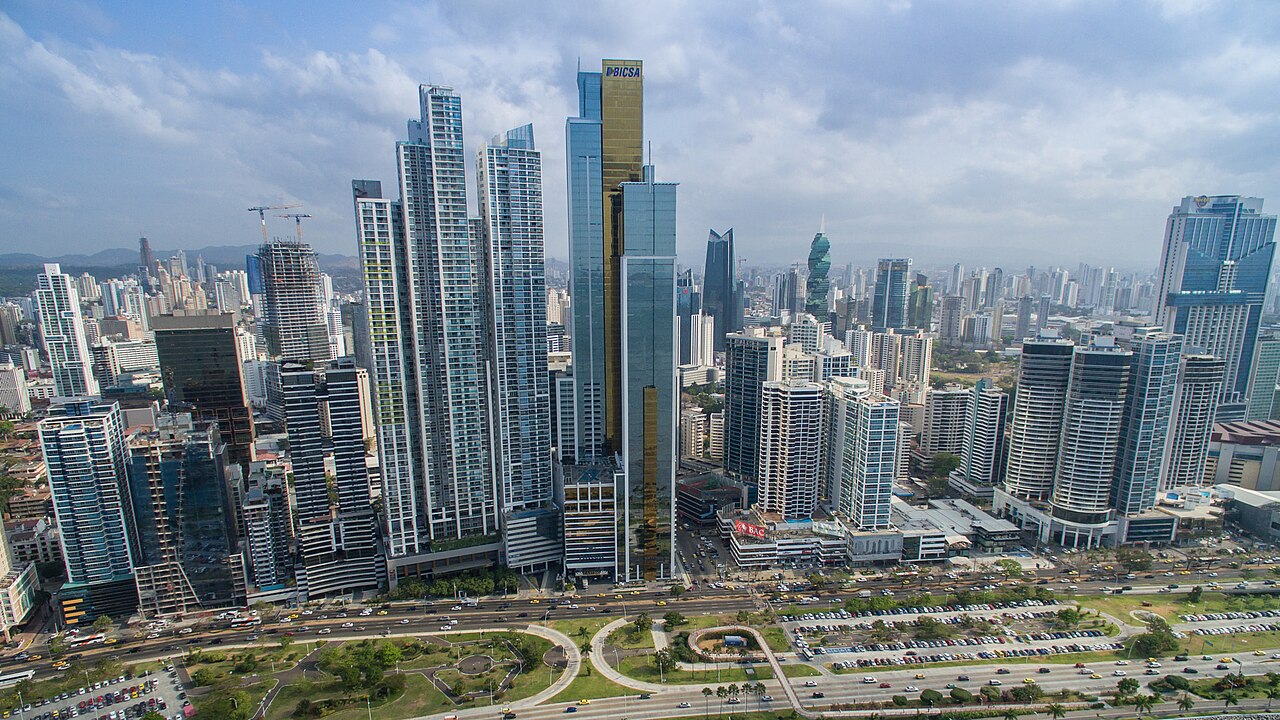
Panama City is the capital of Panama and, for its size, one of the most dramatically cosmopolitan cities in Latin America. Its skyline is unmistakable: a long wall of glass-and-steel towers rising above the Pacific across a crescent bay, the closest thing Central America has to Miami or Hong Kong. Behind that modern skyline sits a much older city — the Casco Viejo, founded in 1673 after pirates led by Henry Morgan sacked and burned the original settlement of Panamá Viejo. Between the two, the Panama Canal runs straight out of the city into the jungle, and it is the canal, still, that defines almost everything about this place: the money that built the towers, the flags of convenience, the ships queued up offshore, the banks that launder them.
For travellers the three essential stops are the Casco Viejo, the Panamá Viejo ruins, and the canal. The Casco Viejo — a UNESCO World Heritage Site — is a compact grid of colonial streets, restored Spanish and French colonial mansions, small plazas, cathedrals, and some of the best restaurants and hotels in the country; twenty years ago it was a crumbling slum, and it has been restored (with all the gentrification baggage that entails) into one of the most atmospheric old-city centres in the Americas. Panamá Viejo, the original city, was abandoned after Morgan's raid and is now a park of ruined stone walls on the eastern edge of the modern city. The Panama Canal itself is best seen from the Miraflores Locks visitor centre, a short taxi from downtown, where you can watch enormous container ships rise or fall 18 metres in a single lock cycle — the new Centennial Bridge and the 2016-opened Cocolí Locks handle the biggest Neopanamax vessels.
Beyond the canal, Panama City is an unexpectedly good wildlife destination. The Parque Natural Metropolitano, the only tropical rainforest inside any Central American capital, sits at the western edge of the city; Soberanía National Park, 30 minutes out, has some of the finest bird-watching in the Americas (including the Pipeline Road, a legendary birding site); and the Amador Causeway, a string of small islands connected by a 6 km causeway built with rock dug from the canal, is a breezy place for dinner and a view of the skyline. Stay in Casco Viejo if you can; eat a sancocho and drink a coffee at one of the Casco's cafés; and give the city at least three days.