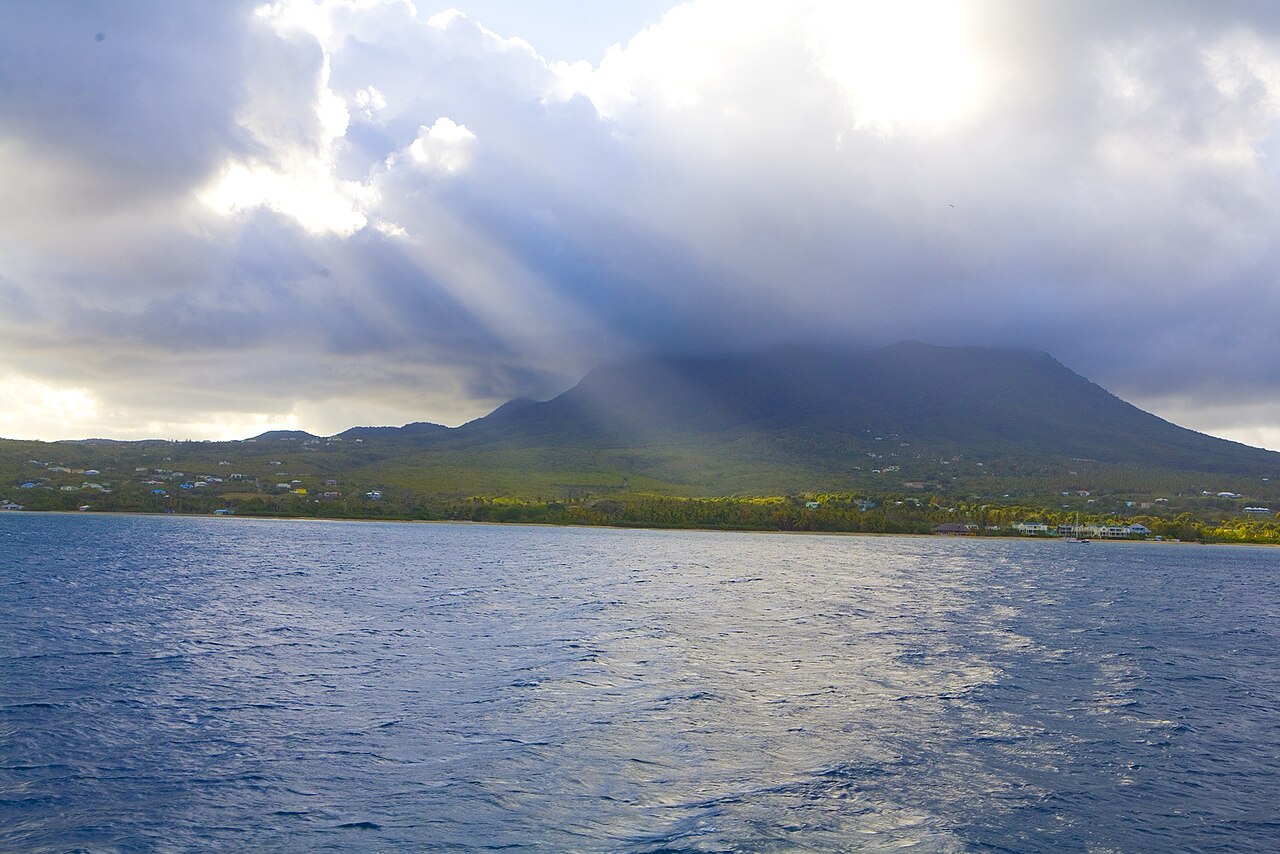
Nevis is a small volcanic island — roughly 36 square miles — that rises from the Caribbean Sea in a single graceful cone. At its centre, Nevis Peak climbs to around 985 metres and is usually wrapped in cloud by mid-morning. The island is quieter and less developed than its neighbour Saint Kitts, which suits it well.
The island's most famous son is Alexander Hamilton, born here in Charlestown in 1755 before emigrating to become one of America's founding fathers. The Alexander Hamilton Birthplace Museum still stands in Charlestown. Beyond that historical footnote, Nevis built its wealth on sugar, and the legacy is visible in the plantation great houses that ring the island — several have been converted into small inns, making them the most atmospheric places to stay.
The beaches are real: Pinney's Beach on the west coast stretches for miles with calm Caribbean water and a few beach bars. The Atlantic side is rougher and less visited. Snorkelling and diving are good around the southern tip of the island, where coral is still healthy. For hikers, the climb to Nevis Peak rewards serious effort with views over the entire island and out to Saint Kitts and, on clear days, to Montserrat and Antigua.
History-minded visitors should seek out the Bath Hotel and Spring House — once the Caribbean's grandest spa resort, now atmospheric ruins — and the ghostly Eden Brown Estate on the less-visited eastern coast. The Nevis Botanical Gardens on the lower slopes of the Peak make a pleasant half-day.
Getting here means a short ferry from Basseterre on Saint Kitts, or a small prop-plane flight. The island is small enough to drive around in an hour. Most visitors come for a week and wonder why they didn't stay longer.