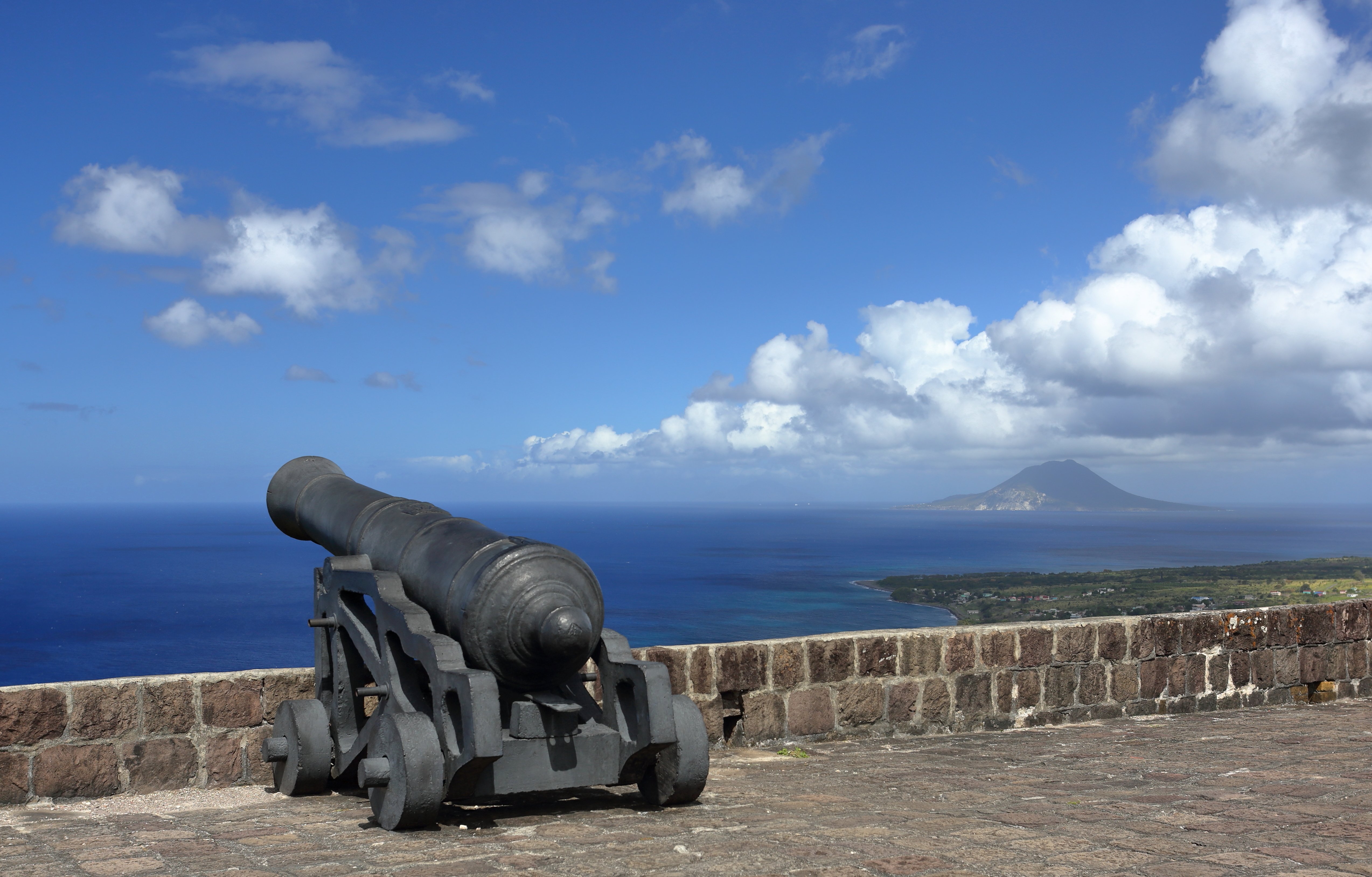
St. Kitts is the larger of the two islands that make up the Federation of Saint Kitts and Nevis, a volcanic peak rising steeply from the Caribbean Sea. The island was one of the first in the Caribbean to be colonised — by both the British and the French, who fought over it for centuries — and the massive Brimstone Hill Fortress, a UNESCO World Heritage Site perched on a volcanic outcrop, is the most dramatic reminder of that history.
The capital, Basseterre, is a small, walkable port town with colourful colonial buildings around the Circus and Independence Square. The island's interior is dominated by Mount Liamuiga, a dormant volcano whose crater can be reached by a steep jungle hike — one of the best walks in the eastern Caribbean. The southeastern peninsula, connected to the rest of the island by a single road, has the best beaches: Frigate Bay on the Atlantic side for surf, the calmer South Friars Bay on the Caribbean side.
St. Kitts is quieter and less developed than most Caribbean destinations. The old sugar railway has been converted into a scenic tourist train that loops the island, passing through former plantation estates and along the coast. If you want a Caribbean island that still feels unhurried, this is a good choice.