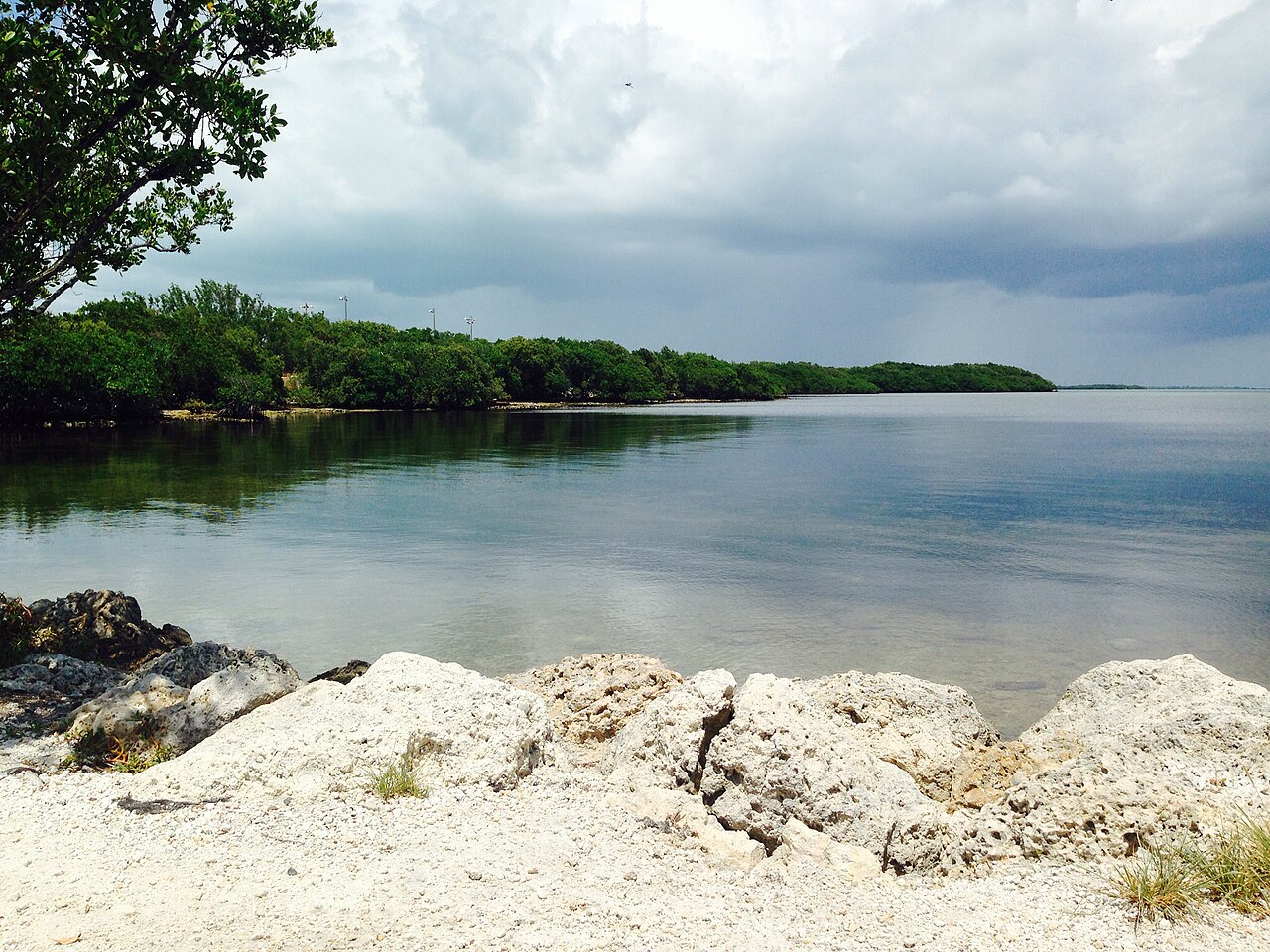
Key Largo is the first and largest island in the Florida Keys, a 120-mile chain of coral and limestone islands stretching southwest from the mainland into the Gulf of Mexico and Atlantic Ocean. Often called the "Diving Capital of the World," Key Largo sits alongside the only living coral barrier reef in the continental United States.
The main draw is the water. John Pennekamp Coral Reef State Park and the adjacent Florida Keys National Marine Sanctuary protect over 70 nautical square miles of coral reefs, seagrass beds, and mangrove swamps. Snorkelers and divers come for the elkhorn and brain coral formations, the parrotfish and barracuda, and the Christ of the Abyss statue resting in 25 feet of water at Key Largo Dry Rocks. If you are not a diver, glass-bottom boat tours run daily from the park marina.
Above the waterline, Key Largo is a laid-back strip of dive shops, seafood restaurants, and tiki bars lining both sides of US-1. The town has none of Key West's party-town energy — it is quieter, more outdoorsy, and focused almost entirely on the reef. The Florida Bay side offers excellent kayaking through mangrove channels, and the Crocodile Lake National Wildlife Refuge protects one of the last habitats of the American crocodile. For a piece of Hollywood history, the original African Queen steamboat from the 1951 Bogart film is moored at a local marina and still makes short cruises.
Advanced divers have the USS Spiegel Grove, a 510-foot navy ship sunk six miles offshore as an artificial reef — one of the largest in the world. Lobster mini-season in late July draws crowds of spearfishers and snorkelers for a frenzied two-day harvest before the regular season opens in August. Book accommodation months in advance if you plan to visit during this weekend.