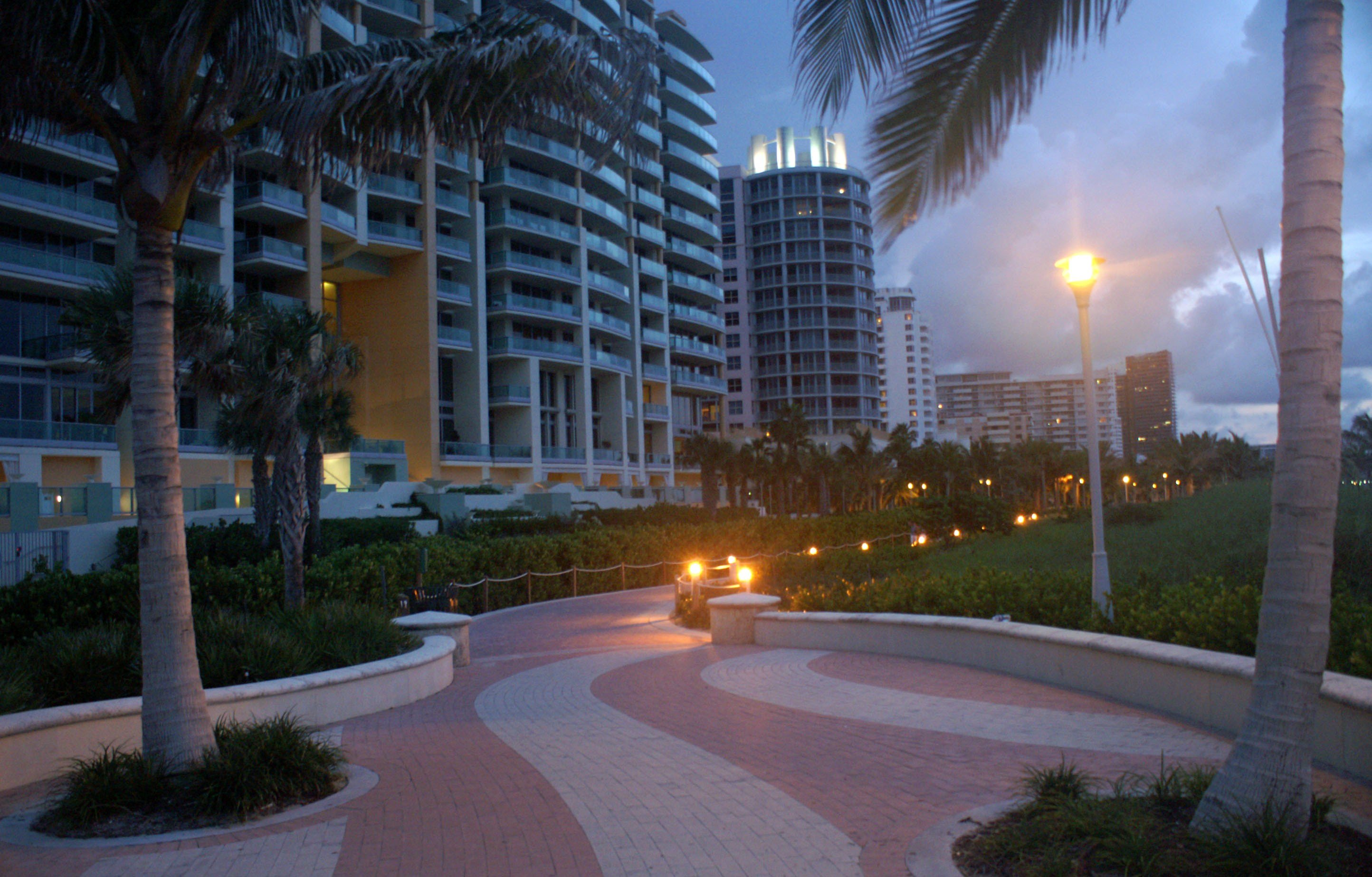
Miami Beach is its own incorporated city, technically separate from Miami, though the distinction barely registers in practice — it sits on a barrier island across Biscayne Bay, connected by causeways, and functions as the beachfront district of the greater metropolitan area. It is famous beyond most cities ten times its size for the Art Deco Historic District that lines Ocean Drive and Collins Avenue in South Beach — the most concentrated collection of Art Deco architecture in the world, painted in tropical pastels and largely preserved through the efforts of preservationists who fought for it in the 1970s and 80s.
South Beach, the southern third of the island, is the globally recognised version of Miami Beach: the wide white sand, the parallel rows of coloured hotels, the beautiful people, the outdoor dining on Ocean Drive until two in the morning. It is genuinely beautiful in a flashy, self-conscious way, and the architecture is serious enough to repay slow examination. The Wolfsonian-FIU is the best museum in the area — a research museum dedicated to design and propaganda from 1885 to 1945, housed in a former storage facility on Washington Avenue.
North of 23rd Street, Miami Beach becomes quieter and more residential. Mid-Beach and North Beach have their own character: the Collins Waterfront Architectural District represents a later wave of 1940s–60s modernist hotels; Lincoln Road is a pedestrian mall that has evolved from retail strip to outdoor gallery to year-round dining and café scene. The New World Center concert hall, designed by Frank Gehry and opened in 2011, has raised the city's cultural ambition considerably.
The annual Art Basel Miami Beach in December has transformed the city into one of the most important art market events in the world, bringing galleries, collectors, and artists from every continent. Beyond that week, the city's gallery and museum scene is permanently enriched by the institutions that came with it.