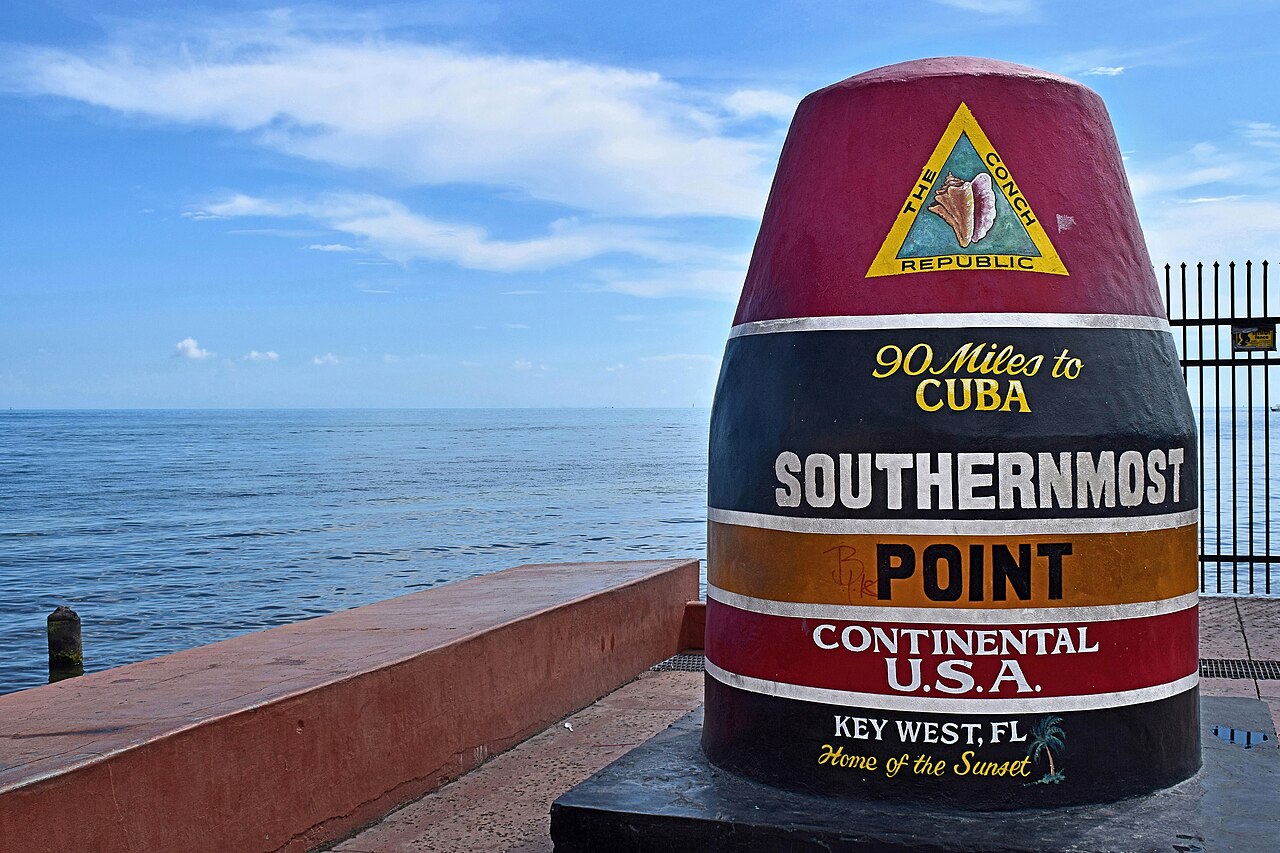
Key West is the end of the road — literally. Mile Marker 0 of US Route 1 sits here, at the southernmost point of the continental United States, closer to Havana than to Miami. The island is just two miles by four miles, but it packs in more character per square foot than most American cities.
The heart of the action is Duval Street, a mile-long strip running from the Gulf of Mexico to the Atlantic that holds most of the bars, restaurants, and shops. But the real Key West is in the quieter streets of Old Town — the gingerbread houses with their wide porches, the wild roosters strutting through gardens, the banyan trees spreading across entire yards. Old Town has the density and walkability of a European village, which is rare in Florida.
Key West has always attracted people who wanted to live outside the mainstream. Ernest Hemingway wrote here in the 1930s. Tennessee Williams came for the winters. Harry Truman made it his presidential retreat. The town became a haven for artists, writers, and the LGBTQ+ community long before most of America was ready for any of that. That live-and-let-live attitude still defines the place — you feel it in the easygoing pace, the lack of pretension, and the nightly sunset celebration at Mallory Square where street performers, food vendors, and tourists gather to watch the sun drop into the Gulf.
The island runs on water — snorkeling and diving on North America's only barrier reef, kayaking through the mangroves, fishing charters heading out to the flats or the deep blue. Fort Zachary Taylor State Park has the best beach on the island. The Dry Tortugas, 70 miles offshore, are one of the great day trips in the country. The Mel Fisher Maritime Museum tells the story of the greatest treasure hunt in Florida history. On land, the food scene leans heavily on fresh seafood, Cuban-influenced dishes, and key lime everything.