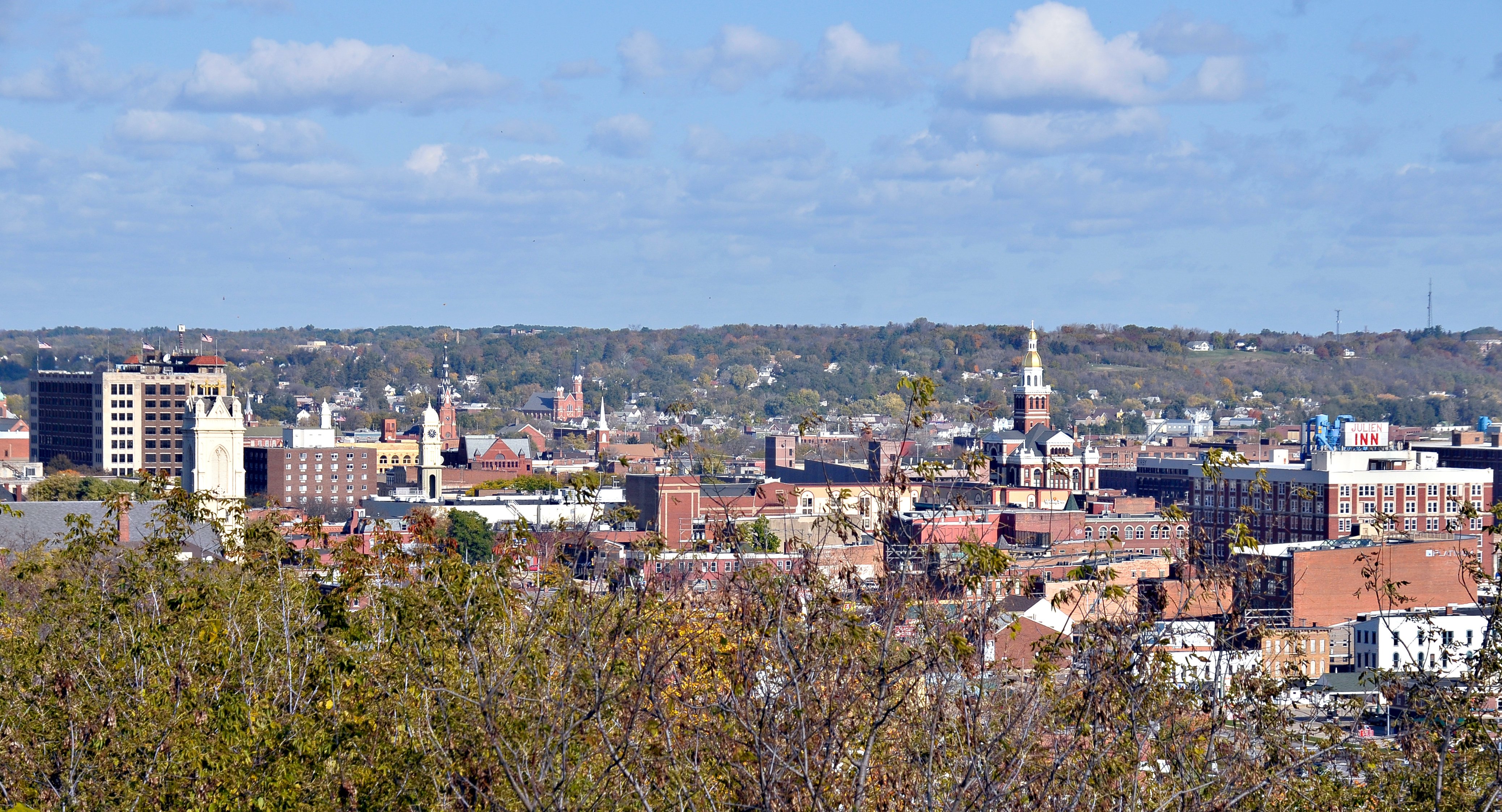
Dubuque sits on the bluffs above the Mississippi River in the far northeast corner of Iowa, and the setting alone is worth the detour. The river here is wide and muscular, flanked by limestone ridges and wooded hills that look nothing like the flat Iowa of popular imagination. It is one of the oldest cities west of the Mississippi — founded in 1833, built on lead mining money — and the Victorian architecture of its downtown and Cable Car Square reflects that early prosperity.
The revitalized riverfront is the obvious starting point. The National Mississippi River Museum and Aquarium is genuinely good — one of the better river natural history museums in the country, with live fish, river otters, and an honest account of what the Mississippi corridor looks like today. The Fenelon Place Elevator, a tiny funicular railway that has been hauling passengers up the bluff since 1882, gives you one of the best views of the river in the region and costs almost nothing to ride. Near the museum, the Dubuque Shot Tower is a vivid reminder of the city's lead-mining past.
Away from the river, Dubuque has three colleges, a lively arts scene for a city its size, and the kind of downtown where independent shops and restaurants have held on against the suburban sprawl. The stretch of Main Street around the Millwork District has been thoughtfully restored. In winter, driving the Great River Road north toward Galena or south toward Guttenberg shows you the Upper Mississippi at its most dramatic — bluffs, backwater lakes, bald eagles, and very little traffic.
It is not a destination that will detain most travelers for more than a day or two, but as a stop on a longer Mississippi or Midwest road trip it punches well above its weight.