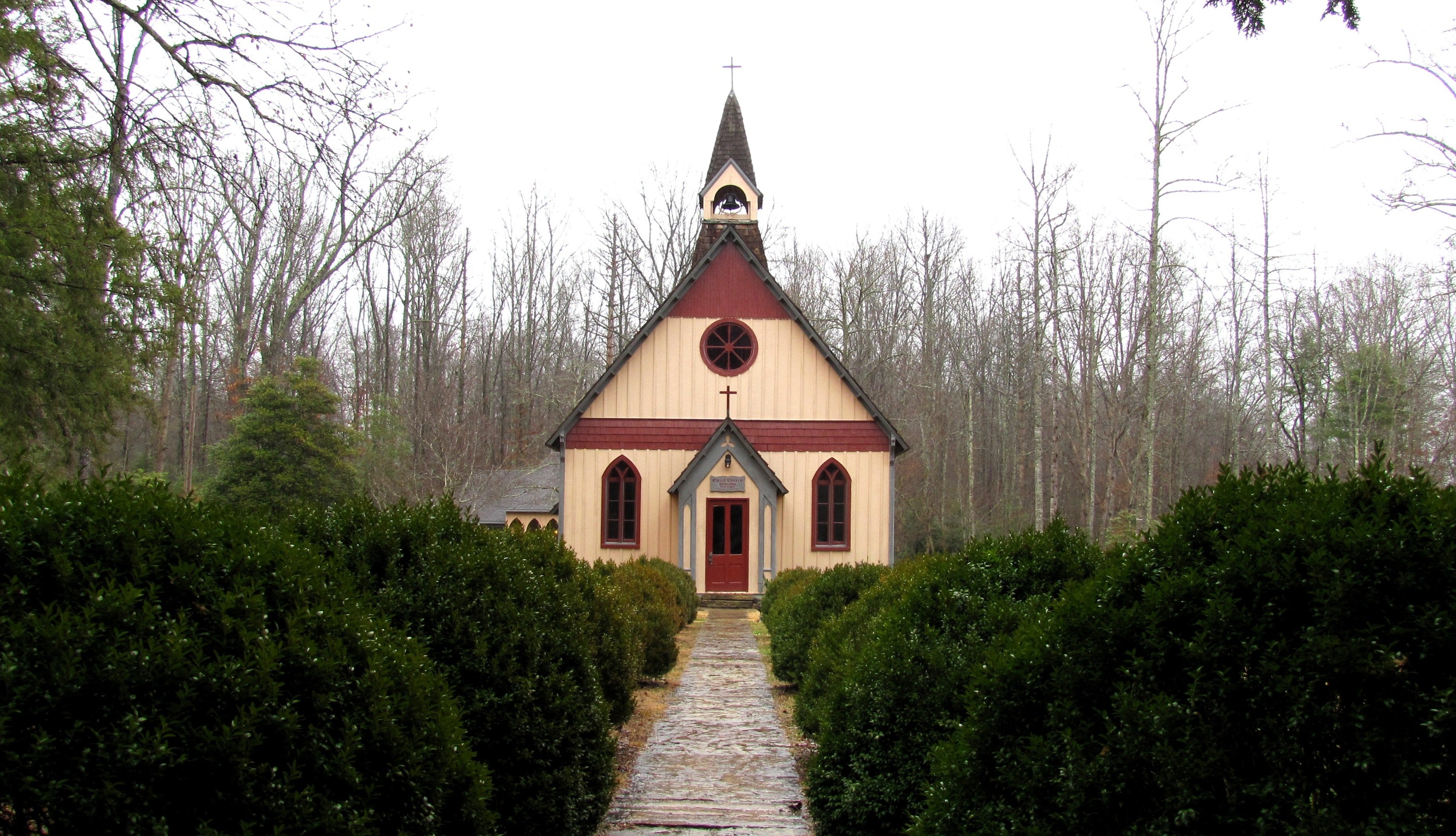
Rugby is one of America's most unusual small towns — a Victorian village frozen in time on Tennessee's remote Cumberland Plateau. Founded in 1880 by Thomas Hughes, the British author of Tom Brown's School Days, it was meant to be a cooperative utopian colony where younger sons of English gentry could escape rigid class hierarchies and build something new in America.
The colony flourished briefly, then dwindled. But unlike most nineteenth-century utopian experiments, Rugby didn't disappear — it simply went quiet. Of the 66 original Victorian buildings, 17 still stand along unpaved lanes shaded by old trees, creating a streetscape unlike anywhere else in the American South. The architecture is unmistakably English: board-and-batten cottages, a Gothic Revival church, a library still stocked with the volumes the colonists brought from England.
Historic Rugby, the non-profit that has managed the site since 1966, has restored the key buildings and runs guided tours through the village. Five buildings operate as museums, including Thomas Hughes's own house Kingstone Lisle. The town was added to the National Register of Historic Places in 1972. It's a quiet, contemplative place — best visited on a weekday when you can have the lanes largely to yourself. The surrounding Big South Fork gorge country gives the place its outdoor dimension.