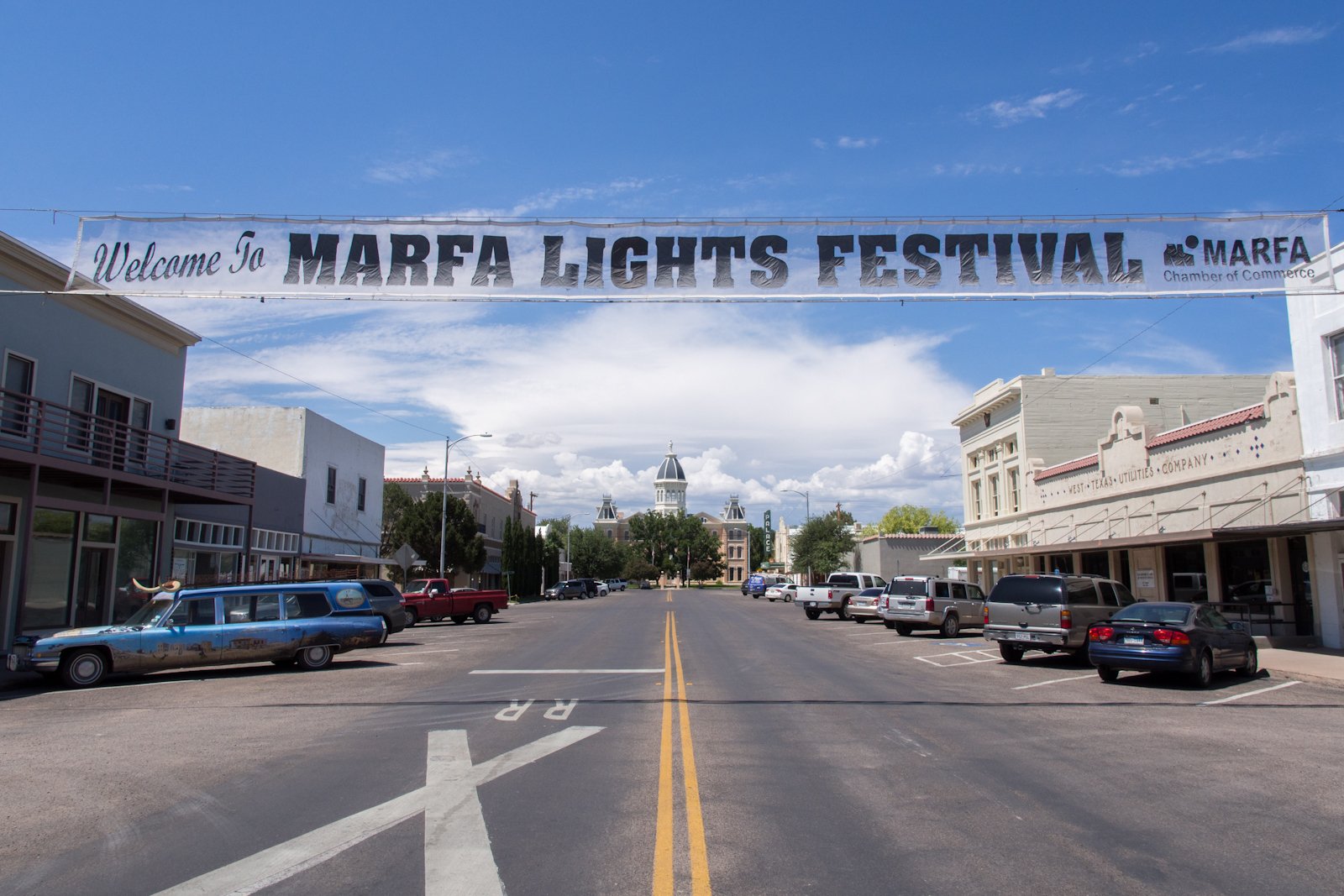
Marfa sits alone in the high desert of West Texas, a small ranching and railroad town that became one of the strangest art destinations in the United States. The landscape does half the work: empty roads, old brick storefronts, mountains on the horizon, and a sky that makes even plain buildings look deliberate.
Donald Judd moved here in the 1970s and changed the place without turning it into a normal gallery town. His large-scale installations at the Chinati Foundation and the preserved spaces of the Judd Foundation are the main reasons art travelers cross this much desert. Marfa also has smaller galleries, the excellent Ballroom Marfa, and enough odd local history to keep it from feeling like a single-artist shrine.
At night, people drive east of town to the Marfa Lights Viewing Area, where the desert may or may not provide its famous floating lights. Even when nothing appears, the stargazing is good and the silence feels like part of the trip. Marfa is not a casual detour from a big city; it rewards travelers already crossing Big Bend country who are happy to slow down and look carefully.