La Plata is one of the great planned cities of the Americas. Founded in 1882 as the new capital of Buenos Aires province, it was laid out on a perfect grid of broad avenues intersected by diagonal boulevards, with a public park or plaza every six blocks. The result is a city that feels spacious and geometric in a way that Buenos Aires proper never does.
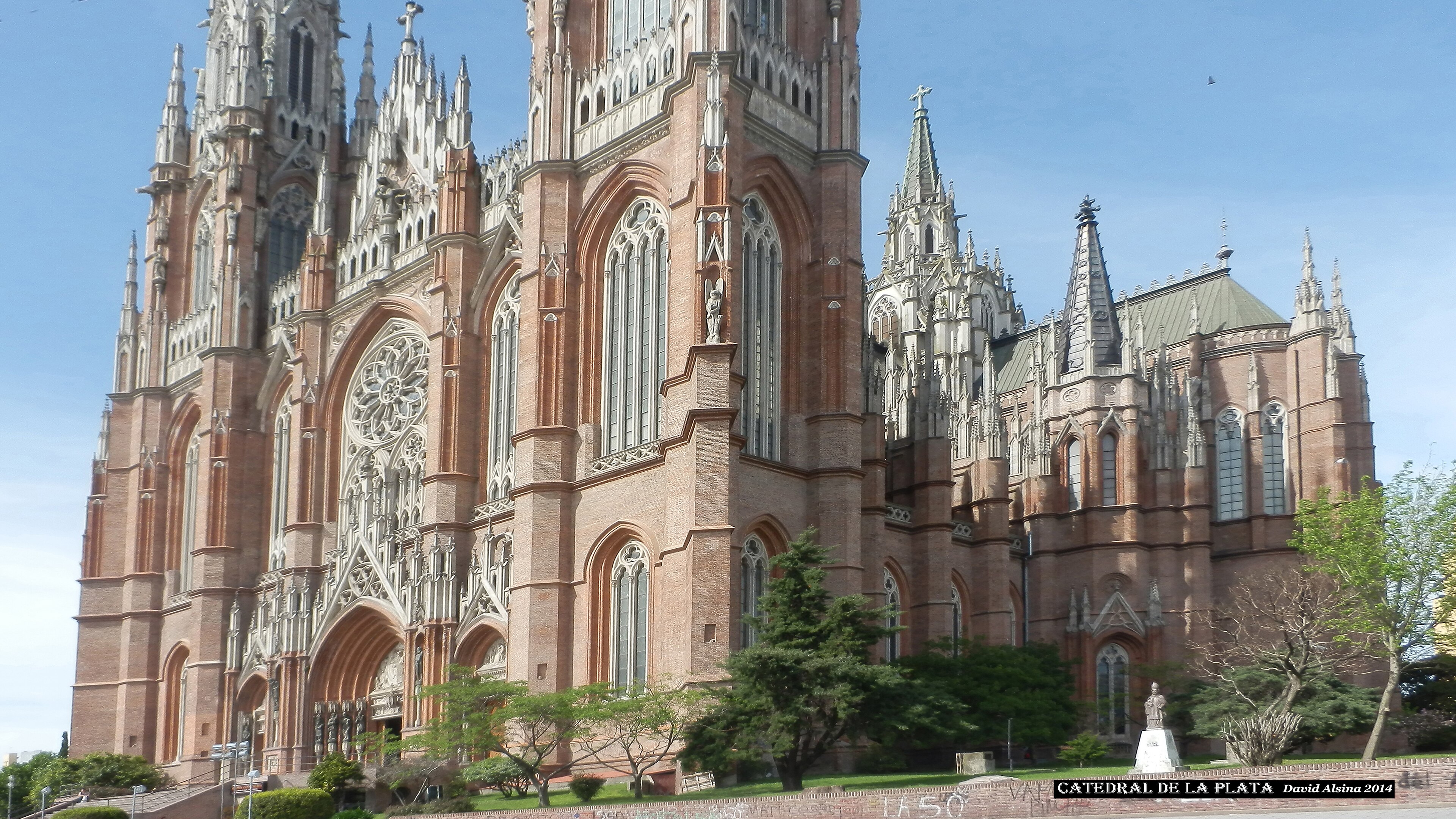
The centrepiece is the Catedral de la Inmaculada Concepción, an enormous neo-Gothic cathedral that took almost a century to complete — the towers were finally added in 1999, 115 years after construction began. It ranks among the largest churches in the Americas, and the view from its towers across the city grid is one of the best in the region. Nearby, the Museo de La Plata houses one of the finest natural history collections in South America, with extraordinary paleontological galleries drawing on Argentina's exceptionally rich fossil record.
Plaza Moreno, the main square, is the ceremonial heart of the city, flanked by the cathedral on one side and the ornate Palacio Municipal on the other. The Teatro Argentino, a few blocks away, is the second most important opera house in Argentina and hosts a full season of opera, ballet, and orchestral concerts. The Paseo del Bosque park to the north is where the university crowd gathers on weekends — 60 hectares of trees, a lake, and the atmosphere of a city that knows how to enjoy its own public spaces.
La Plata sits just an hour southeast of Buenos Aires by bus or train, making it an easy day trip, though spending a night lets you appreciate the city at a more relaxed pace. The surrounding pampas are flat and featureless, which only makes the city's deliberate geometry more striking when you arrive.