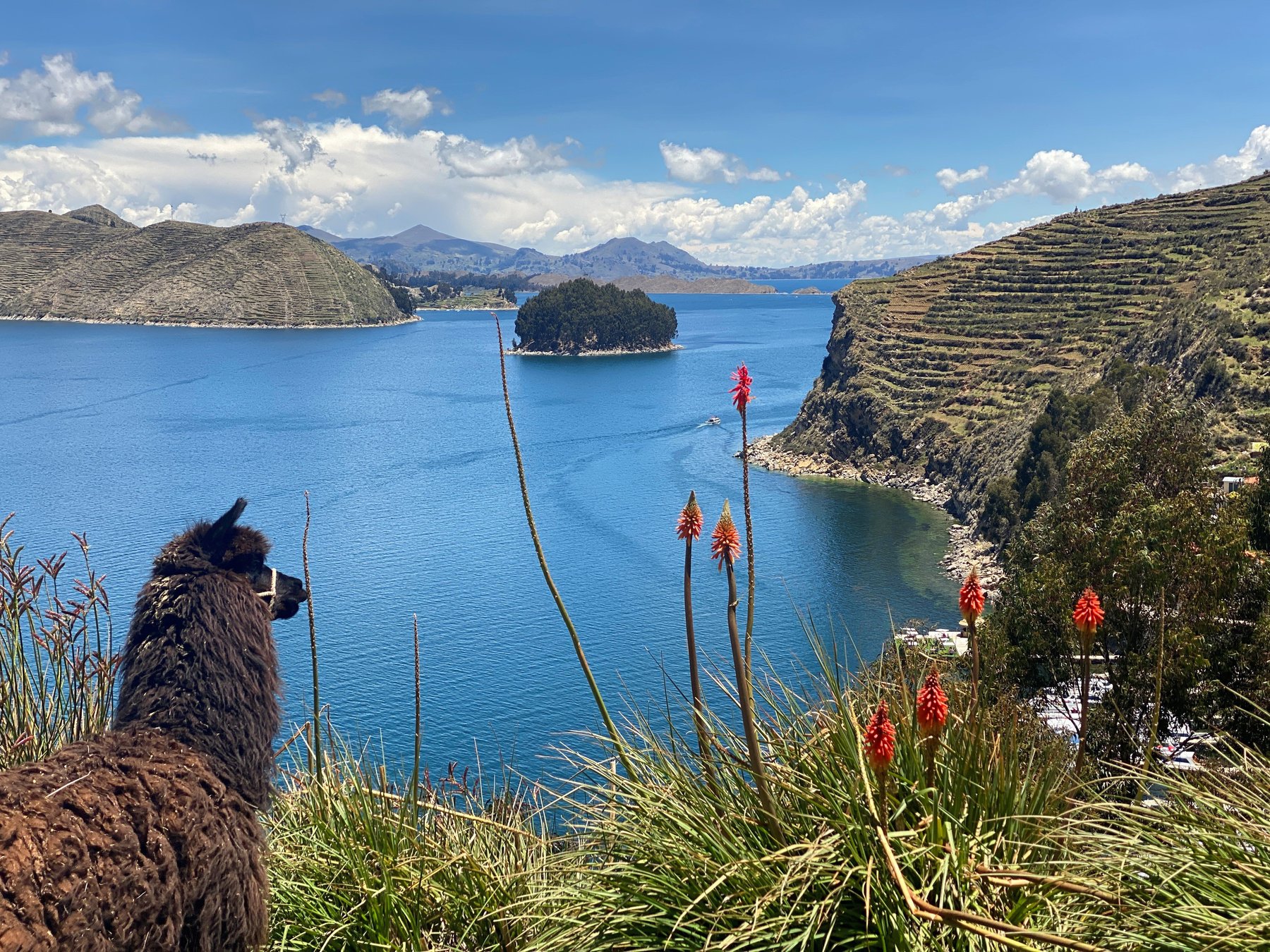
Lake Titicaca straddles the border between Bolivia and Peru at 3,812 metres above sea level — the highest navigable lake in the world. It has been central to Andean belief for over two millennia. The Incas considered Isla del Sol (Sun Island) the birthplace of their civilisation, and it remains the most important archaeological site on the lake.
On Sun Island you will find Inca steps, a sacred fountain, the ruins of the Pilkokaina palace, and the Inti Wata Cultural Complex, which houses the largest collection of Sun Island archaeological items, Andean mummies, and the Ekako abundance god. The complex also includes traditional agricultural terraces, medicinal herb gardens, and demonstrations of reed vessel construction — the same technique used by Thor Heyerdahl for his transatlantic RA expeditions.
Copacabana, on the Bolivian shore, is the main base for visiting the lake. It is a pilgrimage town centred on its famous Moorish-style basilica housing the Virgen de Copacabana. Boats to Sun Island leave from the harbour daily.