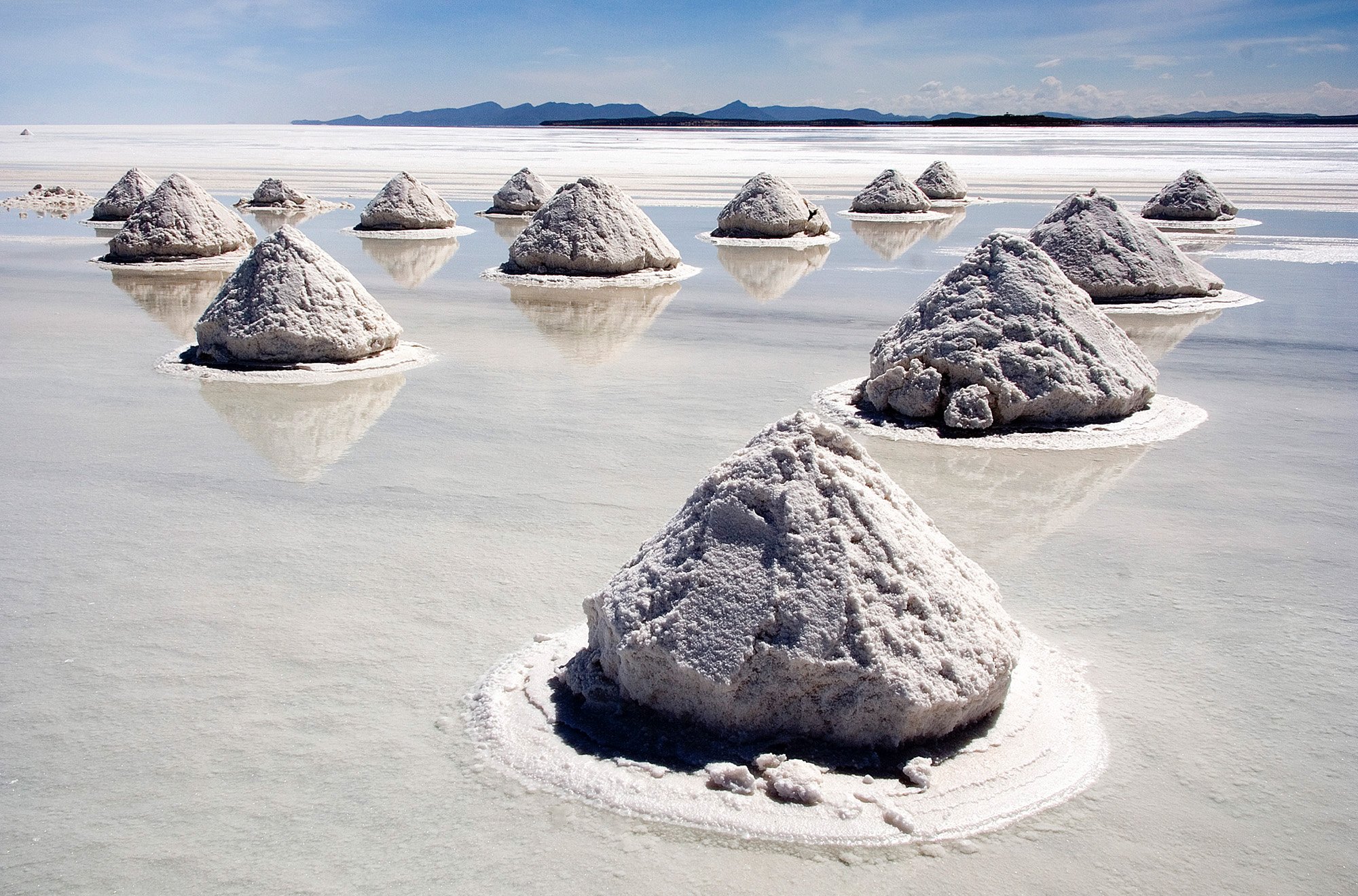
Uyuni is a small, dusty railway town on the Altiplano of southwest Bolivia, sitting at 3,670 metres on the edge of the great salt flat that bears its name. Almost everyone who comes here is on their way to or from the Salar de Uyuni, and the town has organised itself accordingly — every other building on the main street is a tour agency, a pizza joint, or a hostel.
The town itself is not pretty. Wind whips across the open grid of low brick houses, the temperature drops well below freezing on winter nights, and there is little of the colonial charm you find in Sucre or Potosí. What it does have is the train cemetery on its southwest edge — a stretch of rusted nineteenth-century locomotives slowly returning to the desert — and dozens of jeep agencies competing fiercely on price. The standard product is a three-day, two-night loop through the salt flat and on into the high-altitude lake country of the Eduardo Avaroa Reserve, often ending at the Chilean border.
Most travellers spend a night here before or after their tour. Arrivals are a familiar Bolivian scene: a bus pulls in well after dark, jeep agency touts cluster around the door, and within the hour you have a tour booked for the morning. The food scene exists almost entirely for foreigners — pizza, pasta, and llama steak appear on every menu. A handful of breweries and bars have sprung up to fill the long cold evenings.
Practical notes: the altitude hits hard, so allow a day to acclimatise if you have come up from the lowlands. Cash machines exist but are unreliable; bring bolivianos. Joya Andina (Uyuni) Airport has daily flights from La Paz, and the overnight train from Oruro is a more interesting way to arrive. From Tupiza in the south, four-day jeep tours run the same circuit in reverse and are usually quieter — see Tupiza's Uyuni tour notes.