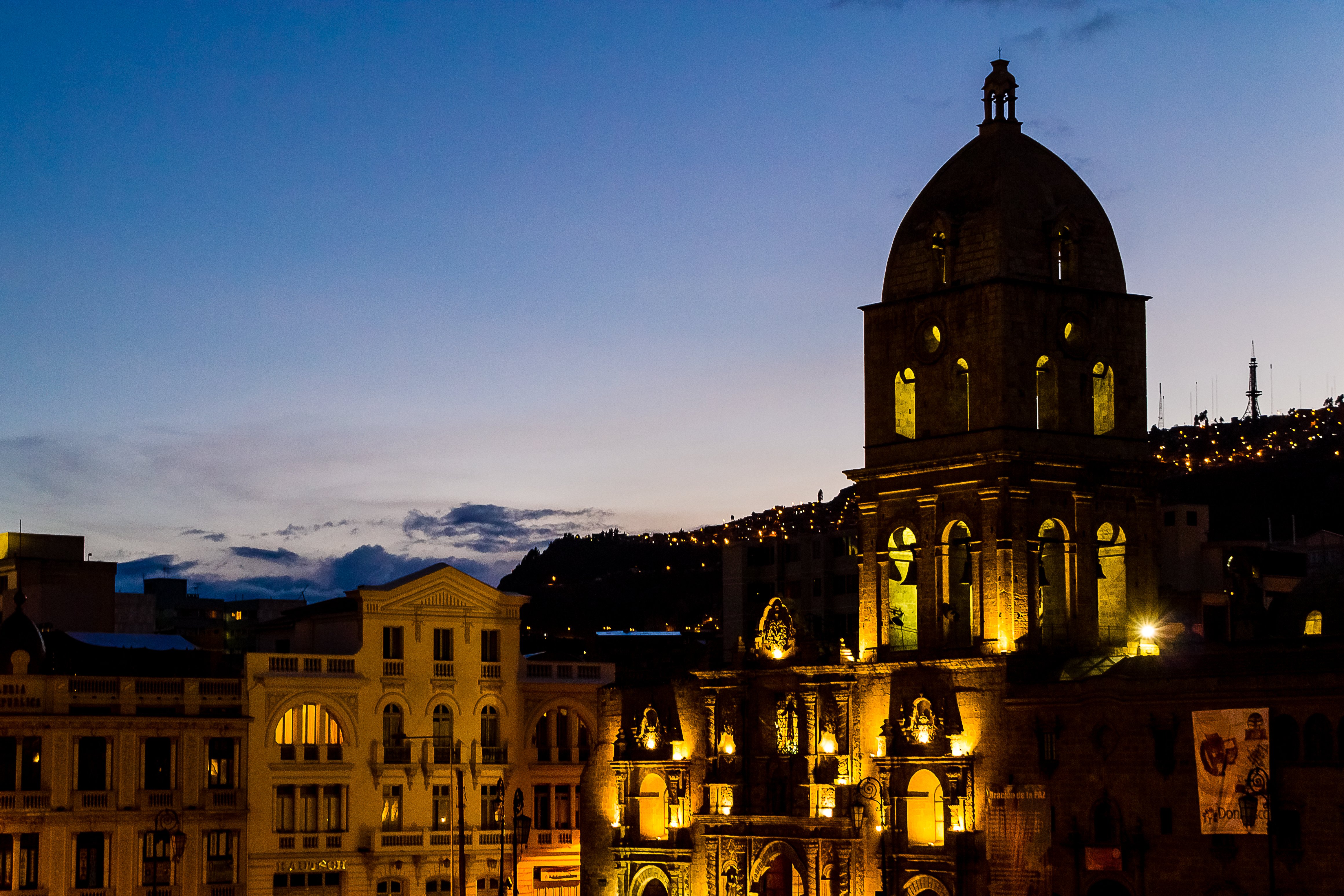
La Paz hits you before you even arrive. The airport sits at 4,061 metres in El Alto — a wind-blasted plateau city in its own right — and the descent by road into the canyon below is one of the great urban approaches on earth. The city spills down the slopes in a tangle of red-brick buildings, cable cars, and market stalls, with the white peak of Illimani hovering behind it all at 6,438 metres.
At 3,640 metres at its centre, La Paz is the world's highest capital, and altitude will be your first preoccupation. Give yourself two days before doing anything strenuous. Drink coca tea, eat lightly, and walk slowly. The city rewards patience — once you've acclimatised, the thin air stops being an obstacle and starts feeling like part of the place's strange, weightless character.
The city has two overlapping personalities. The historic centre around Plaza Murillo is colonial Bolivia: the Palacio Quemado, the cathedral, the Basilica of San Francisco, and the steep lanes of the Witches' Market selling dried llama foetuses, herbal potions, and offerings to Pachamama. A few kilometres downhill, Sopocachi and Miraflores are full of cafes, international restaurants, and the comfortable hotels that most travellers end up in. The contrast between these worlds — Aymara market women in bowler hats and cholita skirts beside suited businessmen — is less a contradiction than the actual texture of the place.
La Paz is also the best base for exploring this part of Bolivia. The Salar de Uyuni salt flat, Tiwanaku's pre-Inca ruins, the Death Road cycling descent, and Lake Titicaca are all within day-trip or overnight range.