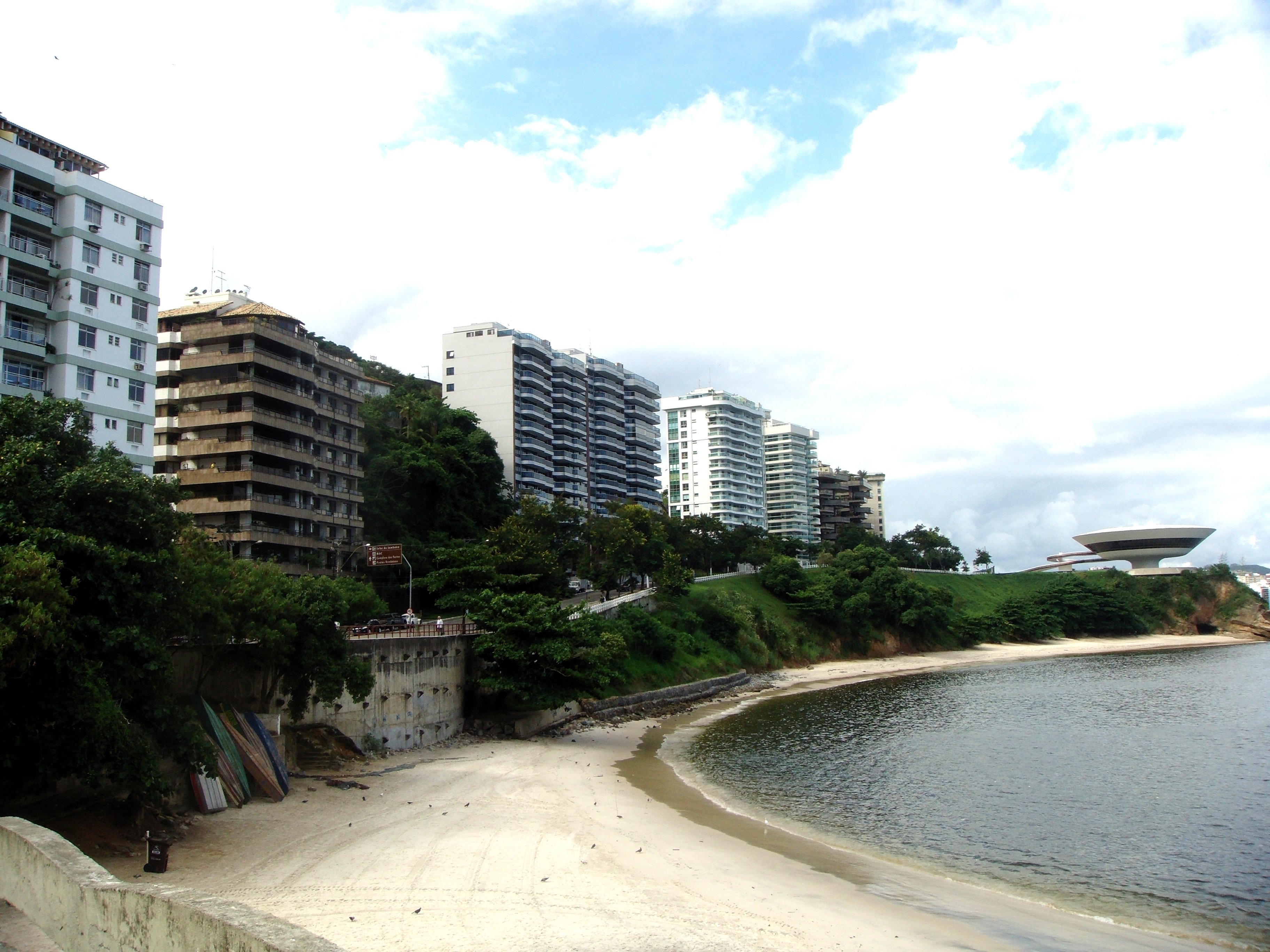
Niterói sits across Guanabara Bay from Rio de Janeiro, connected by the striking 13-kilometer Ponte Rio-Niterói. Most visitors to Rio never make the crossing, which is a shame. The city has one of the most dramatic museum buildings on earth, a string of wild oceanic beaches, and views back toward Rio that rival anything you will see from the other side.
The waterfront downtown is dominated by Oscar Niemeyer's Caminho Niemeyer, a series of futuristic public buildings along the bay. The jewel in the crown is the MAC, the Museu de Arte Contemporânea, a flying-saucer-shaped gallery perched on a cliff edge with the whole sweep of Rio as its backdrop. Beyond the museum, the Fortaleza de Santa Cruz guards the entrance to the bay and is one of the best-preserved colonial fortresses in Brazil.
Head south from the center and you reach the Região Oceânica, a stretch of open Atlantic beaches that feels nothing like the crowded urban strips of Copacabana and Ipanema. Piratininga, Camboinhas, Itaipu, and Itacoatiara each have their own character, from calm lagoon-side swimming to serious surf breaks backed by the forested hills of the Serra da Tiririca state park. Itacoatiara, tucked between rocky headlands, is regularly ranked among the best beaches in Rio de Janeiro state.
Getting here is easy. Ferries run every fifteen minutes from Praça XV in central Rio to the Estação das Barcas in Niterói, a twenty-minute ride with excellent views. The bridge is faster by car but far less scenic.