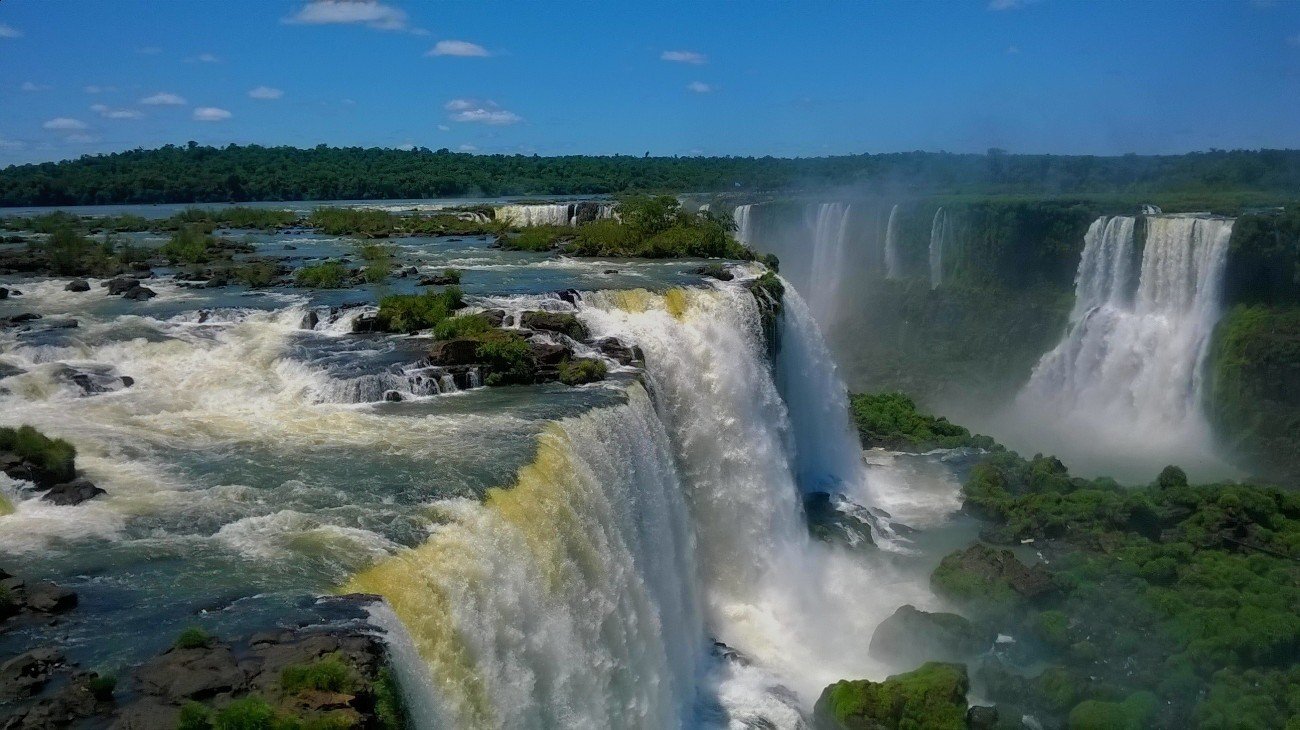
Foz do Iguaçu is a Brazilian border city whose entire reason for existing is one of the great natural spectacles of the Americas. The city itself is a sprawling, functional place of around 260,000 people in the far west of Paraná state, sitting at the point where Brazil, Argentina, and Paraguay meet — a convergence known as the Triple Frontier. Most visitors pass through quickly, but those who stay longer discover that Foz has more to offer than its famous falls.
The Iguaçu Falls are the obvious headline: nearly 275 waterfalls spread across a horseshoe cliff some three kilometres wide, with the Garganta do Diabo (Devil's Throat) pouring some 1,500 cubic metres of water per second into the gorge below. The Brazilian national park gives you the panoramic view — a long elevated walkway that ends directly above the churning heart of the falls. It is stunning, and it stays with you. But Foz is also the closest base for visiting the Itaipu Dam, one of the largest hydroelectric power stations ever built, which sits just upstream on the Paraná River.
The city is unusually cosmopolitan for a Brazilian border town. There is a significant Arab community (mainly Lebanese and Syrian), a Chinese merchant class that keeps the shops of neighbouring Ciudad del Este stocked with electronics, and a modest Japanese community as well. This mix shows up in the restaurant scene, which is more varied than you might expect. The Parque das Aves bird park, set in a fragment of Atlantic rainforest next to the national park entrance, is one of the best in South America and well worth a few hours of your time.
Getting around requires a bit of planning — the falls, the Itaipu Dam, and the Triple Frontier monument are all some distance from the city centre, and the connections to Paraguay across the Friendship Bridge and to Argentina via Puerto Iguazú run on their own schedules. Most travellers find that two full days gives them time to see both sides of the falls, tour the dam, and catch a sunset at the Triple Frontier.