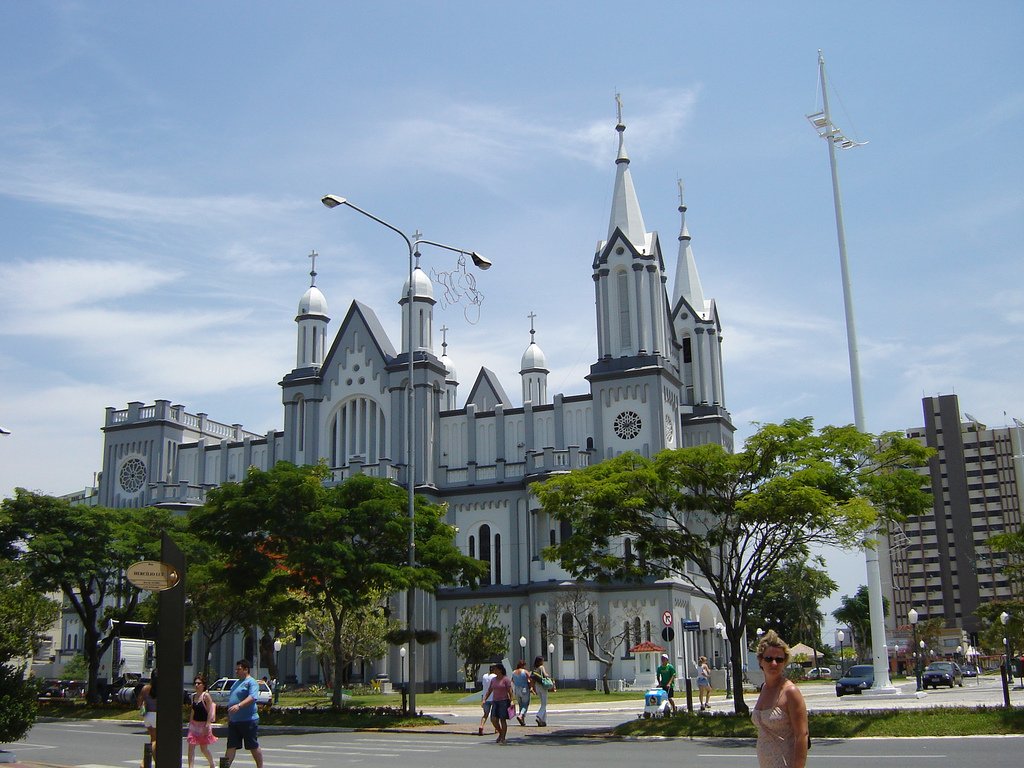
Santa Catarina port city at the Itajaí-Açu mouth, with fishing fleets and Azorean-German traces.
Itajaí sits at the mouth of the Itajaí-Açu river in Santa Catarina state, about 90km north of Florianópolis. It is one of Brazil's most important fishing ports — the fleet that docks at the port is among the largest in the country — and the city's economy turns on fish, fuel wholesale trade, and a busy container port. With around 230,000 inhabitants, it punches above its weight as a regional centre, home to the UNIVALI university.
For travellers, Itajaí is mostly a transit point or a base for the more glamorous Balneário Camboriú nearby. That said, it has pleasant beaches — Cabeçudas is the local favourite — a laid-back local atmosphere, and a genuine Brazilian city feeling that the overdeveloped coastal resorts tend to lack. The German and Azorean settler heritage is visible in the architecture and in the food, and is celebrated at the Marejada festival every October. Seafood here, eaten at simple waterfront restaurants, is outstanding and inexpensive.
Guide
Bars and Cafes
Itajaí's nightlife is local and low-key — nothing like Rio or São Paulo, but genuine and unpretentious. Brazilians here follow the "happy hour" ritual religiously: post-work drinks that stretch well into the evening at bars around the city centre. Live music — samba, choro, pagode — turns up at bars and restaurants on weekend evenings. Note that venues often add an "artistic cover" to your bill once a performance starts, so settle up and leave early if the music isn't to your taste. For free live music, Parque da Marejada is a good option.
Guide
Eating Out
Itajaí lives on fish. The trawlers that dock at the port supply a steady stream of grouper, snapper, prawns, lobster, octopus, and the local sea bass (robalo). Seafood-focused restaurants along the riverfront and at Praia das Cabeçudas serve simple grilled fish, moqueca-style fish stews with coconut milk and dendê oil, and the Santa Catarina speciality sequência de camarão — eight or nine courses of prawns cooked every imaginable way.
Azorean Portuguese influence shows up in the salt cod (bacalhau) dishes that turn up on most menus. Prices are well below those of Florianópolis or Balneário Camboriú for fish of equal quality.
Guide
Getting There
Navegantes International Airport (NVT), just north across the river, is the closest air gateway, with flights from São Paulo, Rio de Janeiro, Brasília, Belo Horizonte, Curitiba, and Porto Alegre. A short bridge or ferry connects the airport to Itajaí city.
By road, the BR-101 federal highway runs along the coast through the city; Florianópolis is about 90 km south and Curitiba some 230 km north. Long-distance buses use the Rodoviária downtown. By sea, Itajaí is a regular cruise-ship stop between October and April and is occasionally the South American base for the Ocean Race fleet.
Guide
When to Go
December through February is high summer in Santa Catarina — hot, humid, and busy with Brazilian beach holidaymakers. The water at Cabeçudas is at its warmest and the city feels at full speed. October sees the ten-day Marejada festival, the city's biggest annual event.
Spring (September to November) and autumn (March to May) are cooler and quieter, with pleasant temperatures and fewer crowds. Winter (June to August) is grey and cool — not unpleasant, but the beach is off the menu.