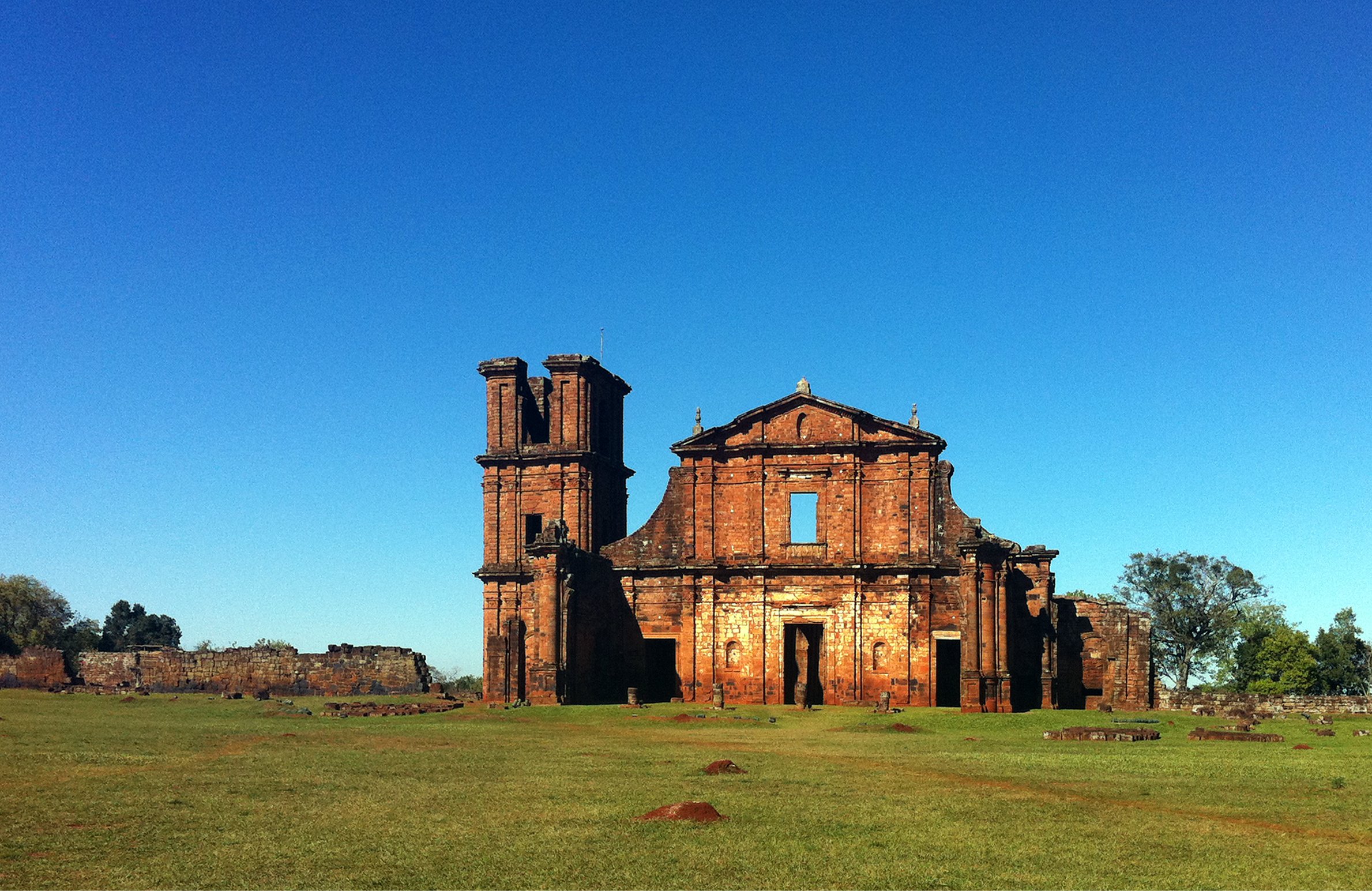
São Miguel das Missões is a small town in the western pampas of Rio Grande do Sul, about 480 kilometres west of Porto Alegre — too far for a comfortable day trip, but close enough for an overnight journey that is thoroughly worth the effort. It exists around its reason for fame: the ruin of one of the great Jesuit reduction settlements of the 17th and 18th centuries, a UNESCO World Heritage Site since 1983.
The Jesuit missions were among the most ambitious social experiments in the Americas — self-governing indigenous communities organised by Jesuit priests according to utopian principles, producing art, music, and architecture of remarkable quality. When the Jesuits were expelled from South America in 1767, the missions were abandoned and the communities scattered. What remains here is the skeleton of one of the greatest architectural achievements of colonial South America: a vast stone church whose facade still stands to its full original height, with elaborate baroque stonework intact three centuries after it was carved. The carved details — animal heads, religious figures, indigenous decorative motifs woven into the European baroque vocabulary — are among the finest examples of the hybrid aesthetic the missions produced.
The sound-and-light show presented on the ruins most evenings is genuinely excellent, one of the best such productions in South America: it uses the ruins themselves as its stage and tells the story of the missions with real emotion. The small on-site museum gives good context. Allow at least one full day; two is better. The town itself is quiet and modest, with a handful of pousadas and restaurants, and most visitors arrive by car or overnight bus from Porto Alegre.