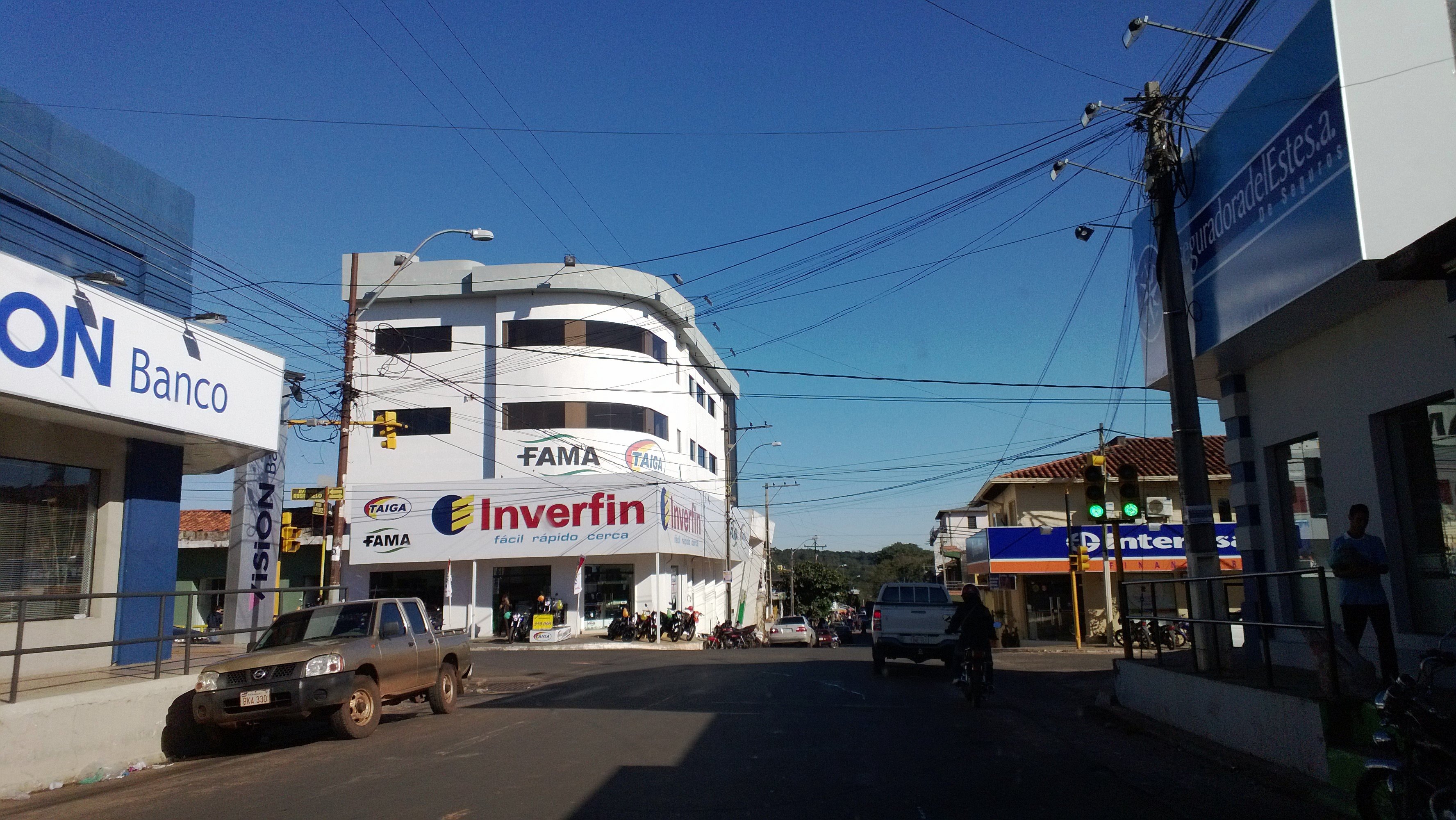
Small Paraguayan market town, officially San Estanislao, showing rural San Pedro life around its central plaza
Santaní — officially San Estanislao — is a small market town in the San Pedro department, a few hours northeast of Asunción in one of Paraguay's poorest and most rural provinces. If you are looking for monuments and museums, this is not the place. But if you want to see small-town Paraguayan life without any tourist infrastructure or pretense, Santaní delivers exactly that.
The town revolves around its central plaza and the modest Iglesia San Estanislao. Life moves slowly here: motorcycles and bicycles outnumber cars, and the social scene centers on "la playa" — the local swimming and gathering spot along the Jejuí river — and pickup games of "voli," the Paraguayan hands-free volleyball played with astonishing skill. The Mercado Central provides the most vivid snapshot of agricultural San Pedro: yerba mate sold in bulk, hand-woven baskets, and vendors with loud opinions. The surrounding countryside is flat agricultural land, mostly cattle ranches and small farms growing yerba mate, cotton, and cassava.
Santaní is best understood as a window into rural Paraguay rather than a destination in itself. The people are welcoming, cold beer and fresh tortillas are cheap and plentiful, and the pace of life is genuinely unhurried. If you are passing through on your way to the Chaco or toward the Brazilian border, it makes a reasonable stop to stretch your legs and eat something home-cooked.
Guide
Eating Out
Santaní has no restaurants in the formal sense. What it has are comedores — small family-run eateries serving a set lunch of soup, meat, and rice for a few thousand guaraníes. Look for hand-painted signs near the market and along the main road. The food is plain and satisfying: sopa paraguaya (a dense cornbread baked with cheese and onion), chipa (a cheese and cassava bread sold from street carts), and grilled meat eaten with mandioca.
Street snacks are the best eating in town. Women sell tortillas from baskets near the plaza in the morning, and there are usually a few empanada vendors setting up in the afternoons. Cold drinks — beer, soft drinks, and bottled tereré — are available from the small shops (despensas) scattered through the town.
Guide
Getting Around
Santaní is a small town and most things are walkable from the centre. The main street and plaza are within easy reach of any accommodation. For anything further out — the river beaches, the outlying farms — motorcycle taxis are the standard solution. They are cheap, plentiful, and the drivers know every dirt track in the surrounding countryside.
Motorcycles and bicycles dominate the streets. There are very few cars by the standards of any city, and traffic is light enough that crossing the road is not an event. If you are driving yourself, the town's grid layout is easy to navigate, though the streets are not always well signposted.
Guide
Getting There
Santaní is about 230 km northeast of Asunción, roughly a four-hour drive depending on road conditions. The main route runs via Coronel Oviedo and then north through the San Pedro department on Route 3 (Ruta Mariscal Estigarribia). The road is paved to Santaní, which was not always the case — the improvement came in the 2000s and made a significant difference to the town's connectivity.
Buses run from the Asunción bus terminal (Terminal de Ómnibus) to Santaní several times daily. Several companies operate the route; expect the journey to take four to five hours. Shared taxis (taxis compartidos) sometimes make the run faster for a higher price. There is no train service to this part of Paraguay. If you are coming from the east (Ciudad del Este), you can connect through Coronel Oviedo, which is the regional hub for bus connections through central and northern Paraguay.