Djanet
Djanet

Djanet

Tuareg oasis town below Tassili n'Ajjer, gateway to prehistoric rock art and sandstone desert.

Djanet is one of the most extraordinary places in Algeria — a Saharan oasis town sitting at the foot of the Tassili n'Ajjer plateau, surrounded by some of the most dramatic desert landscapes on the continent. If you have any interest in the deep Sahara, this is where you come.

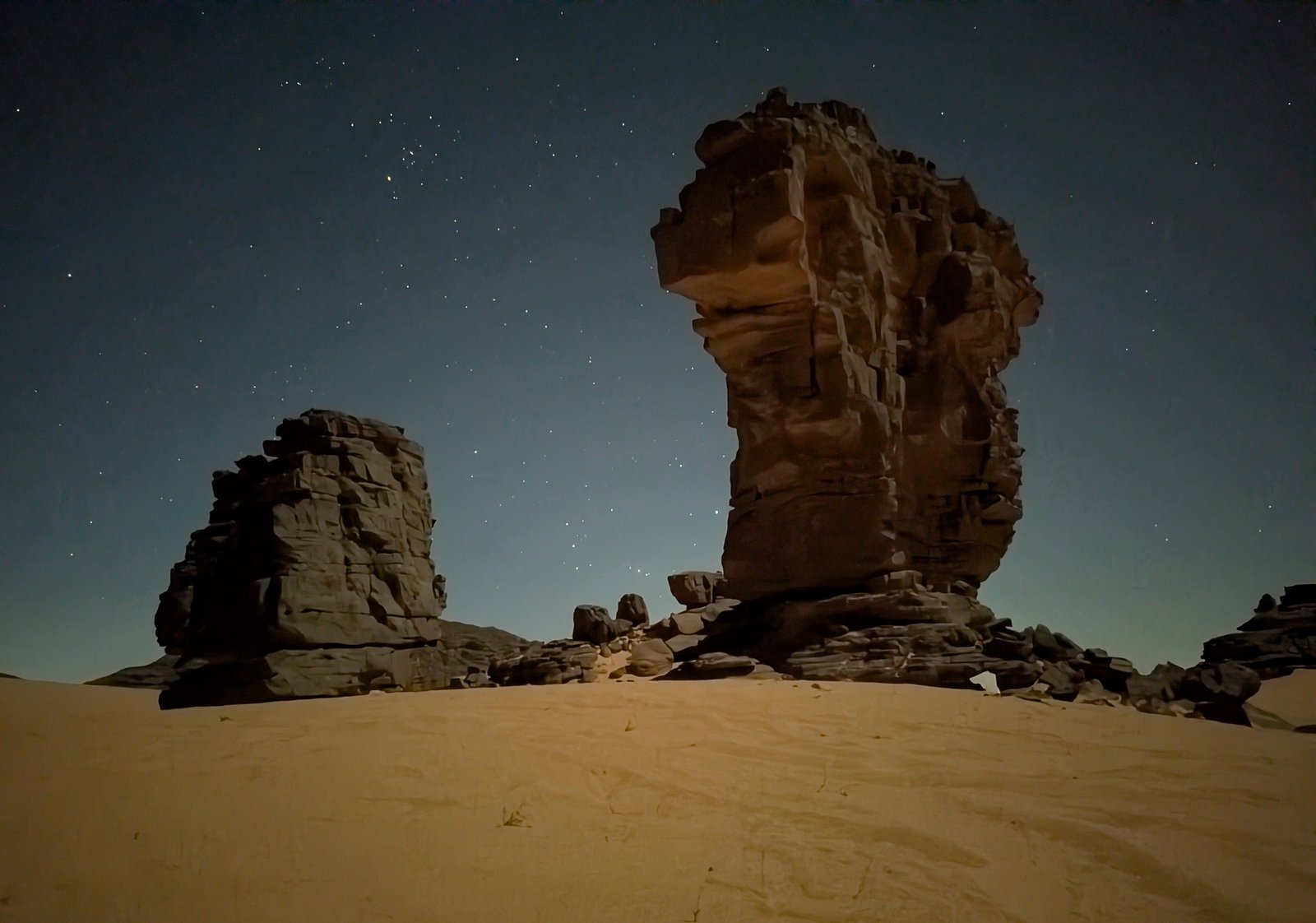
The town itself is small and quiet, a collection of low buildings and palm gardens fed by springs at the edge of the sand sea. The population is mostly Tuareg, and the pace of life here is unhurried in a way that feels genuine rather than posed. Djanet serves as the gateway to Tassili n'Ajjer National Park, a UNESCO World Heritage Site that preserves both an otherworldly sandstone landscape and one of the most important collections of prehistoric rock art anywhere in the world. The paintings and engravings, some dating back 8,000 years, depict a time when this desert was green savanna teeming with cattle, giraffes, and hippos. The hidden guelta of El Ihrir — a permanent rock pool deep in the canyon system — holds some of the most accessible rock art on the plateau. To the southeast, the Tadrart Rouge plateau offers a different desert experience: deep red sandstone pinnacles and golden dunes that have nothing to do with tourism circuits.

The old town quarter at the base of the cliffs gives a sense of what Tuareg oasis life looked like before concrete, with palm gardens irrigated by ancient spring channels and a small market selling silver jewellery and indigo-dyed cloth. Getting to Djanet requires commitment — flights from Algiers are infrequent and sometimes cancelled, and the overland route from the north is a genuine desert expedition. Once here, exploring the Tassili plateau requires a local guide and permits. Multi-day treks are the main draw, sleeping under the stars among rock formations that look like they belong on another planet.

Guide

Getting There

Djanet is served by Tiska Airport (DJG), with irregular flights from Algiers (Houari Boumediene Airport). Air Algérie operates the route but schedules are thin and cancellations are common — check the airline's current timetable carefully and build in flexibility for delays. The flight takes around two hours.

Overland from the north is a genuine desert expedition. The main route runs via Tamanrasset and then east across the Hoggar plateau — a journey of several days through extraordinarily remote territory. Some travellers come in convoy through Libya or Niger, but border situations in the wider region change frequently and should be checked thoroughly before attempting any overland crossing. Once in Djanet, the town is small and everything is walkable; a four-wheel-drive vehicle is essential for any excursion into the Tassili plateau.

Guide

When to Go

The only viable season for visiting Djanet is October through March. Daytime temperatures in this window typically range from 20 to 30°C, dropping sharply at night — desert nights can be very cold, and sleeping outdoors on the Tassili plateau requires a good sleeping bag.

Summer (June to September) is brutal, with temperatures regularly exceeding 45°C and occasionally touching 50°C. No serious trekking is possible, and even short walks in the desert carry real heat-stroke risk. April and May are transitional — warm but manageable, though the heat builds quickly toward the end of May.

The festival of Sebiba, a Tuareg festival unique to the Djanet region, takes place in January or February (the exact date follows the Islamic calendar). It is an extraordinary event: days of costumed processions, traditional music, and ritualized mock combat between the two clans of the oasis. If your visit coincides with it, rearrange your itinerary to be there.