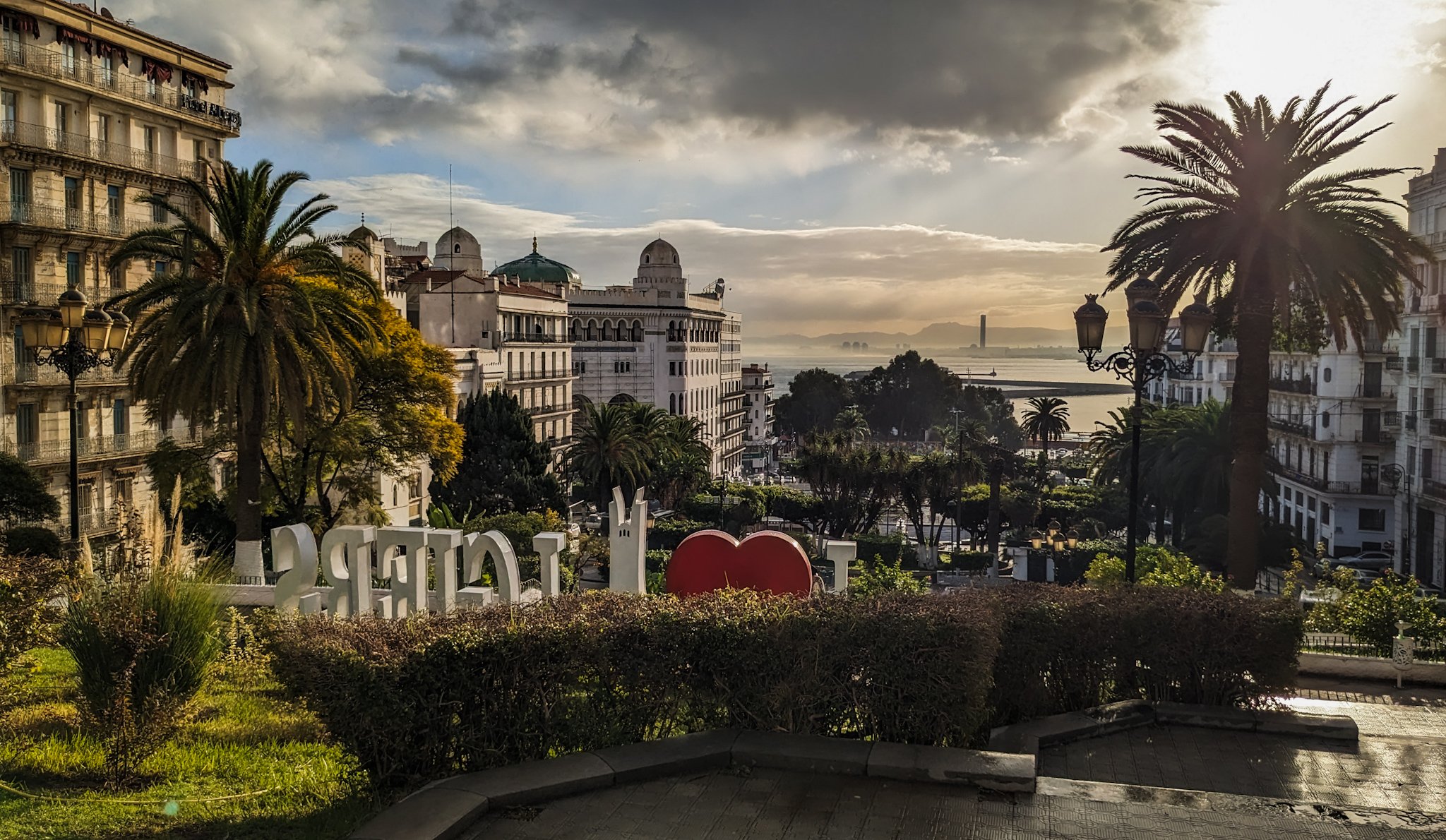
Algeria's capital sprawls along the Mediterranean coast, a city of steep hills and white buildings that earned it the nickname la Blanche — the White City. Close to three million people live here, making it the largest city in the Maghreb.
The heart of the city is the Casbah, a UNESCO World Heritage Site where roughly 100,000 people still live in a medieval tangle of narrow alleys and Ottoman-era houses. Below it, the French colonial centre — centred on the Grande Poste and Place Audin — has broad boulevards, arcaded buildings and pavement cafes that could almost be Marseille. The contrast between the two is what makes Algiers unlike anywhere else.
The city has real edge. Security has improved enormously since the dark years of the 1990s, but petty crime remains common and some neighbourhoods are best avoided after dark. Dress down, keep valuables out of sight, and stay alert — the same advice that applies in any large North African city. That said, the rewards are genuine: the views from Notre Dame d'Afrique, the Bardo Museum's prehistoric collections, the couscous at a backstreet Casbah stall.
For a great overview of the city and its sweeping bay, drive up to the Couvent d'Afrique viewpoint. The lookout sits high on a hill and the panorama is exceptional. The Martyrs' Memorial on the ridge is the other great vantage point, easily reached by escalator from Place Audin. Several worthwhile day trips are within reach: the Roman ruins at Tipasa, the Chiffa Gorge with its Barbary macaques, and the Chrea ski station in winter. Excluding side trips, Algiers can be seen comfortably in two or three days.