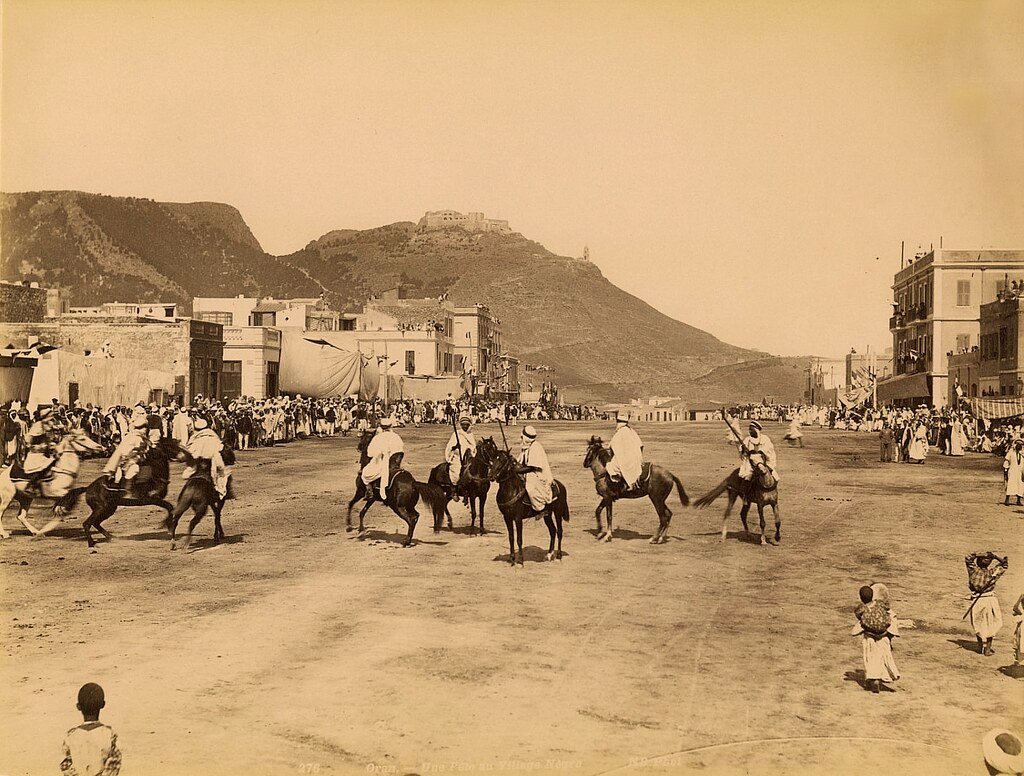
Oran is the most important city of western Algeria and the country's second-largest urban centre, sprawling around a wide Mediterranean bay overlooked by the rugged ridge of Jebel Murdjadjo. With Tlemcen it is probably the most Moroccan in feel of Algeria's cities — closer culturally to Fez than to Algiers — and its identity is wrapped up in Rai music, the country's signature popular sound. Khaled, Cheb Mami, Cheb Hasni, Cheikha Rimitti — almost every great Rai artist is Oranais.
The city was founded by Andalusian seamen in 937 AD and flourished under Zianid rule, developing strong trading ties with Spain that eventually led to Spanish occupation from 1509 to 1708, a brief Ottoman interlude, a second Spanish occupation until 1792, and finally Ottoman rule under the Bey of the West until the French conquest of 1831. Each layer left its mark: the Fort of Santa Cruz and the Chapel on Jebel Murdjadjo from the Spanish; the Bey's Palace and Hassan Pasha Mosque in Sidi El Houari from the Ottomans; the grand Haussmannian streetscape around the Place du 1er Novembre from the French.
Modern Oran is a busy port and university city of over a million people. The Front de Mer corniche above the harbour is the social heart in the cooler hours; the western beaches at Les Andalouses, Cap Falcon, and Cap Blanc draw the city out of itself in summer. A short tour of the Sacred Heart Cathedral — now a public library — and the Ahmed Zabana Museum covers most of the city's layered history in an afternoon.