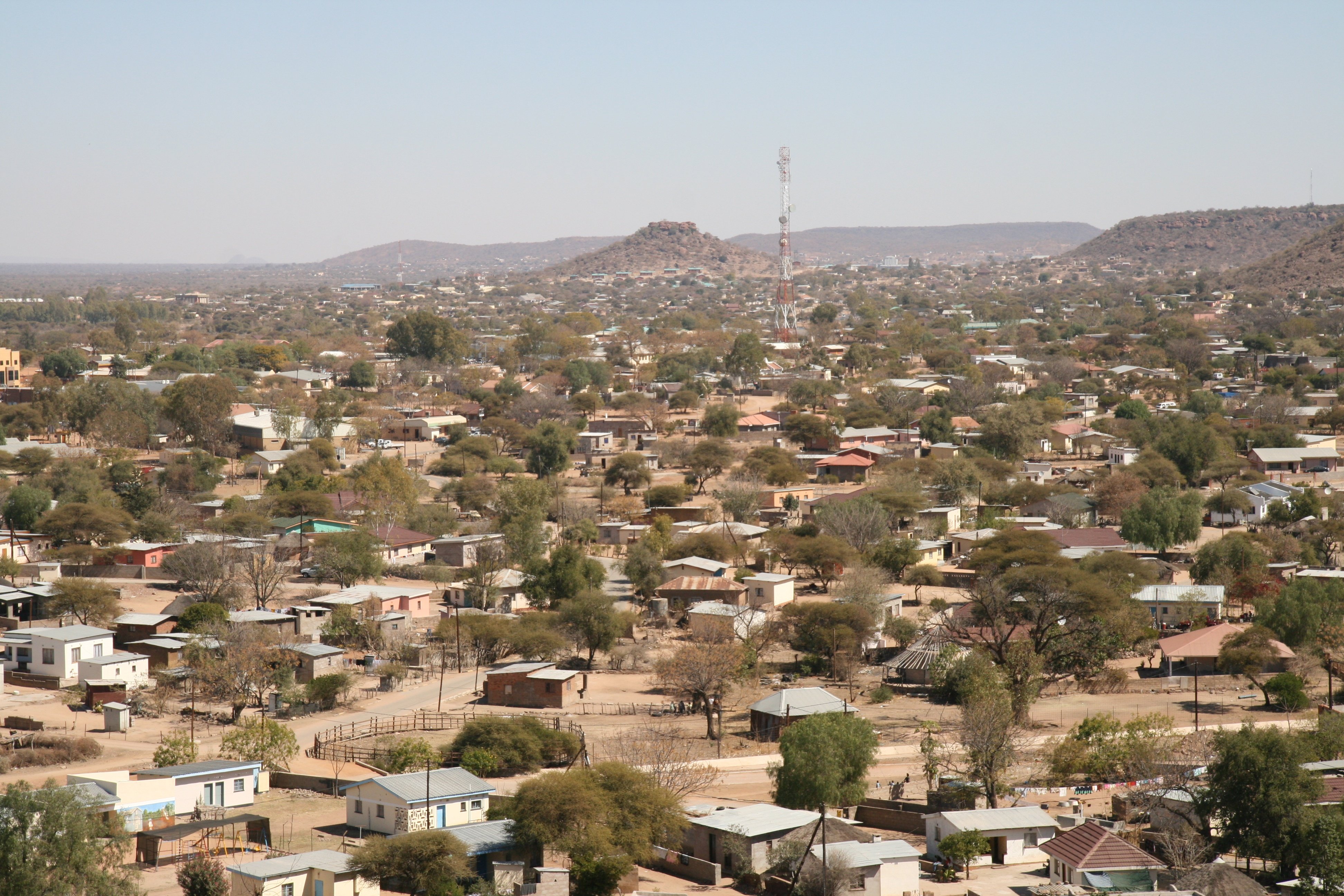
Mochudi is one of the larger villages in Botswana, about 35 km north of Gaborone, and the historical capital of the Bakgatla ba Kgafela people. The Bakgatla migrated here from what is now South Africa in 1871, under pressure from Boer encroachment on their lands, and settled at the foot of Phuthadikobo Hill beside the Notwane River. Despite its proximity to the capital, Mochudi retains a sense of traditional village life — compounds, kgotla meetings, a genuine market — that the sprawling modern suburbs of Gaborone have largely lost.
The Phuthadikobo Museum, housed in a remarkable 1920s school building on the hilltop, is one of the best community museums in southern Africa. It traces the history of the Bakgatla through photographs, tools, and everyday objects, including images going back to the 1890s. The climb up to it is short but steep, and vervet monkeys line the path.
About 15 km southwest of town, near the village of Rasesa, are the Matsieng Footprints — Late Stone Age petroglyphs carved into sandstone by the San people. The site is considered one of four creation points in Tswana tradition: the place where the first ancestor Matsieng emerged from the earth followed by his animals and his people. Together, the museum and the rock carvings make Mochudi a richer stop than its small size might suggest.