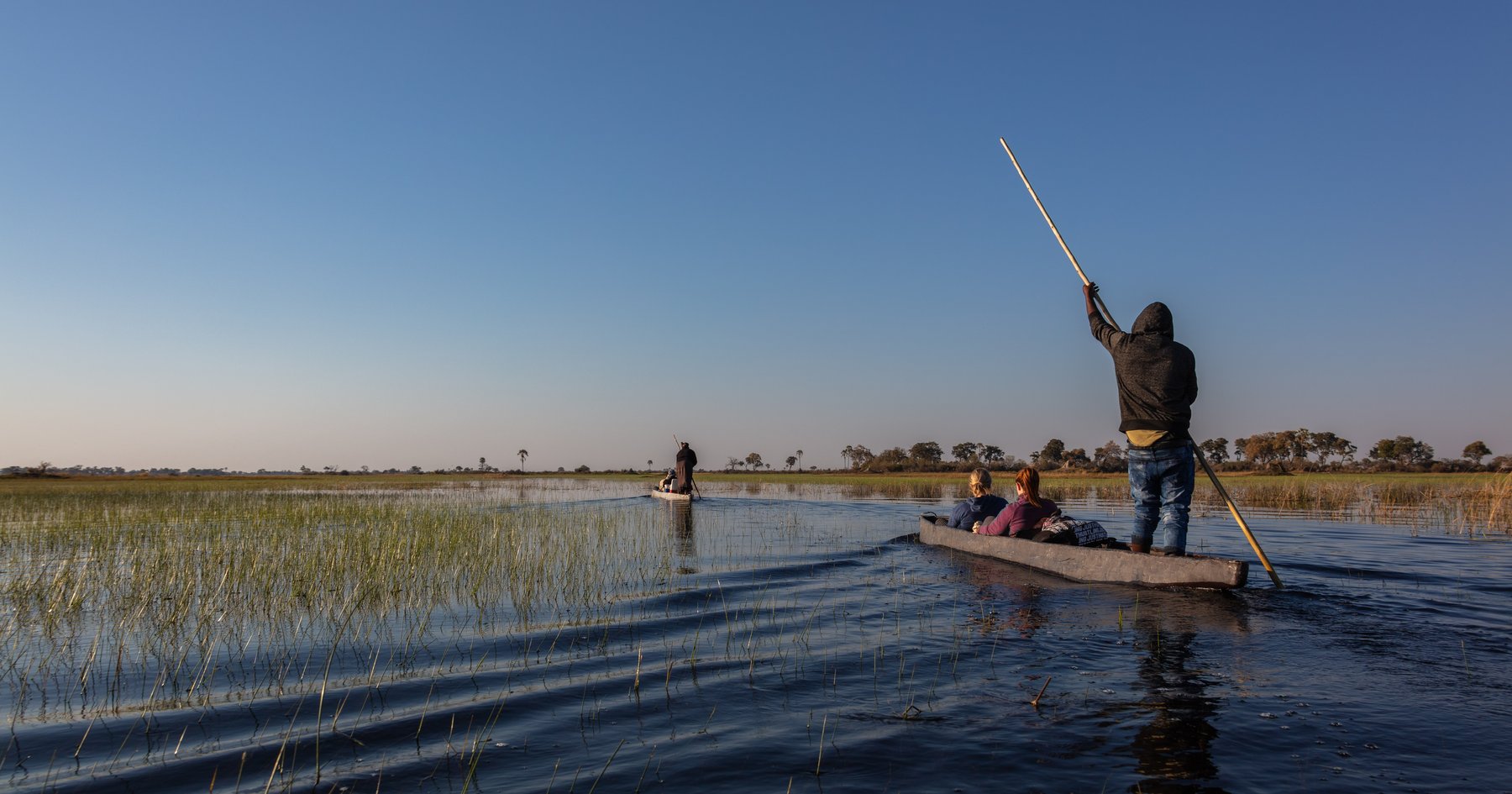
Northern Botswana inland delta where Okavango waters spread into wetlands across the Kalahari sands.
The Okavango River never reaches the sea. Instead, it fans out across northern Botswana into one of the largest inland deltas on earth — over 16,000 square kilometres of palm forests, grasslands, flood plains, islands, and lagoons, all spilling into the sands of the Kalahari Desert. The contrast of lush wetland meeting bone-dry desert is what earns the delta its nickname: the Jewel of the Kalahari.
The wildlife here is extraordinary. Elephants, hippos, crocodiles, lions, leopards, African wild dogs, giraffes, and hundreds of bird species move through the delta's mosaic of channels and islands. The best way to see it is by mokoro — a traditional dugout canoe poled through shallow waterways — or on a guided walking safari across one of the larger islands. Game drives work well too, particularly in the Moremi Game Reserve on the delta's eastern edge.
The delta floods seasonally, with water arriving from Angola's highlands between June and August — the peak of Botswana's dry season. This is the best time to visit: animals concentrate around the shrinking water sources and the birdlife is spectacular. The wet season (November to March) brings rain, green landscapes, and migratory birds, but many tracks become impassable.
Most visitors arrange trips through Maun, the gateway town on the delta's southeastern edge. Fly-in safaris reach the more remote camps deeper in the delta, while budget travellers can organize mokoro trips from Maun for a fraction of the cost.
Guide
Getting There
Maun is the main entry point. Maun Airport (MUB) has daily flights from Gaborone and Johannesburg, plus connections to Kasane for those combining the delta with Chobe National Park. From Maun, light aircraft transfers reach the remote camps and lodges deeper in the delta — most high-end operators include these in their packages.
By road, Maun is roughly 950 km from Gaborone on a good tarred highway (the A3 north via Nata, then west). The drive takes about ten hours. From Namibia, the border crossing at Mohembo on the panhandle is the most direct route to the northwestern delta.
Getting into the delta itself requires either a 4x4 (essential — there are no paved roads inside), a mokoro, or a charter flight. Self-driving is possible but demanding; most visitors fly in or arrange transfers through their camp or lodge.
Guide
When to Go
The delta's rhythm is shaped by its annual flood. Water from Angola's summer rains arrives between June and August — right in the middle of Botswana's dry, cool winter. This is the peak season for wildlife viewing: animals cluster around the shrinking water, the bush is thin, and the skies are clear. Nights can be cold, dropping to near freezing in June and July.
The wet season from November to March brings afternoon thunderstorms, green landscapes, and migratory birds, including huge flocks of carmine bee-eaters. It is the best time for birding but the worst for driving — many tracks flood and some camps close entirely. The shoulder months of April, May, and September offer a good compromise between access and wildlife density.