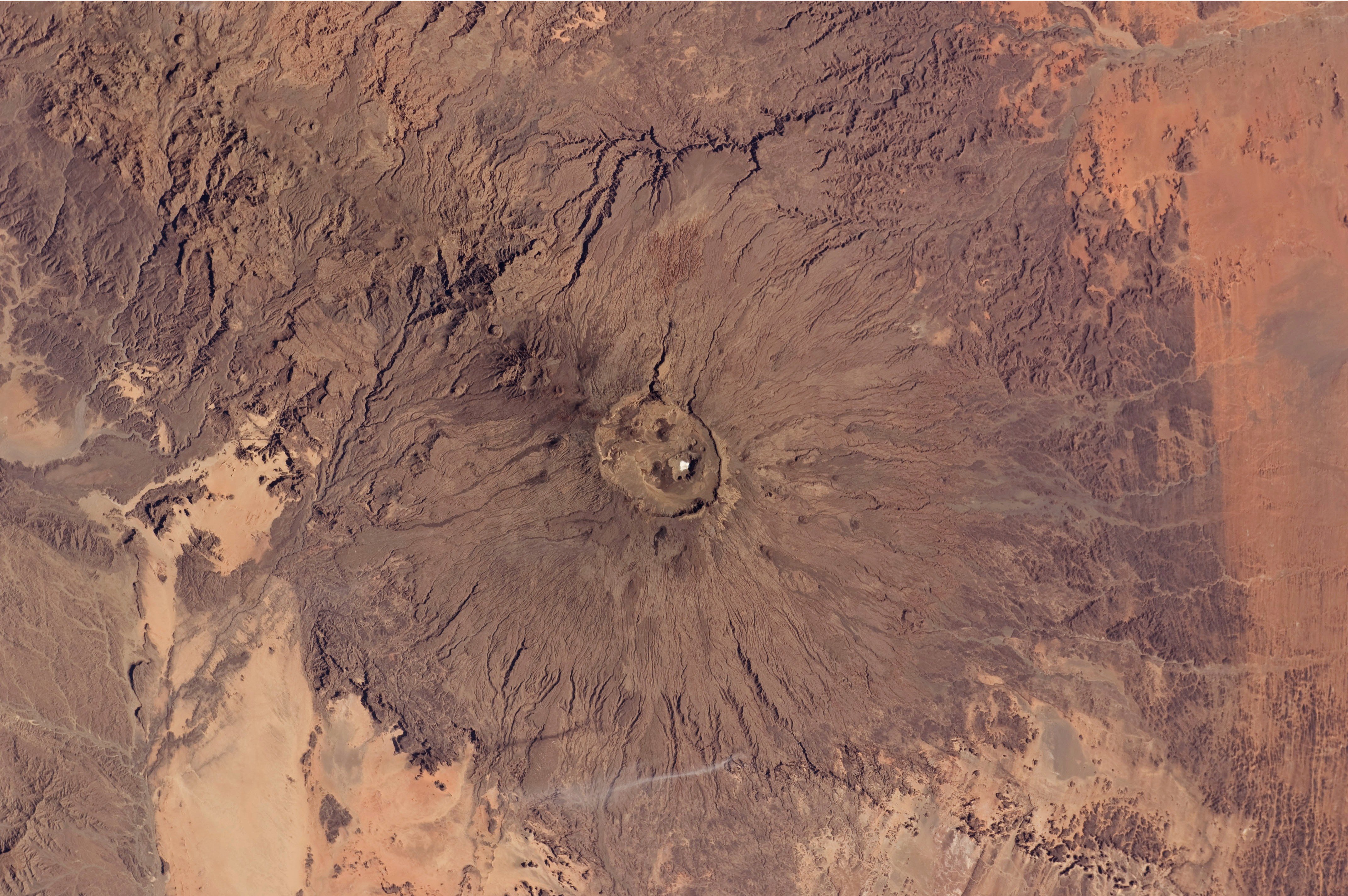
Massive shield volcano in Chad's Tibesti Mountains, the highest point in the Sahara.
Emi Koussi is the highest point in the Sahara, a massive shield volcano rising to 3,445 meters in the Tibesti Mountains of northern Chad. The caldera at the summit is 15 km wide and contains fumaroles, mineral deposits, and an eerie moonscape of volcanic rock. It is one of the most spectacular and least-visited peaks on the continent.
Getting here is a serious undertaking. The Tibesti region has no paved roads, no fuel stations, and no infrastructure of any kind. Access is by 4x4 expedition from N'Djamena, a journey of several days across open desert. The Toubou nomads who inhabit the region are the only permanent residents.
Security is a genuine concern. The Tibesti has seen intermittent armed conflict, and most governments advise against all travel to the province. If you are determined to go, work with an experienced Chadian tour operator who knows the current security situation and has relationships with local communities. Do not attempt this independently.
Those who do reach Emi Koussi describe it as one of the most extraordinary landscapes they have ever seen: volcanic towers, hot springs, and a silence broken only by the wind.
Guide
Getting There
Getting to Emi Koussi is one of the hardest logistical challenges in African travel. There are no roads, no fuel depots, and no accommodation of any kind in the Tibesti Mountains. The only viable approach is by organised expedition with experienced guides.
From N'Djamena: The most practical starting point is the Chadian capital, 1,000+ km to the south. An expedition drive takes a minimum of 4–5 days each way across unmarked desert tracks. All fuel must be carried in jerry cans for the entire journey — the nearest fuel station is hundreds of kilometres from the mountain.
Tour operators: A handful of specialised tour operators run expeditions to the Tibesti, typically departing from N'Djamena or occasionally from northern Niger. Research thoroughly; local knowledge of current security conditions is essential.
Security: Check your government's travel advisory before planning any trip. The Tibesti has experienced armed conflict and kidnapping incidents. The security situation changes; what was safe two years ago may not be safe now. Work only with operators who have current, reliable local intelligence.
Permits: Access to the Tibesti requires permits from the Chadian government. A reputable tour operator will handle this.
Guide
When to Go
The Tibesti Mountains are within the Sahara Desert. Temperatures vary enormously by season and by altitude. The best expedition window is November through February, when daytime temperatures are tolerable (15–25°C at altitude) and nights are cold but manageable. The Saharan summer (June–September) brings temperatures exceeding 45°C in the lowlands, making travel extremely dangerous.
Even in the cooler season, be prepared for cold nights at altitude — temperatures at 3,000m can fall below 0°C. Wind and dust storms (haboobs) can arrive with little warning and reduce visibility to zero for hours. All expedition supplies, including water, must be self-sufficient.
Sandstorms are most frequent in spring (March–May) when the harmattan wind blows from the northeast. Avoid this period.