Keren
©
Keren

Keren

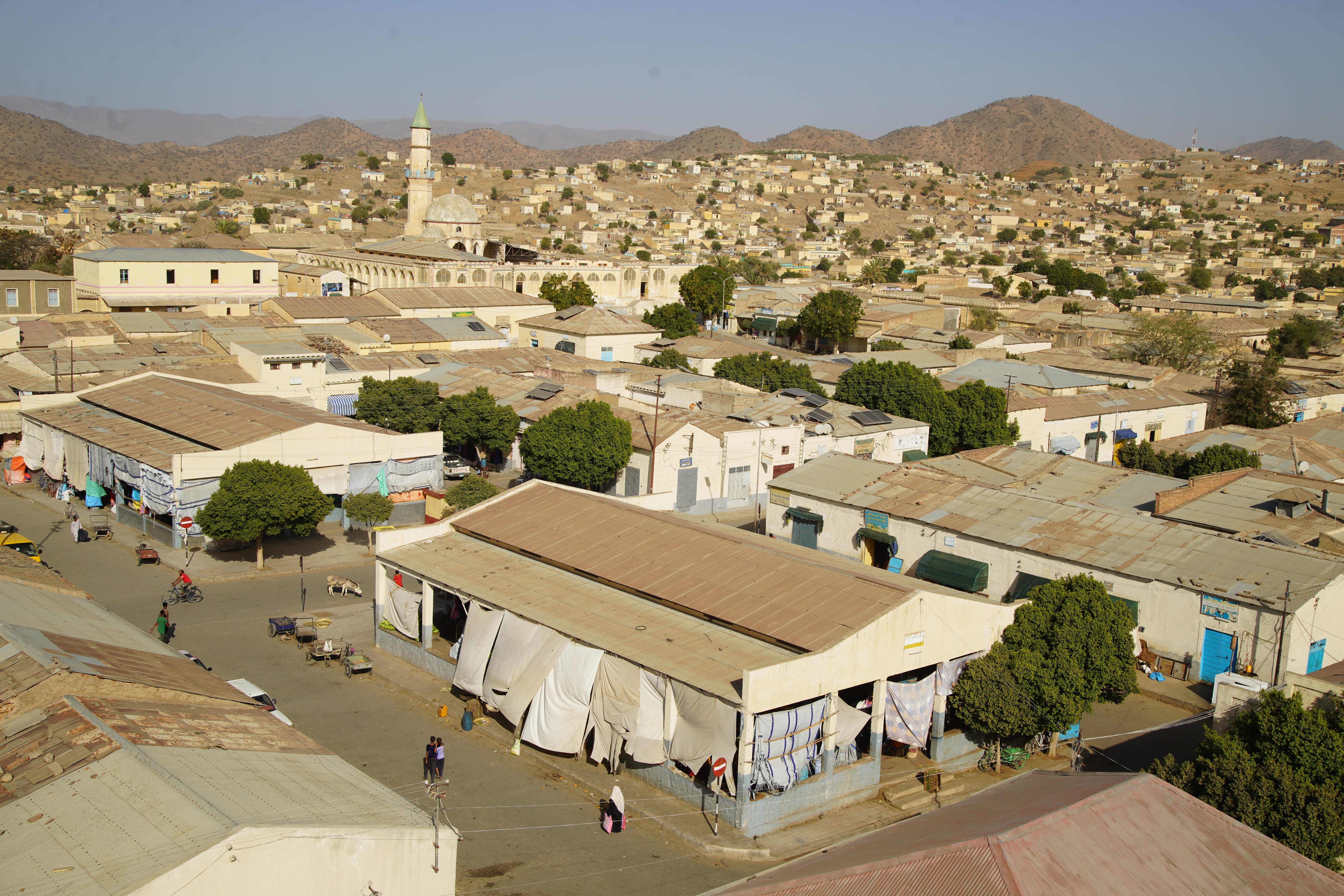
Eritrean market city in a bowl of rocky hills, known for its mixed communities and camel market.

Keren is Eritrea's second city, sitting in a bowl of rocky hills about 90 km northwest of Asmara at an elevation of 1,390 metres. It is quieter and less visited than the capital, but many travelers who make the trip find it more immediately likeable — a market town that feels genuinely lived in.

The city is surrounded by dramatic granite outcrops and is home to a large and ethnically mixed population: Tigre, Bilen, Tigrinya, and Saho peoples all live here, giving the place a different character to Asmara's more uniformly Tigrinya-speaking highland feel. You can hear several languages on a single walk through the market.

The weekly camel market is one of the most vivid scenes in the country. Held on Mondays, it draws herders from a wide area and gives the city an energy it doesn't have the rest of the week. The old covered market in the center of town is good for the rest of it — copper goods, baskets, incense, spices.

Keren was also the scene of one of the hardest-fought battles of the East African campaign in World War II. The Italians held the town for two months before British and Commonwealth forces finally broke through in March 1941. The battle is still remembered here; Commonwealth War Graves cemeteries sit quietly on the edge of town.

Guide

Eating Out

Keren's restaurant scene is modest but satisfying. Most places serve the Eritrean staples: injera with spiced lentil or meat stews, salads, and strong sweet tea. The food is filling and inexpensive, and the quality in a working market town tends to be reliable — these are places where locals eat every day.

The Italian colonial period left a mark on Eritrean cuisine that is still visible in Keren. Pasta dishes are common, often prepared with a local spice profile that makes them something distinctly their own. A plate of spaghetti with berbere-tinged tomato sauce is not unusual to find alongside the injera, and it is usually worth ordering. For coffee, skip the restaurants and find a place doing the full Eritrean ceremony — it takes time, but that's the point.

Guide

Getting There

Keren is about 90 km northwest of Asmara along a good asphalt road. Buses run regularly between the two cities and take around two hours. Taxis and shared minibuses are also an option for the journey.

There is no rail service to Keren — the old Italian-era railway never extended this far.

Guide

Things to Do

Keren rewards visitors who slow down. The city has a market-town rhythm — most of what's worth seeing is within walking distance of the center, and the best experiences tend to be unplanned: a conversation at a cafe, the noise and color of the Monday camel market, an evening climb up one of the granite outcrops that ring the city. The ethnic mix of Bilen, Tigre, Tigrinya, and Saho people gives Keren a different atmosphere to Asmara, and the Muslim-majority character of the town adds a distinct texture of mosques, calls to prayer, and strong coffee ceremonies.

For anyone interested in the Second World War, Keren is also a place of genuine historical weight. The battle fought here in early 1941 was one of the most costly engagements of the East African campaign, and the Commonwealth War Graves cemeteries on the edge of town carry that history quietly and without fanfare.