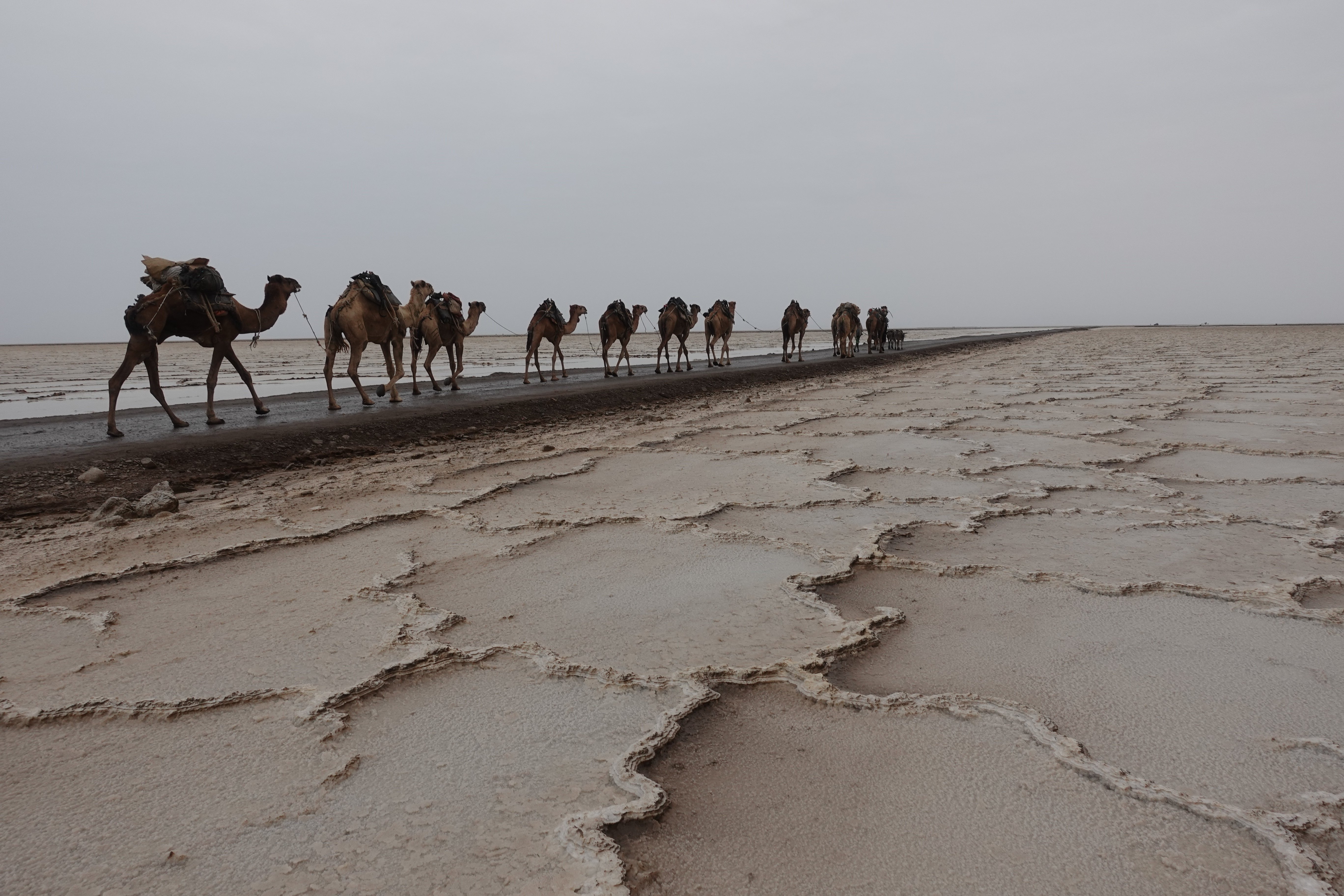
The Danakil Depression is the extreme northeastern lowland shared by Eritrea, Ethiopia, and Djibouti: salt, lava, sulphur, heat, and a horizon that seems to have given up on being hospitable. Eritrea's part is often called Dankalia or Dancalia, and it runs down toward Assab and the Red Sea coast. It is one of the hottest inhabited landscapes on earth, and that is not travel-brochure exaggeration.
Most travellers know the Danakil from the Ethiopian side, where Dallol and the nearby Gaet'ale Pond have become shorthand for alien colour and chemical weirdness. The Eritrean side is lonelier and harder to arrange, with fewer operators, tighter permits, and very little infrastructure. That difficulty is part of the appeal, but it is also the main practical fact of the place.
Do not treat the Danakil as a casual side trip. Travel here depends on permits, a competent local driver, large water reserves, and current security advice. If the paperwork lines up, the reward is a desert unlike almost anywhere else: salt flats, volcanic ground, Afar pastoral life, and Red Sea heat pressed into one stark, beautiful, unforgiving region.