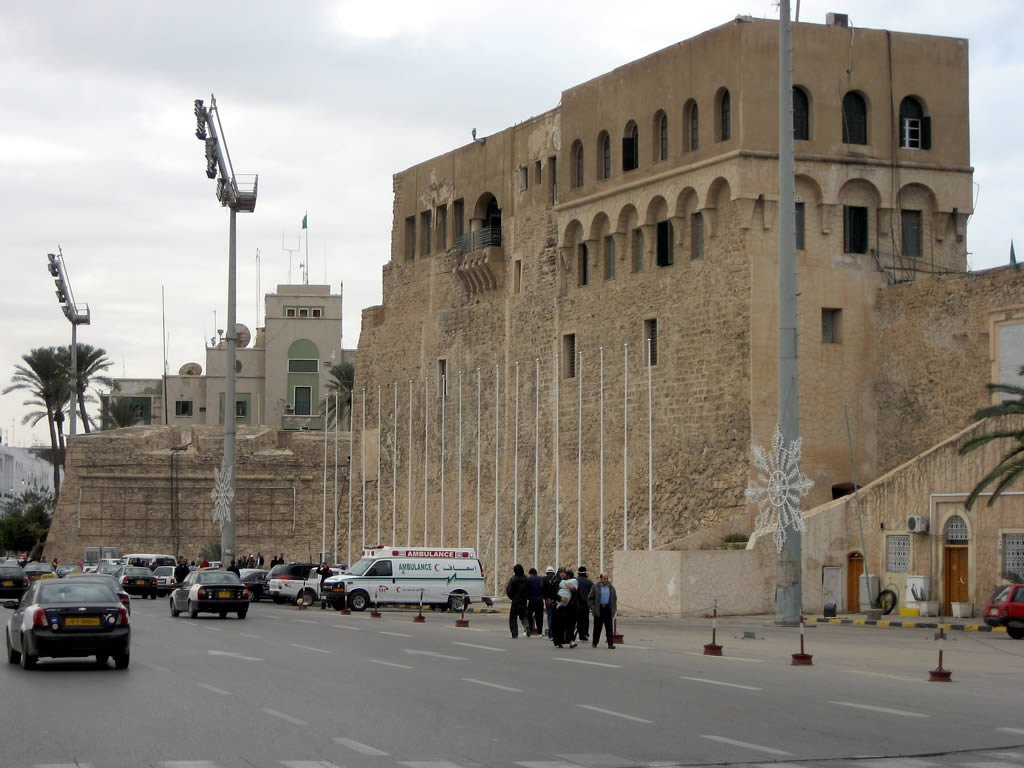
Tripoli is the capital of Libya and the seat of the internationally recognised Government of National Unity (GNU). It is a city of about 1.2 million people, built at the edge of the Sahara where it meets the Mediterranean. The old town retains genuine character despite the concrete sprawl of the oil-boom decades.
The Arch of Marcus Aurelius (163 AD) stands in the old town and is the most prominent ancient monument in the city. The medina's souqs — the Turk and Al-Mushir markets — are worth an afternoon. The Red Castle (Assaraya al-Hamra), which dominates the waterfront and once held an excellent archaeological museum, has suffered from years of neglect and intermittent conflict. The Karamanli Mosque and Naqa Mosque are the best of the medina's many Ottoman-era religious buildings.
Tripoli is the obvious base for day trips to Leptis Magna (130 km east) and Sabratha (65 km west), which are the main reasons most people come to Libya at all. There are beaches on the coast to the west, around Janzour and beyond.
The general security situation in Tripoli has been relatively stable since the 2020 UN-brokered ceasefire, but the city is controlled by competing armed factions whose rivalries can erupt into fighting with little warning. Significant clashes occurred in 2023 and 2025. Travel here requires a licensed operator and police escort, and constant monitoring of developments.