Niono
©
Niono

Niono

Malian town in the Office du Niger irrigation zone, noted for rice fields and mud-brick mosque architecture.

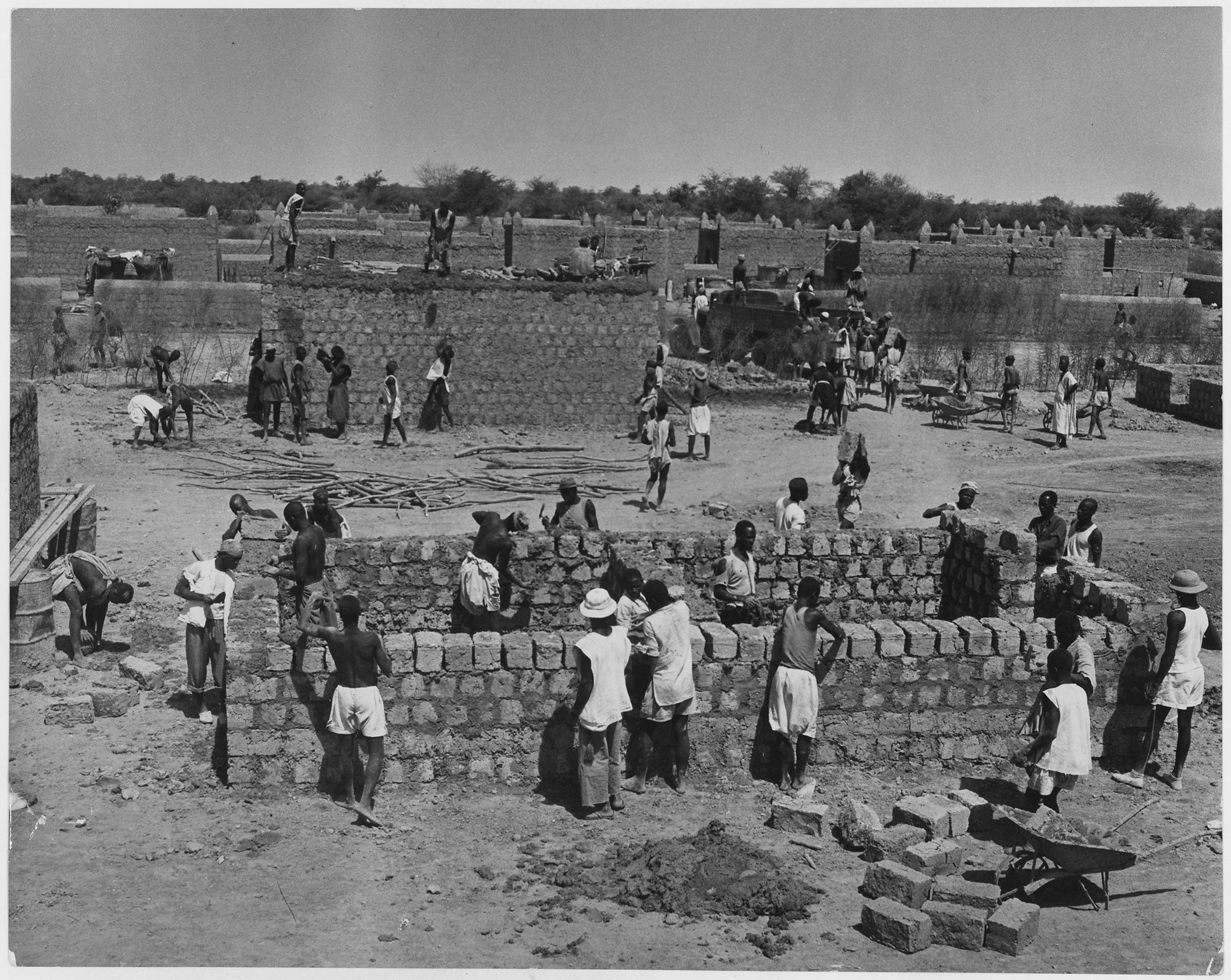
Niono is a town in the Ségou Region of Mali, about 55 kilometres northwest of Segou, set in the flat irrigated landscape of the Office du Niger agricultural scheme. The surrounding countryside is laced with irrigation canals, producing rice on land that would otherwise be dry Sahel — a striking and unexpected landscape in this part of Mali.

The town's main sight is its Great Mosque, a notable example of Sudano-Sahelian mud-brick architecture with the characteristic tapering minarets and protruding wooden toron beams of the tradition. While less famous than the Grand Mosque at Djenné, it is architecturally impressive and worth the visit. Niono is most practically seen as a day trip from Segou, or as a stop on the road north toward Timbuktu — though note that transport becomes less frequent beyond Niono and the security situation in the region should be checked carefully before travelling further north.

Guide

Getting There

Niono is about 55 kilometres northwest of Segou on a paved road, and the journey by bush taxi takes around an hour. Shared vehicles leave from the main gare routière in Segou throughout the day. The town can also be visited as a day trip from Segou, which is by far the most practical base.

Continuing on from Niono toward Timbuktu is possible but involves a significant journey north through increasingly arid terrain. Transport becomes less frequent the further north you go; plan carefully and check the security situation before attempting routes into the Sahel.

Guide

Things to Do

Niono's main sight is its Great Mosque, a notable example of Sudano-Sahelian mud-brick architecture that rivals the more famous mosque at Djenné in its ambition if not quite in its scale. The Office du Niger irrigation scheme, headquartered in Niono, has transformed the surrounding countryside and is one of West Africa's most ambitious colonial-era hydraulic engineering projects — a peculiar but genuinely interesting thing to understand when visiting the area.

The town itself is compact and navigable on foot. The market is the other main point of interest, drawing traders from the surrounding rice-growing communes and reflecting the agricultural character of this part of the Ségou Region.