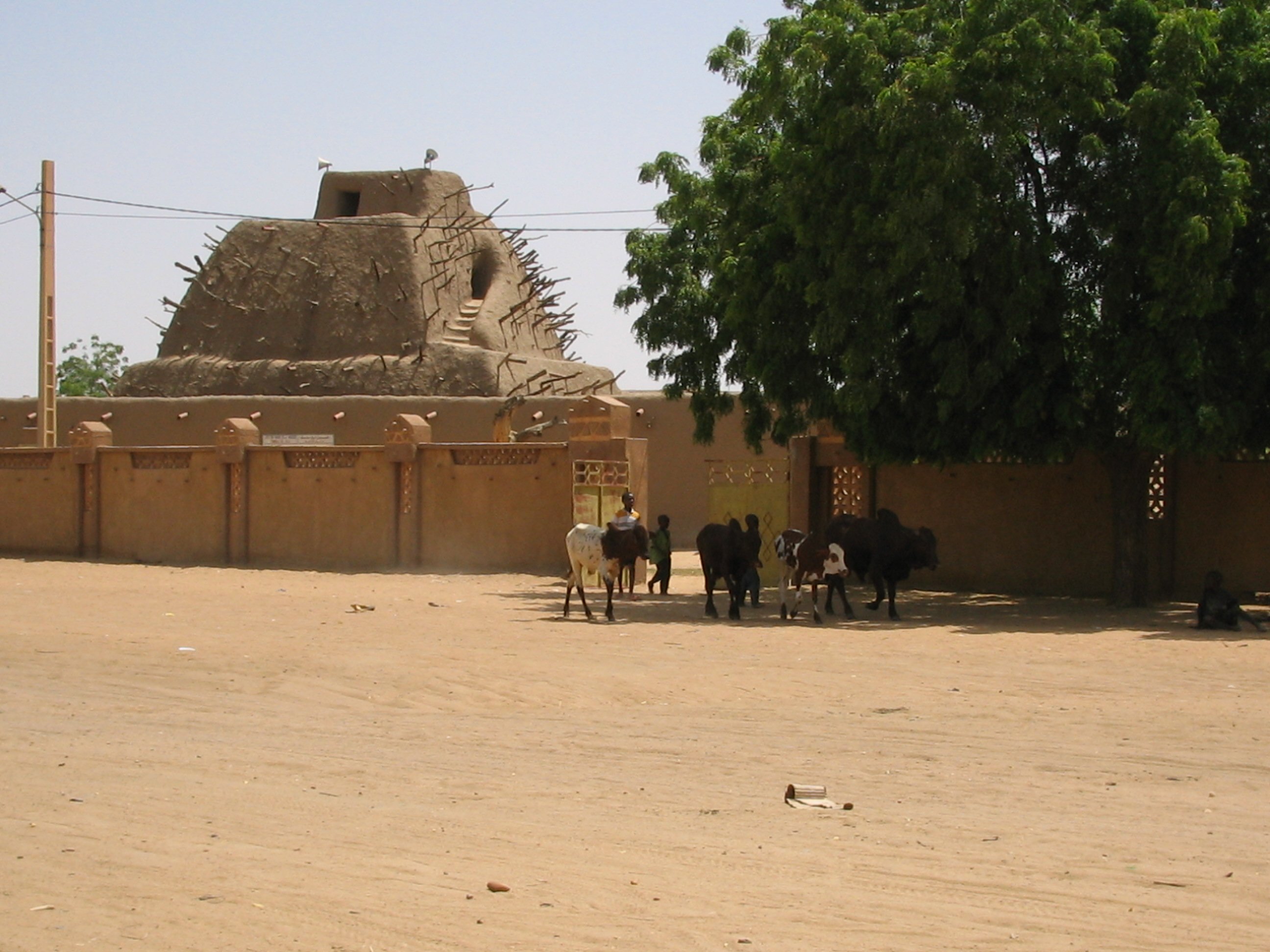
Niger River city in Mali's Sahel, once a capital of the Songhai Empire.
Gao sits on the eastern bank of the Niger River, in the harsh scrubland where the Sahara begins to soften into the Sahel. It is not a beautiful city — the 1591 raid by Moulay Ismail's Moroccan warriors ended Gao's role as the great Songhai empire's capital and it has never quite recovered. But for travellers crossing the Sahara or threading between West Africa's major routes, it is a significant waypoint: buses run west to Bamako and Mopti, east to Niamey, and north towards Tamanrasset in Algeria.
The Tomb of Askia, a 500-year-old adobe pyramid on the edge of town, is the most important sight — a UNESCO World Heritage Site and one of the finest examples of Sudano-Sahelian architecture in the region. The Musée du Sahel has local artefacts, art, and tools. The market sells leather goods, desert sandals, and the occasional sword. An early-morning pirogue ride across the river to the red sand dune on the far bank is one of the most atmospheric things you can do here.
Self-appointed guides can be persistent. The heat is fierce. But Gao has the rough authenticity of a place at the edge of things, and the river sunsets are memorable.
Guide
Getting There
Buses run from Gao to Mopti and Bamako. The fare to Bamako is 15.000 CFA, to Mopti about half that. Another option is taking the passenger boats on the Niger river, they stop by Timbuktu which makes for a very nice excursion.
For onward travel to Niamey in Niger you cannot take a boat, since the river is not navigable all the way. There are buses three times a week, try the SNTN office. The bus stops overnight at the border and arrive the following day. The fare is about 8000 CFA. Take water with you.
Guide
When to Go
Gao has a harsh Saharan climate. The coolest and most bearable months are November through February, when temperatures drop to around 20–25°C during the day. From March onwards the heat intensifies rapidly, and by May–June temperatures regularly exceed 45°C. The rainy season (July–September) brings some relief from the heat but can make roads outside the city impassable.
The best time to visit is November to January, though even then the harmattan wind carries fine Saharan dust for days at a time. Check the current security situation carefully before travelling — Gao and the wider Gao Region have experienced serious instability related to jihadist insurgency since 2012, with French and UN forces present. Travel advice from your government's foreign ministry is essential.