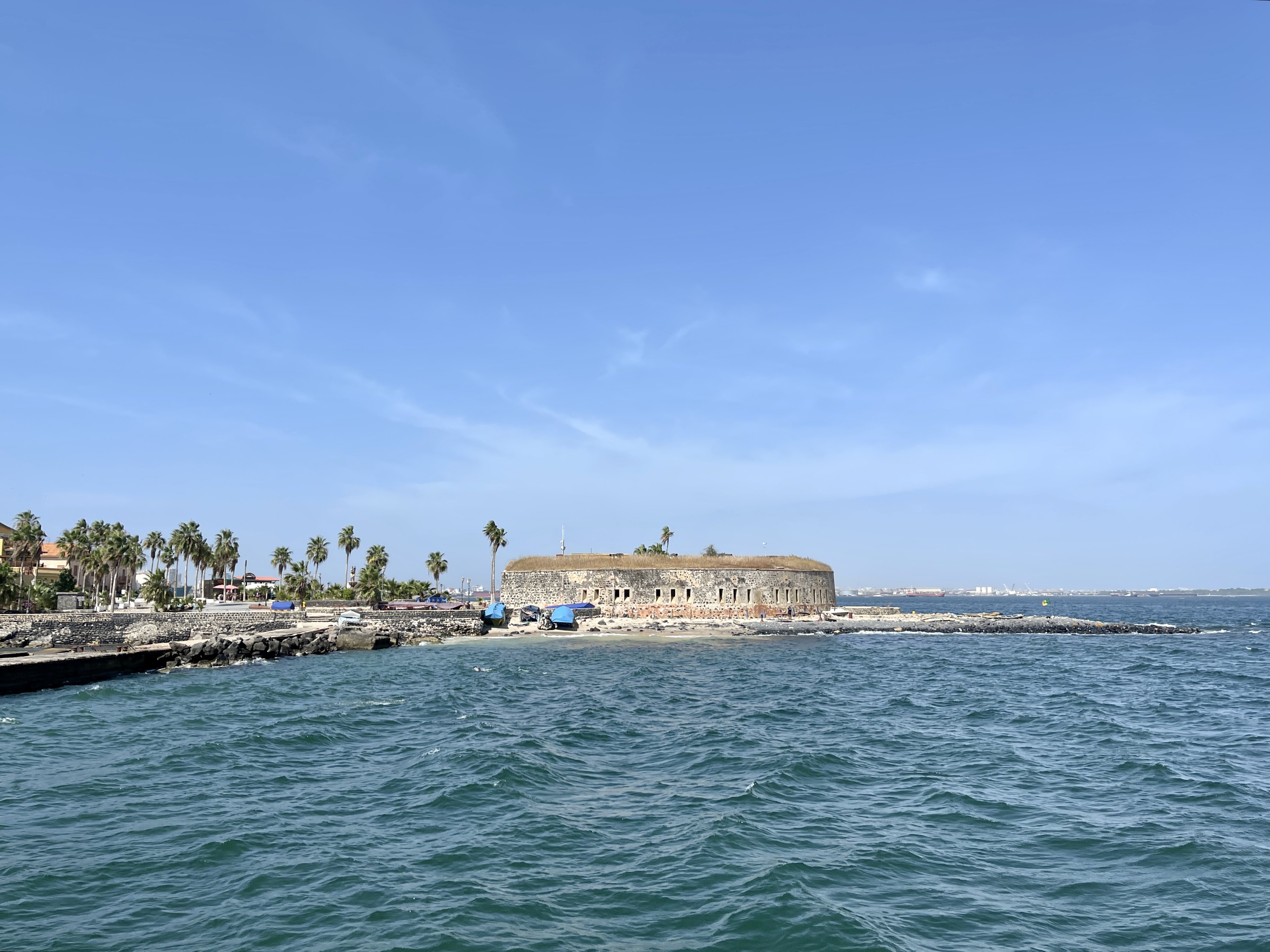
Gorée lies just 3 km off the Dakar waterfront, a 20-minute ferry ride from the Dakar port terminal. It is one of the first places European traders settled on the West African coast — the Portuguese arrived in the fifteenth century, followed by the Dutch, English, and French — and it played a significant role in the Atlantic slave trade from the sixteenth to the nineteenth centuries.
The most visited site is the Maison des Esclaves, an eighteenth-century house with holding cells and the "Door of No Return" opening directly onto the sea. Historians debate the exact numbers who passed through Gorée specifically, but the building carries the weight of the broader history. It is sobering and worth the visit.
The rest of the island is beautiful. No cars, bougainvillea cascading over stone walls and old streets, children playing in car-free lanes, and a string of small restaurants by the waterfront. The Musée Historique traces Senegal's past from prehistoric times through the slave era, and the fortified hilltop of Le Castel gives the best view back to the Dakar skyline. Several artists have studios here and there is a small community of residents who have chosen island life over the capital's noise.
The ferry from Dakar takes around 20 minutes and runs throughout the day. Early morning and late afternoon are the best times — cooler, less crowded, and better light.