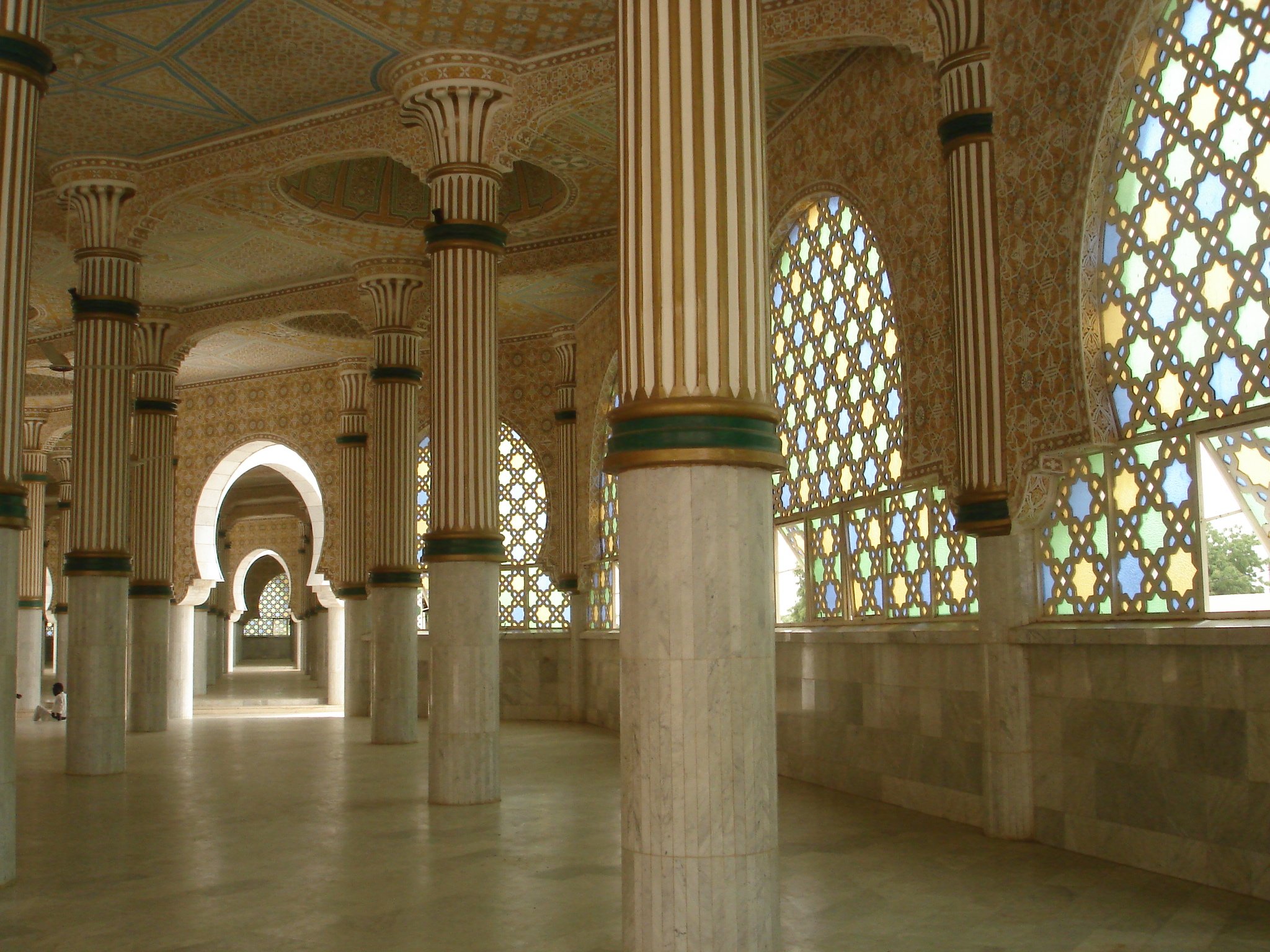
Senegalese holy city and Mouride Brotherhood capital, dominated by the vast Great Mosque of Touba.
Touba is Senegal's second city and its holiest. Located about 200 km east of Dakar, it is the spiritual capital of the Mouride Brotherhood, the most powerful Islamic Sufi order in West Africa. The city was founded in 1887 by Cheikh Amadou Bamba, who was later exiled by the French colonial authorities — an act that only deepened his followers' devotion. Today, Touba is a city shaped entirely by faith, and it operates by its own rules: alcohol is banned, smoking is banned, and the authority of the Khalife General carries more weight than the Senegalese state.
The scale of the place surprises most visitors. Touba is prosperous in a way that is hard to explain from the outside. A remarkable number of Mercedes cars cruise the streets, testimony to the global reach of the Mouride network, whose members run trade operations across West Africa, Europe, and the United States. Much of that wealth flows back to Touba.
The city's centrepiece is the Great Mosque of Touba, the largest in Senegal. Its main minaret stands over 86 metres tall, and from the top you get a sweeping view of a city that seems to exist in its own universe. The mosque is open to non-Muslim visitors outside of prayer times, though you should dress conservatively and ask permission before taking photographs.
The annual Grand Magal, held roughly 48 days after the Islamic New Year, draws several million people to Touba to commemorate Cheikh Amadou Bamba's return from exile. It is one of the largest religious gatherings in Africa. If you plan to visit during Magal, expect enormous crowds, impassable roads, and no available rooms — but also extraordinary scenes of collective devotion. If you just want to see the mosque and the city, time your visit for any other time of year.
Guide
Getting There
Touba is about 200 km east of Dakar, reached by the Route Nationale 3. The journey takes 2.5 to 3.5 hours by car depending on traffic. Bush taxis (sept-places) run regularly between Dakar's Gare Routière de Pompiers and Touba, departing when full. The fare is modest and the journey direct, though the vehicles are often overcrowded.
There is no railway to Touba. The nearest large city is Diourbel, about 50 km to the west. During the Magal, the government often organises additional transport, but these services are oriented towards pilgrims rather than general visitors.
Touba has no airport. If you are flying into Senegal, Dakar's Blaise Diagne International Airport is the entry point.
Guide
When to Go
Touba is visited year-round by Mouride pilgrims, but for most outside visitors, timing matters. The city sits in the Sahel, with a dry season running from October to May and a rainy season in summer. The best months to visit are November through March — temperatures are cooler (though still warm by European standards), roads are dry, and the city is at its most accessible.
The Grand Magal falls 48 days after the Islamic New Year, which moves through the Gregorian calendar — check the date before you plan a visit. During Magal, Touba is essentially closed to casual visitors: accommodation is impossible to find, roads are gridlocked for days, and the city functions entirely on its own terms. If you want to witness the Magal, plan well in advance and be prepared for extreme conditions. If you want to visit the mosque and understand the city quietly, avoid Magal entirely.
Ramadan is also a significant period in Touba, with extended prayer sessions and a changed atmosphere in the city.