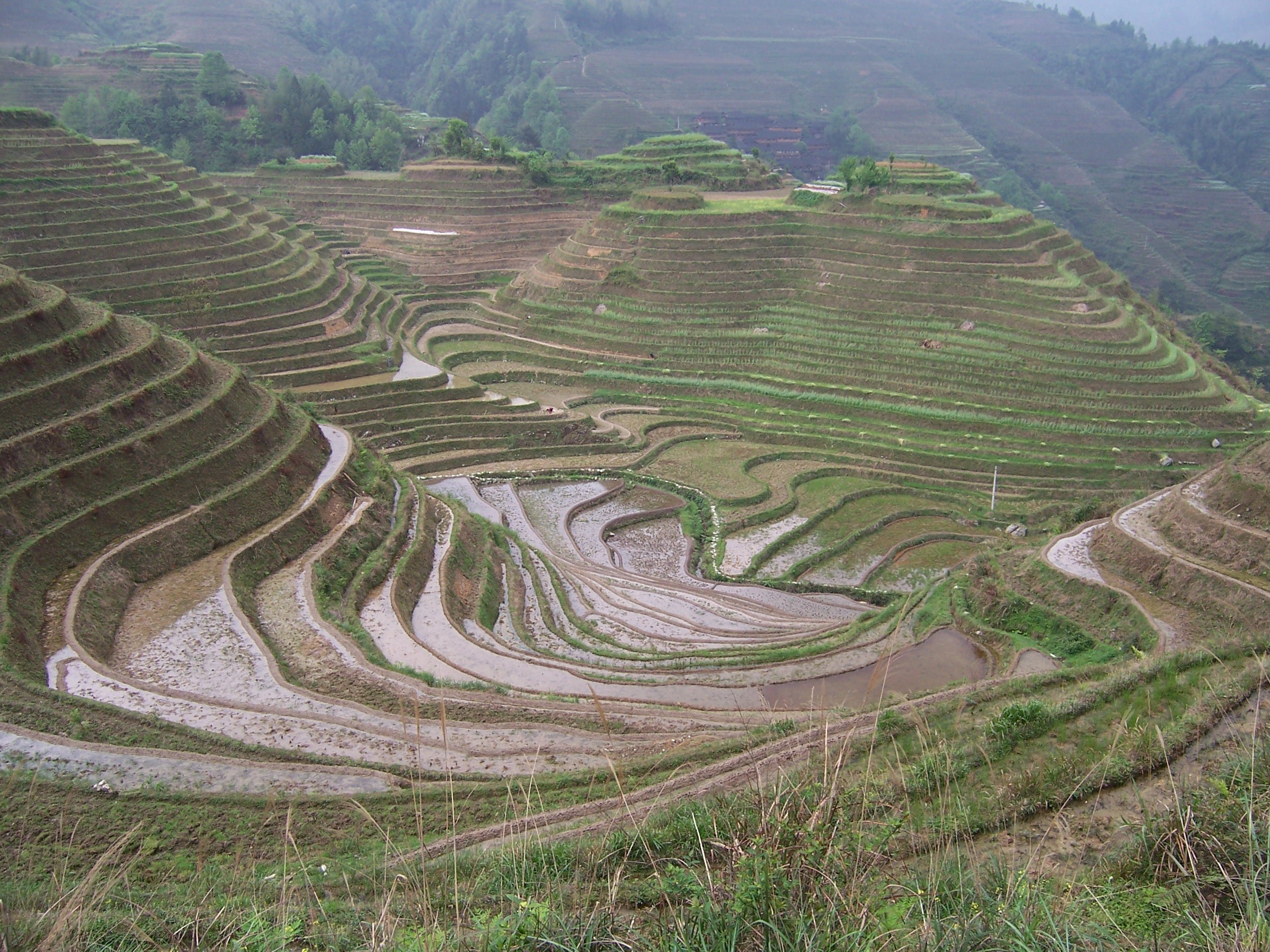
The name means "Dragon's Backbone," and once you see the terraces from above — the water-filled paddies in late May catching the light like scales — you understand why. The Longji rice terraces cascade down the steep hillsides of Longsheng County, about 2.5 hours north of Guilin, in a landscape that has been continuously farmed by Zhuang and Yao villagers for at least 700 years. The result is one of the most photographed agricultural landscapes in Asia, and it earns every photograph.
There are two main clusters of villages, and they feel genuinely different. Ping'An is the easier to reach and the more visited — a Zhuang village with a road running up to it, plenty of guesthouses, and the famous viewpoints labelled "Seven Stars and the Moon" and "Nine Dragons and Five Tigers." Dazhai (and the higher hamlet of Tiantouzhai) in the Jinkeng area is quieter and requires more walking to reach, but the Yao women there are known for their extraordinary long hair — traditionally not cut after the age of 16, worn wrapped around the head — and the terraces here are arguably the more dramatic.
The seasonal calendar matters enormously: late May for flooded fields reflecting the sky, late September to October for golden harvest, winter for occasional snow. Summer is hot and crowded.
Guesthouses in both villages are simple but comfortable, and staying overnight is the right call: after the day-trippers from Longsheng and Guilin leave in the afternoon, the mountain quiet settles back in, and the sunset and sunrise light on the terraces is unlike anything you get in the middle of the day. Eat at your guesthouse — bamboo-tube rice and stir-fried local vegetables are the staples, and they are good.