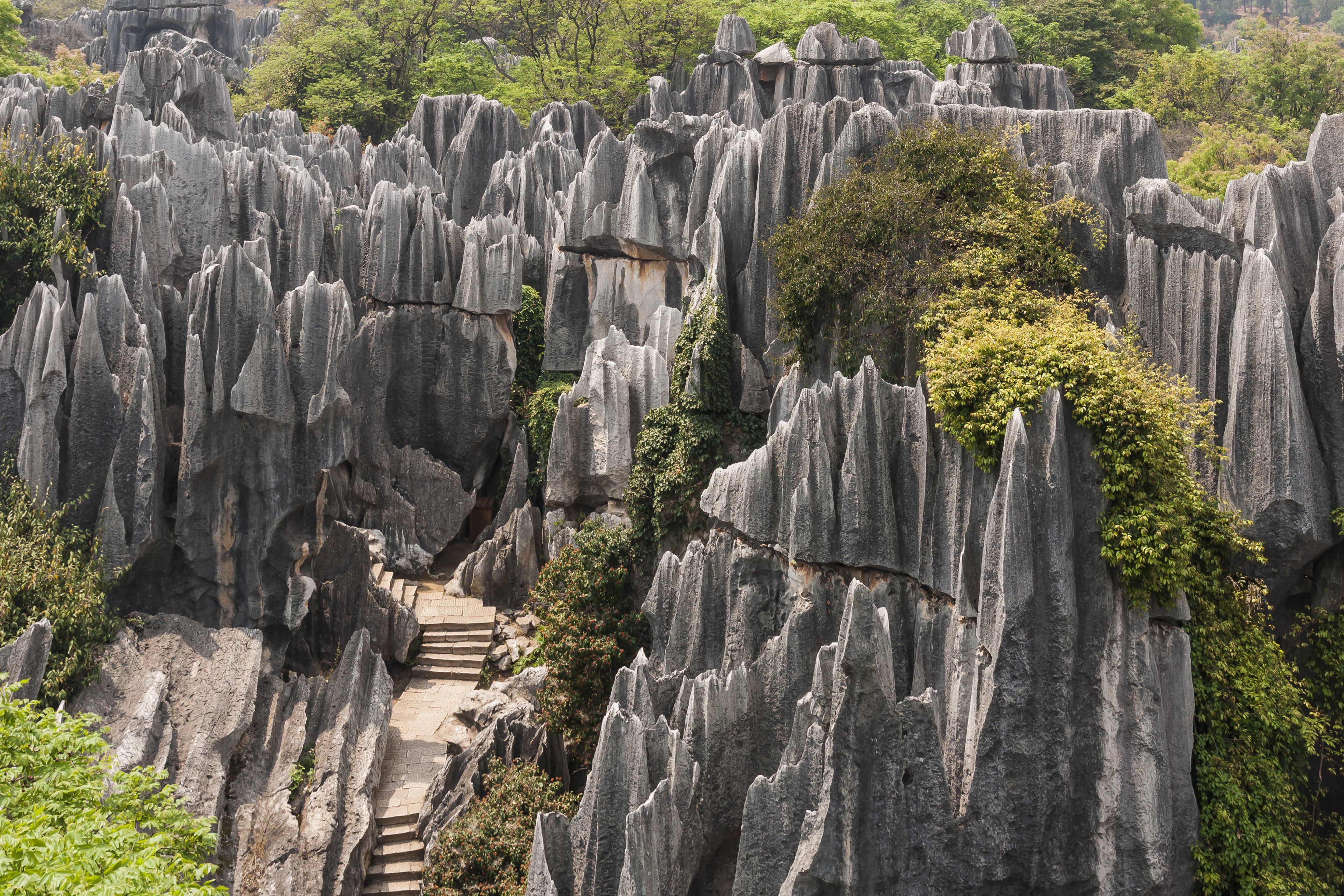
Shilin — the Stone Forest — is one of those landscapes that photographs badly precisely because nothing prepares you for the scale. About 90 kilometres southeast of Kunming, the park protects an extraordinary karst field where ancient limestone has been dissolved and carved into a maze of towering grey columns, some reaching 30 metres, separated by narrow gullies carpeted with moss. A UNESCO World Heritage site since 2007, it shares that designation with several other karst areas across southern China, but Shilin's stone is older and stranger than most — the formations here are Permian, meaning they were ancient long before dinosaurs.
The park is large and divided into several zones. The Major Stone Forest is where most visitors spend their time, following winding paved paths through dense pillars past a small lake and up to a viewpoint. The Minor Stone Forest nearby is quieter and more atmospheric. Further out, the Naigu Stone Forest has rougher, darker rock with a different character entirely. Arrive early — tour buses from Kunming flood in mid-morning and the crowds can be overwhelming by noon. A late afternoon visit has its own appeal as the shadows lengthen across the stone.
The Yi ethnic minority have lived around Shilin for centuries, and the park leans into this with performers in traditional embroidered dress near the main entrance. It feels a little staged, but the Yi connection to this landscape is genuine — the stone pillars figure in their mythology, and the Ashima legend, a Yi folk story about a beautiful girl turned to stone, is told everywhere here. The Sani branch of the Yi still have villages just outside the park boundary.
As a day trip from Kunming it works well — regular buses and high-speed rail connections make the journey under an hour each way. Staying overnight in the small town near the entrance lets you walk into the park at dawn before the gates officially open, which many guesthouses will quietly facilitate, and the stone forest in early morning light, mist still clinging to the columns, is as close to magical as Chinese tourism gets.