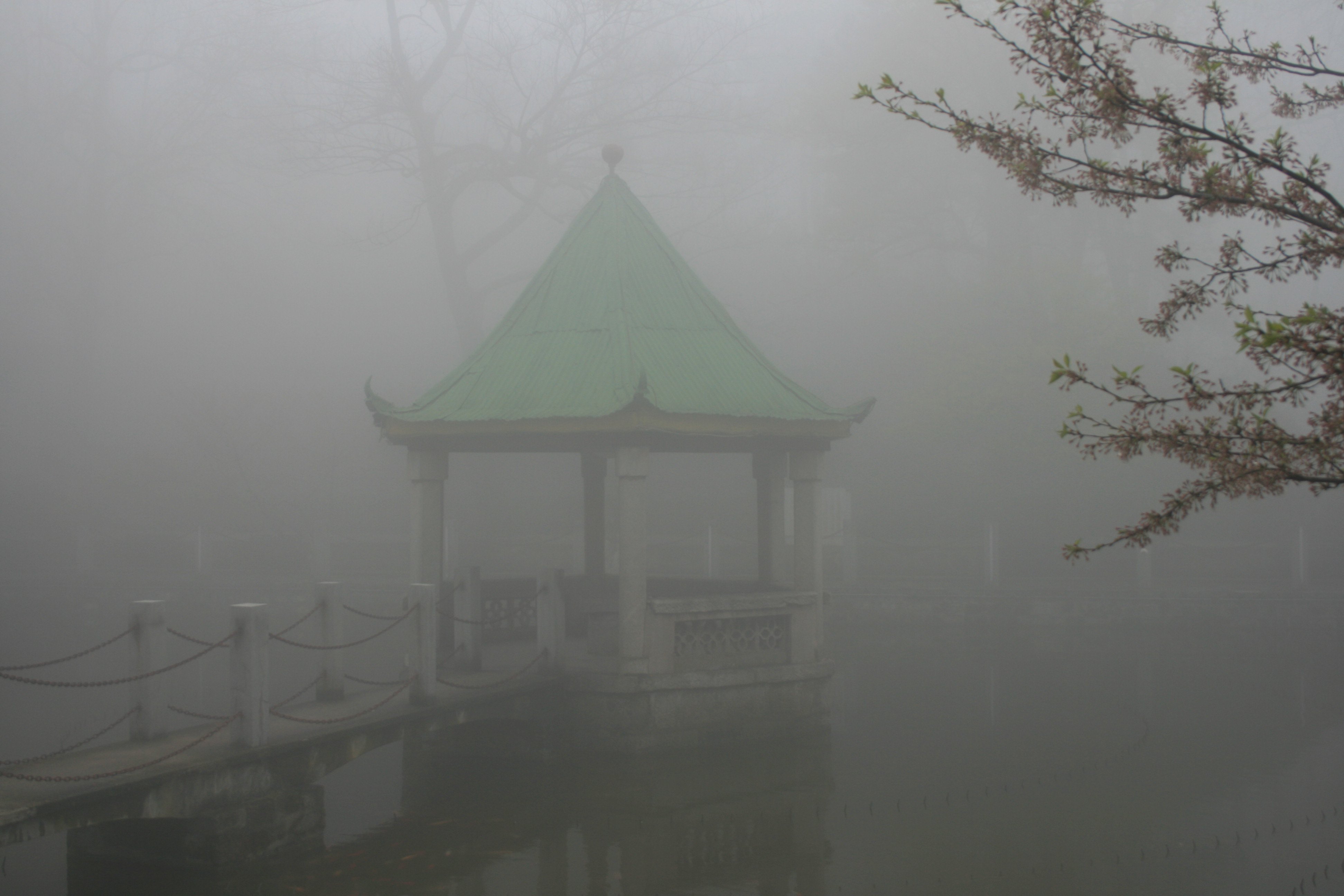
Jigongshan — Rooster Mountain, named for the peak's supposed resemblance to a cock's comb — is a low mountain resort in the far south of Henan near Xinyang, sitting at 734 metres on the northern edge of the Dabie range where the climate shifts from the dry continental conditions of the north into something wetter and more subtropical. Foreign missionaries discovered it in the late nineteenth century and proceeded to build more than three hundred villas on its wooded slopes between 1898 and 1936, turning the mountain into the premier summer retreat for the expatriate community across central China. After 1949 it became a favoured summer residence for Communist party officials, extending the tradition of powerful people fleeing the summer heat into the hills.
The missionary villas are the most historically distinctive thing about Jigongshan. Built in a range of European styles — English cottage, American colonial, Swiss chalet, Chinese-influenced hybrid — they represent one of the largest surviving concentrations of early twentieth-century Western architecture in inland China. The contrast between the tile roofs and veranda columns and the surrounding Chinese hill forest is genuinely strange and interesting. Some of the villas are now guesthouses, others have been converted to other purposes, and a handful sit empty and crumbling; walking the paths between them is like wandering through an outdoor museum of colonial pastoral fantasy.
The scenery is pleasant rather than dramatic — forested ridges, a lake, walking trails through bamboo groves and pine stands. The climate in summer is significantly cooler than Zhengzhou or Wuhan, which explains the mountain's historical appeal and still draws visitors from the hot plains in July and August. The Wuzhiling area within the park has the densest concentration of old villas and the best walking. The mountain is also within the distribution range of the Sichuan giant panda's sister species the clouded leopard, and the forest here is subtropical enough to feel genuinely different from the rest of Henan.
Xinyang, the nearest city, is about 38 kilometres away and connects by high-speed rail to Zhengzhou in roughly ninety minutes and to Wuhan in about an hour. Jigongshan is a more obvious destination for visitors coming up from Wuhan than for those doing a Henan circuit from Zhengzhou — it sits at the bottom of the province, culturally and geographically closer to central China's lake country than to the Yellow River heartland further north.