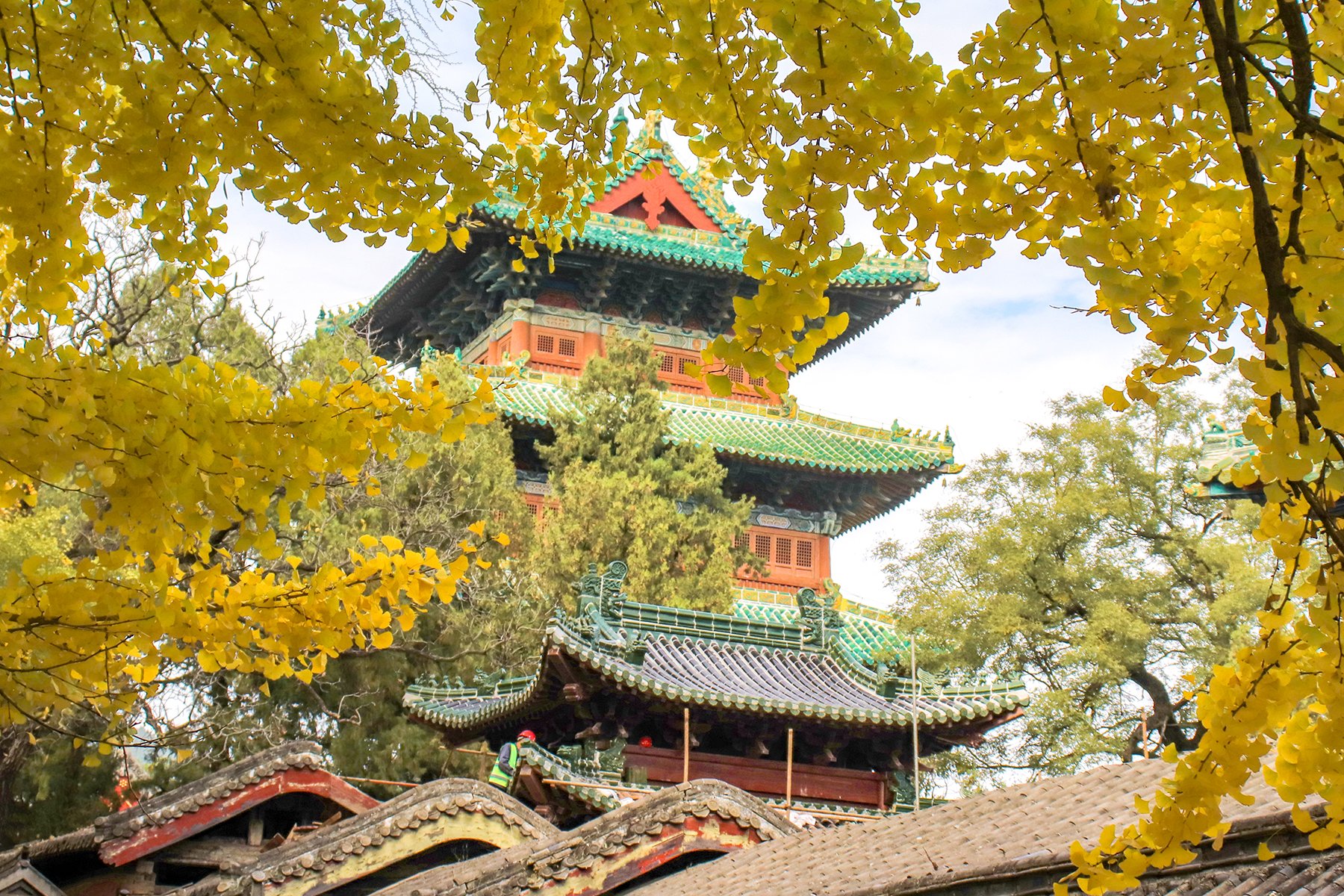
The Shaolin Monastery on Mount Song is one of the most famous Buddhist sites in the world, and also one of the most thoroughly commercialised. The monastery was founded in 495 CE; about thirty years later, according to tradition, the Indian monk Bodhidharma arrived and spent nine years meditating in a cave above the complex, establishing the Chan (Zen) school of Buddhism. The thirteen Shaolin monks who helped Tang Emperor Taizong win a civil war are depicted in paintings throughout the monastery, explaining why an ostensibly pacifist institution is associated with the world's most famous fighting style. Whether Bodhidharma actually taught the physical exercises that became Shaolin martial arts is disputed by modern scholars, but nobody disputes that this is where the tradition as it is understood today developed.
The Shaolin Temple Complex itself, inscribed as a UNESCO World Heritage Site in 2010 along with several other Song Mountain buildings, covers a 160-by-360-metre walled precinct on the wooded lower slopes of Wuru Peak. The main buildings — the Daxiongbao Hall, the Dharma Hall, Bell and Drum Towers — are large and well-maintained, though the constant visitor traffic means the atmosphere of contemplative calm the setting should provide is largely notional during peak season. The Pagoda Forest on the hillside behind the monastery is more affecting: 240 stone tomb pagodas built between the Tang and Qing dynasties for abbots and senior monks, each with its own inscriptions and decorative carving, arranged among trees in a way that feels both ceremonial and intimate. Bodhidharma's meditation cave, a short hike up the mountain, is one of the most evocative spots on the whole site.
The surrounding Shaolin Scenic Area has accumulated a substantial infrastructure of kung fu performance theatres, training schools, souvenir markets, and restaurants. The performance shows featuring young students demonstrating Shaolin techniques range from genuinely impressive athletic displays to outright spectacle, depending on the venue and the day. There are hundreds of martial arts schools in the villages around the monastery, and it is perfectly possible to arrange multi-day training courses if you want more than a single afternoon of watching.
Dengfeng, the nearest town, is the practical base for visiting; buses from Zhengzhou take about ninety minutes. The monastery is 48 kilometres from Luoyang, which is a slightly easier city to use as a base given its other attractions. The entry fee for the full scenic area runs to ¥100 or more depending on which sites you include. Avoid July and August if possible — the heat and crowds combine badly on a site where much of the interest is outdoors.