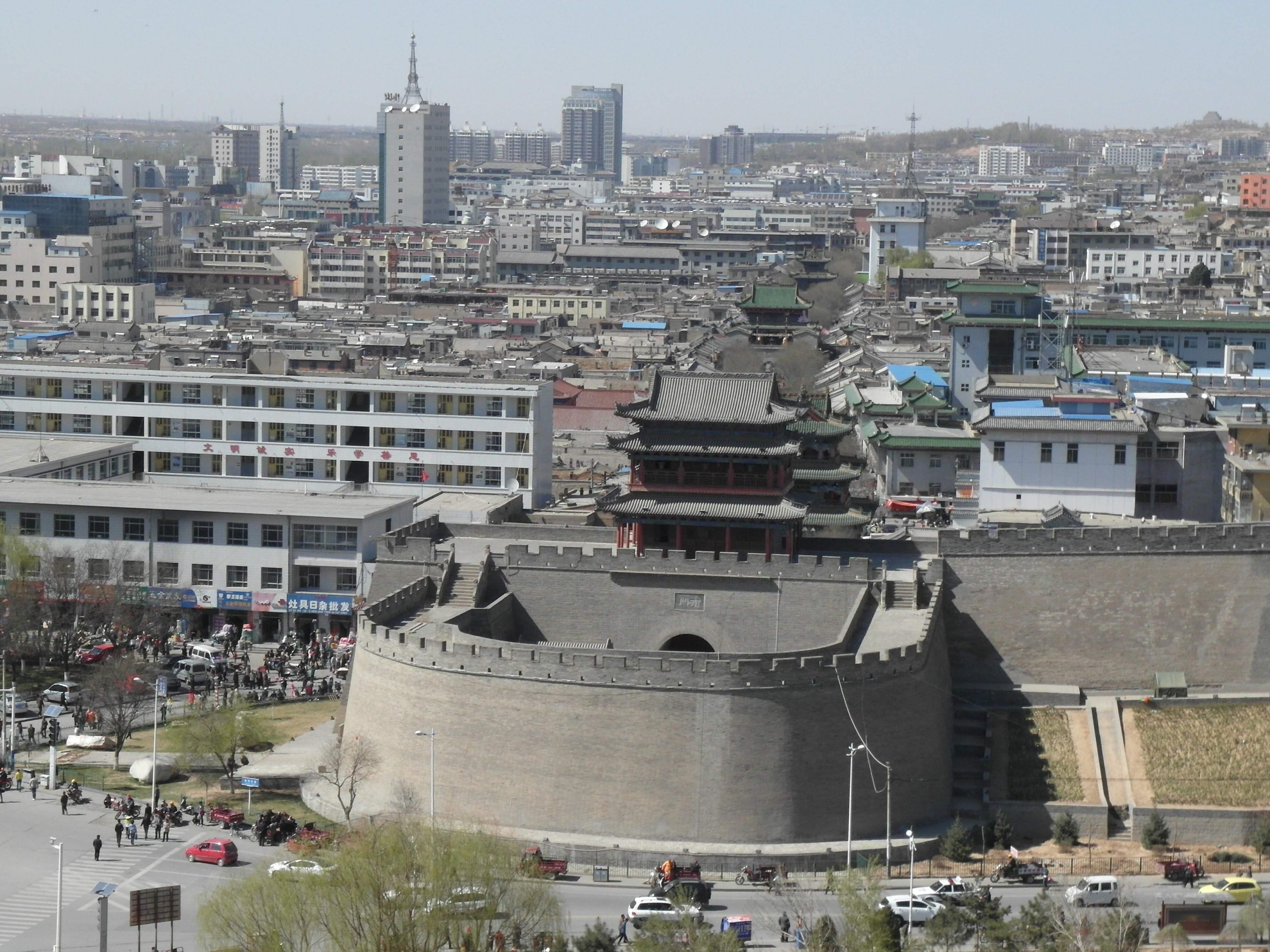
Yulin is the northernmost significant city in Shaanxi, a place where the Loess Plateau gives way to the Mu Us Desert and where the Ming Dynasty's Great Wall runs east to west across the landscape in a long, broken line. The city was established as a garrison against Mongol and other northern threats; its walls, towers, and grid plan still reflect that military origin. Today it is a boomtown built on coal and natural gas reserves in the surrounding desert, but the old town at its core has preserved enough of its hutong streets and courtyard houses to reward a day's wandering.
The Zhenbei Platform, seven kilometres north of town, is one of the largest surviving beacon towers on the Ming Great Wall — a substantial four-storey structure on a hill above the Hongshan River, built to house a garrison and relay fire signals across the desert. The views from the platform extend north across the Mu Us Desert. Hongshi Gorge, a canyon outside town, has forty-four cave dwellings carved into red sandstone cliffs, with carved inscriptions dating to the Ming and Qing dynasties.
Lake Hongjiannao, in Erlintu Town to the northwest, is described as the largest desert freshwater lake in China — a counterintuitive body of water in the middle of dry dunes, ecologically significant as a stopover for migratory birds. The lake has been under environmental stress from surrounding coal mining and is smaller than it once was, but it remains a striking landscape. North of the city in Shenmu County, the Shimao Ruins are a recently excavated Bronze Age city that has fundamentally revised understanding of early Chinese civilization.
Yulin airport connects to Xi'an, Beijing, and other major Chinese cities. Train connections run to Xi'an and Yan'an. The food here is distinctly northern: lamb, millet, and the thick local variety of hand-cut noodles served with a dark vinegar sauce.