Chaozhou is the cultural heartland of the Teochew people, a city that has been sending emigrants to Southeast Asia for centuries while preserving, at home, one of the most distinctive cultures in southern China. The old city is compact and remarkably intact: a 2.6-kilometre stretch of Song-dynasty walls, narrow lanes of shop-houses, and temples layered with centuries of carved woodwork and gilded ornament. The diaspora communities of Bangkok, Phnom Penh, and Singapore are, in large measure, an extension of this place — and many of them still come back.
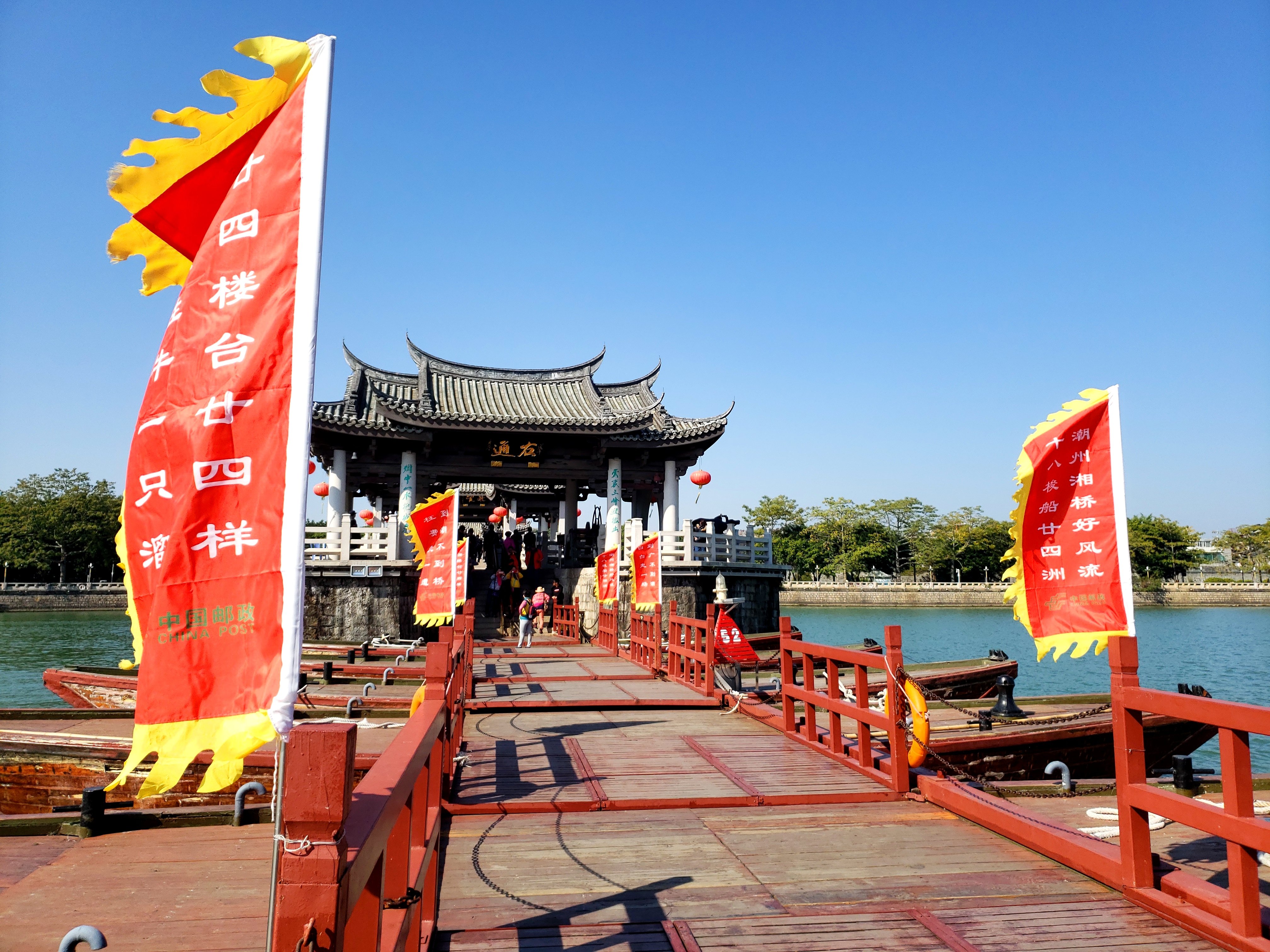
The single most famous sight is Guangji Bridge, built in 1170 and one of the oldest surviving bridges in China. Part pontoon, part stone arch, it spans the Han River with a theatricality that is genuinely earned: the central floating section was designed to be removed to let boats through, and still works. The entry fee is steep for what is essentially a walk across a bridge, but the surrounding riverfront, lined with old buildings and the occasional stilt house, is free and atmospheric at any hour.
Teochew cuisine is the main reason serious food travellers come here rather than stopping at Guangzhou. The cooking style is more restrained than Cantonese, emphasising the natural flavour of fresh seafood, slow-braised meats (braised goose is the signature dish), and a range of cold dishes that reward slow eating. The local obsession with kung fu tea — a precise, slightly ceremonial preparation of strong oolong brewed in a tiny clay pot — is both genuine and pervasive. Even a street noodle stall will serve it to you after the meal.
Getting here from the Pearl River Delta means passing through a different linguistic world: the Teochew dialect, related to the Minnan speech of Fujian and Taiwan, is not remotely intelligible to Cantonese speakers. This sense of distinctness from the rest of Guangdong is part of what makes the city interesting. The high-speed rail connection to Shantou and the broader network has made Chaozhou more accessible, but the city's self-contained pride has not noticeably changed.