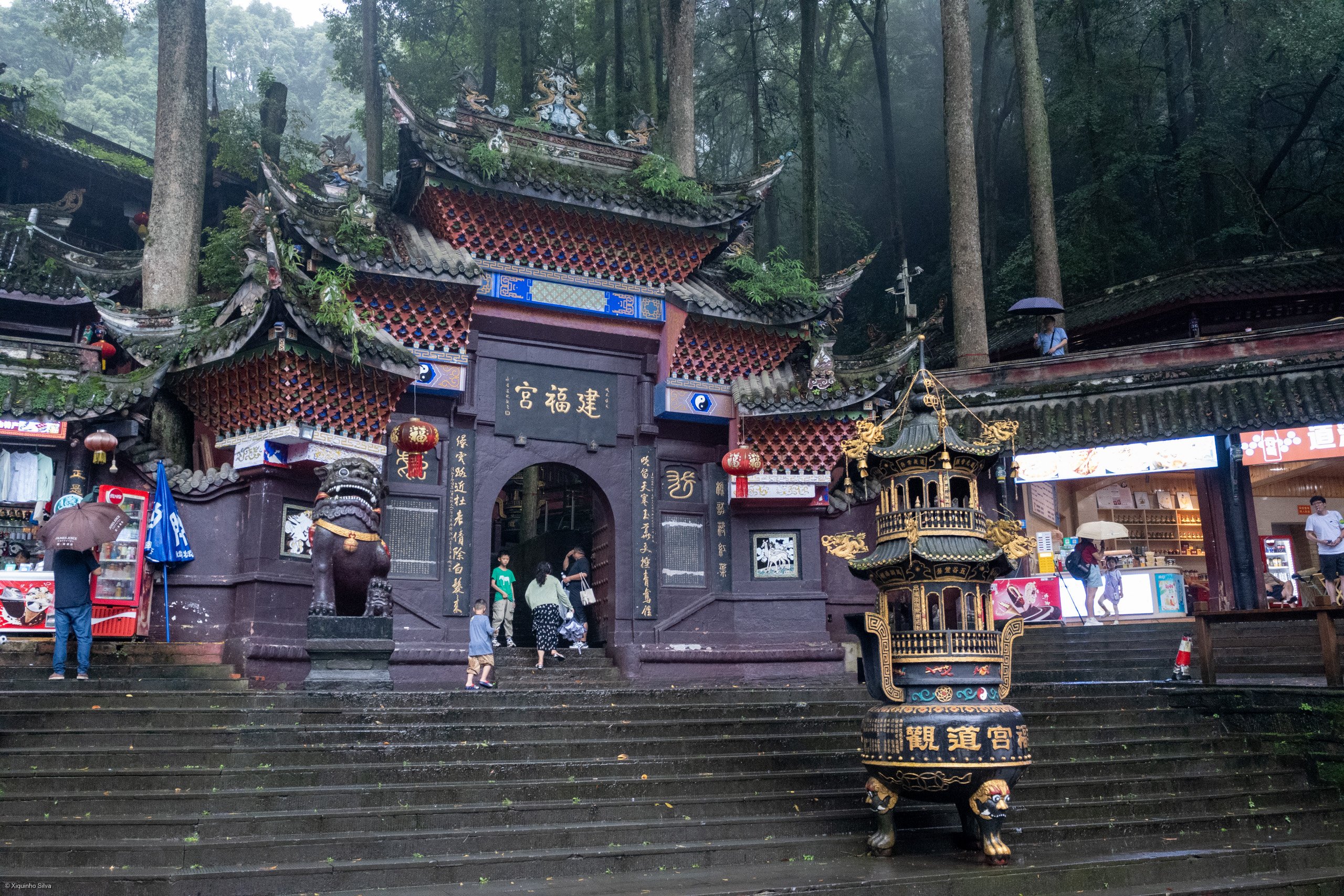
Qingcheng Mountain is one of the birthplaces of Taoism in China, a mist-covered range of forested foothills about 60 kilometres northwest of Chengdu where the religion's early institutional structures were established during the Han Dynasty. The combination of UNESCO World Heritage status — shared with the nearby Dujiangyan irrigation system — bamboo forest, Taoist and Buddhist temples climbing the slopes, and proximity to Chengdu makes it one of the most visited natural sites in Sichuan. Visit on a weekday if possible.
The mountain is divided into front and rear sections. Qingcheng Shan proper, the front mountain, is the densely templated climb most visitors make: a well-maintained path and cable car route ascending through increasingly mist-shrouded forest to a series of temples dedicated to figures including Laozi and the Tang Dynasty physician-alchemist Sun Simiao. The route passes Jianfu Palace, the first major complex at the foot of the climb, then continues to Tianshi Cave — the religious heart of the mountain — before reaching Shangqing Palace at the summit. The rear mountain trails offer 80 kilometres of hiking through wilder terrain with far fewer visitors.
The park entrance costs ¥90 and the cable car adds ¥35 to ¥60 depending on direction. For those wanting more than a day visit, monastery accommodation is available from ¥40 for a dormitory bunk to ¥180 for a private room, and staying overnight allows the mountain to reveal itself in the early morning before the day-tripper buses arrive. The rain and fog that characterise the climate are not inconveniences so much as the conditions in which the mountain makes most sense — Taoist aesthetic thinking about mountains has always been bound up with concealment and revelation.
This page covers Qingcheng Mountain specifically. The associated Dujiangyan irrigation works, a 2,300-year-old hydraulic engineering project that still irrigates the Chengdu plain, are covered separately under Dujiangyan.