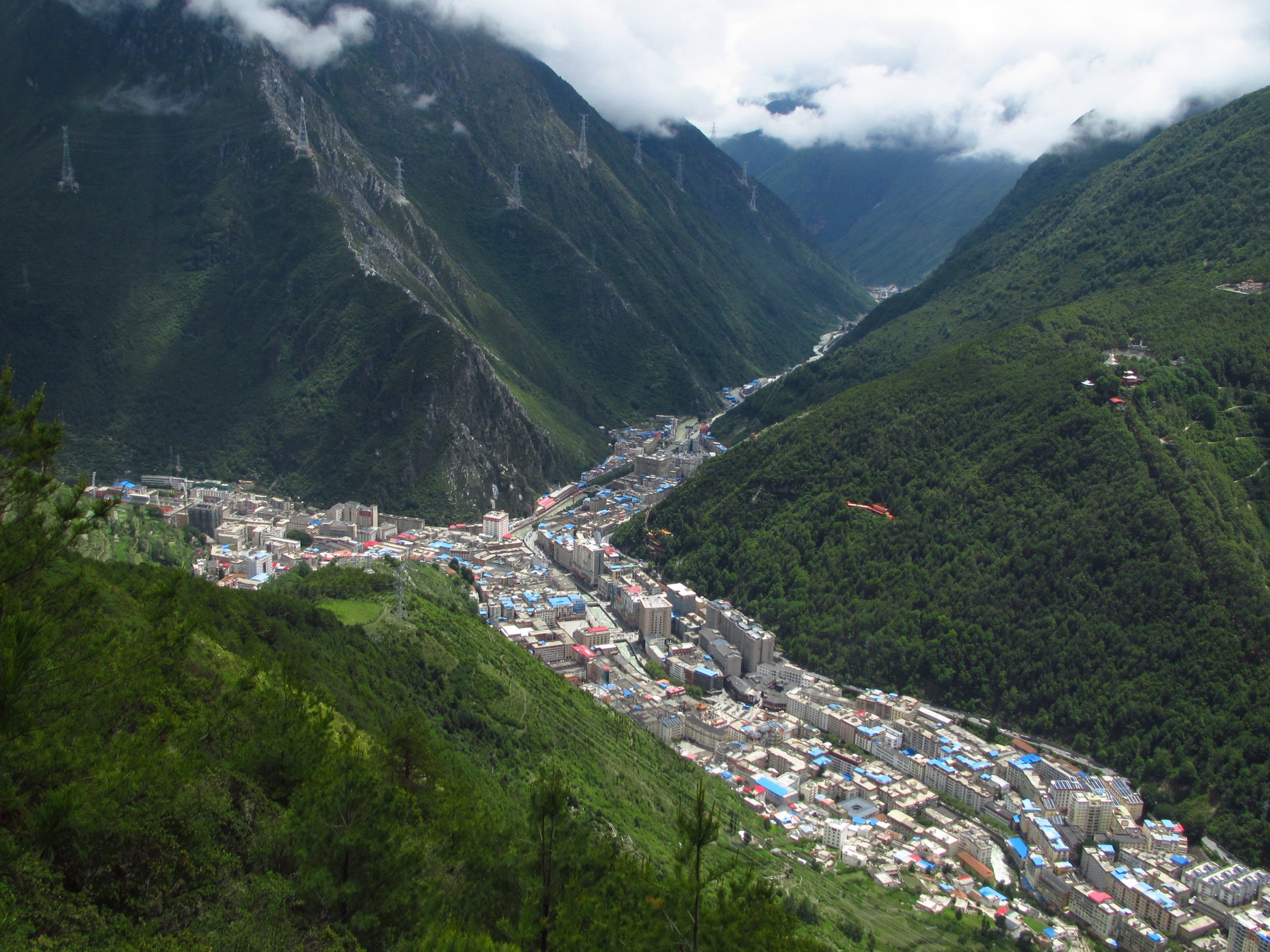
Western Sichuan trading city where Han China meets the Tibetan plateau beneath Paoma Mountain.
Kangding sits at 2,600 metres where the Sichuan plain abruptly ends and the Tibetan plateau begins. It is the largest city in western Sichuan and has served for centuries as the principal trading post between Han China and Tibet — a role you can still sense in its streets, where Tibetan monks, Yi minorities, and Han shopkeepers share the same narrow lanes. The air is noticeably thinner than Chengdu and the relief from that city's haze and density is almost physical.
The town is famous across China through a 1939 folk song, Kang Ding Qing Ge, which romanticises its mountain setting and the love lives of its inhabitants. Paoma Mountain, the forested peak that rises directly above the centre, is the subject of that song and an easy climb — either on foot in half an hour or by cable car. A temple complex on the summit looks out over the Zheduo River gorge and the surrounding snowpeaks that define the skyline in every direction.
Mugecuo National Park, 21 kilometres out of town, is Kangding's best day trip: an alpine plateau at 3,200 metres ringed by glaciated peaks, with lakes, grasslands, and forest. The park is far less visited than Jiuzhaigou and rewards those willing to walk rather than stick to the shuttle bus circuit. Back in town, the hot spring resort at Er Dao Qiao offers an unremarkable but welcome soak after a day at altitude.
Kangding is primarily useful as a transit point for deeper western Sichuan — the gateway to Dege, Ganzi, and the Tibetan heartland — but it is worth an overnight stay in its own right. The Xinshi Dian Jie street sells Tibetan jewellery, silverware, and religious objects of genuine quality, and the evening square dancing around the central plaza is a peculiarly Chinese form of communal life that Kangding performs with particular enthusiasm.
Guide
Eating Out
Kangding has the best food options in western Sichuan, reflecting its position as the largest city on the plateau and its centuries of mixed Han-Tibetan culture. The commercial area around the main square has restaurants ranging from proper Sichuan cuisine — Kangding is far enough into the mountains that the food is somewhat milder than Chengdu's, but mapo tofu and hotpot remain staples — to Tibetan restaurants serving yak meat dishes, momos, and butter tea.
The covered market area has small stalls selling cheap Tibetan and Han food through the day and evening. For sit-down meals, the restaurants along the main shopping street serve reliable versions of standard Chinese dishes; look for places with laminated picture menus if you don't read Chinese, and expect to pay less than you would for equivalent quality in Chengdu.
Butter tea — thick, salted, with a fat content that is functional rather than indulgent at altitude — is available in Tibetan restaurants and is worth trying once. Yak butter is the cooking fat in most traditional Tibetan establishments; it has a particular smell and flavour that is acquired but genuine. Tibetan bread, baked in thick discs, is a better starting point for the uninitiated.
Guide
Getting There
Kangding is the main entry point for western Sichuan and has the best transport connections of any town on the plateau.
By air: Kangding Airport, at around 4,280 metres one of the highest commercial airports in the world, has limited services to Chengdu. Flights are subject to weather cancellation and are not always reliable, but when they run the journey takes about 45 minutes. The airport is approximately 38 kilometres from the city.
By bus from Chengdu: Regular buses from Xinnanmen Bus Station in Chengdu reach Kangding in about 5–6 hours on a road that descends from the Sichuan basin and climbs dramatically through the Erlang Mountain tunnel and the gorges below. Buses run multiple times daily. This is the standard approach for most travellers.
From the plateau: Buses from Ganzi reach Kangding in about 7–8 hours. Buses from Litang, Daocheng, and other plateau towns also connect here.
Within Kangding, everything of note is within walking distance or a short taxi ride. The city is small enough that getting lost is not really possible. Buses for Mugecuo Park depart from outside the main bus station.