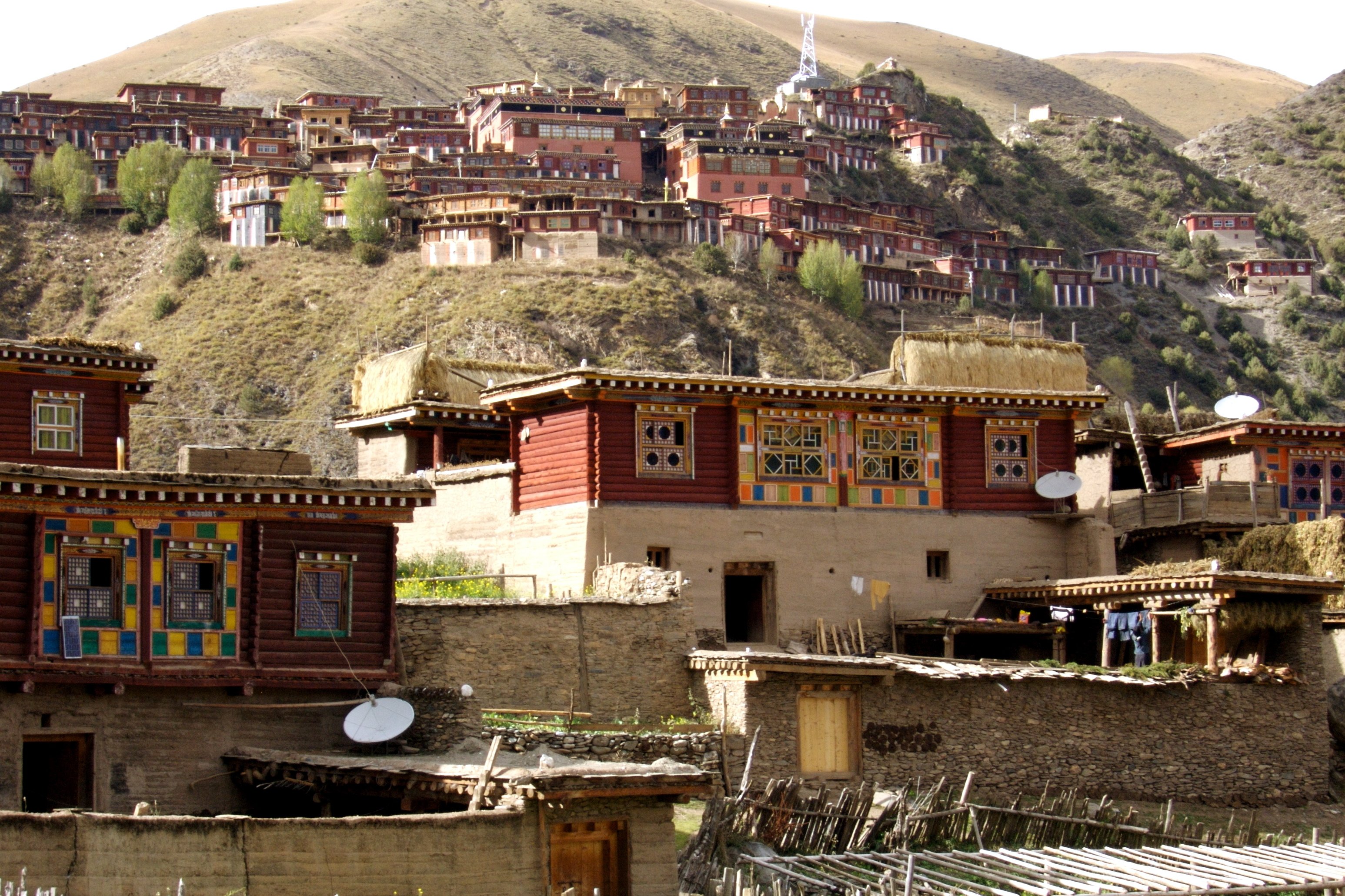
Remote Tibetan town in Sichuan, set near the upper Jinsha River at 3,100 metres.
Dege is a Tibetan town at 3,100 metres near the upper Jinsha River, not far from the border with Tibet Autonomous Region, and the journey to reach it is as significant as the destination itself. Two days by bus from Kangding, through passes that exceed 4,000 metres and along river valleys of extraordinary drama, Dege sits at the far edge of what most travellers reach in Sichuan. That remoteness is part of what has preserved it.
The reason to come is the Dege Parkhang, the Tibetan Buddhist scriptures printing house founded in 1729. It contains over 140,000 carved wooden printing blocks — among them texts that no longer exist anywhere else in the world, saved from destruction during the Cultural Revolution by monks who buried them. Workers still operate the press by hand, inking blocks and pressing sheets of paper in a rhythmic motion that has not changed in three centuries. The entire structure is a low building smelling of ink and old wood, and admission is cheap. Photography of the blocks is restricted but you can watch the printing freely.
The Gonchen Monastery, founded in 1446, occupies the hillside above the printing house. It is a genuine working monastery rather than a tourist site, and the hilltop temple complex offers the best views of the valley and the surrounding peaks. The old town below has small temples and prayer-flag draped alleyways where Tibetan domestic life continues largely undisturbed by visitors.
Practical matters require some preparation. ATMs in Dege do not accept foreign cards, so bring sufficient cash from Kangding or Ganzi. The town is subject to periodic travel restrictions for foreigners during politically sensitive dates, which can happen without much warning. Altitude sickness is a genuine risk — the town itself is manageable for most visitors, but the passes on approach are more demanding.
Guide
Getting There
Dege is among the more difficult destinations to reach in Sichuan, and the journey itself is a significant part of the experience.
The standard approach is by bus from Kangding, a journey of roughly two days with an overnight stop in Ganzi. The road climbs over several passes above 4,000 metres and follows the dramatic gorges of the Yalong and Jinsha rivers. Buses run daily from Kangding to Ganzi (about 7–8 hours) and from Ganzi to Dege (about 5–6 hours depending on road conditions). An alternative route runs from Manigango to the north, which adds another option if you are coming from the direction of Yushu in Qinghai.
Dege can also be approached from the Tibetan Autonomous Region side, though this requires a Tibet Travel Permit in addition to any standard travel documents. Check current permit requirements before planning this approach, as rules change.
The bus station in Dege serves routes north to Manigango and south to Ganzi. Onward travel to Tibet requires either a private vehicle with a driver or, in some seasons, minibuses that cover the road to Chamdo. Road conditions between Dege and Tibet deteriorate significantly in heavy rain or after snowfall.
There is no airport within practical range. The nearest functional airport is at Kangding, which has limited services to Chengdu.
Guide
When to Go
The best time to visit Dege is May through October, when the mountain passes are reliably open and the weather, though still cold at night, allows comfortable daytime travel. June and July are the wettest months, bringing afternoon storms that can reduce visibility and occasionally close roads for a day or two, but travel is still possible.
Winter travel to Dege is serious business. Snow closes the high passes between November and April, and the road from Ganzi to Dege can become impassable for days or weeks. Some travellers make it through in winter by taking lower-elevation routes, but this requires flexibility and an acceptance of potentially being stranded.
The most significant festival in the Dege region is the annual horse racing festival, typically held in late summer — August or early September. The plateau fills with nomads, there is considerable ceremony, and Dege itself sees an unusual concentration of Tibetan visitors from across the region.
Political circumstances can close Dege to foreign visitors at any time. Tibetan-majority areas in western Sichuan are subject to periodic access restrictions, particularly around politically sensitive anniversaries. Check current conditions before committing to travel here.