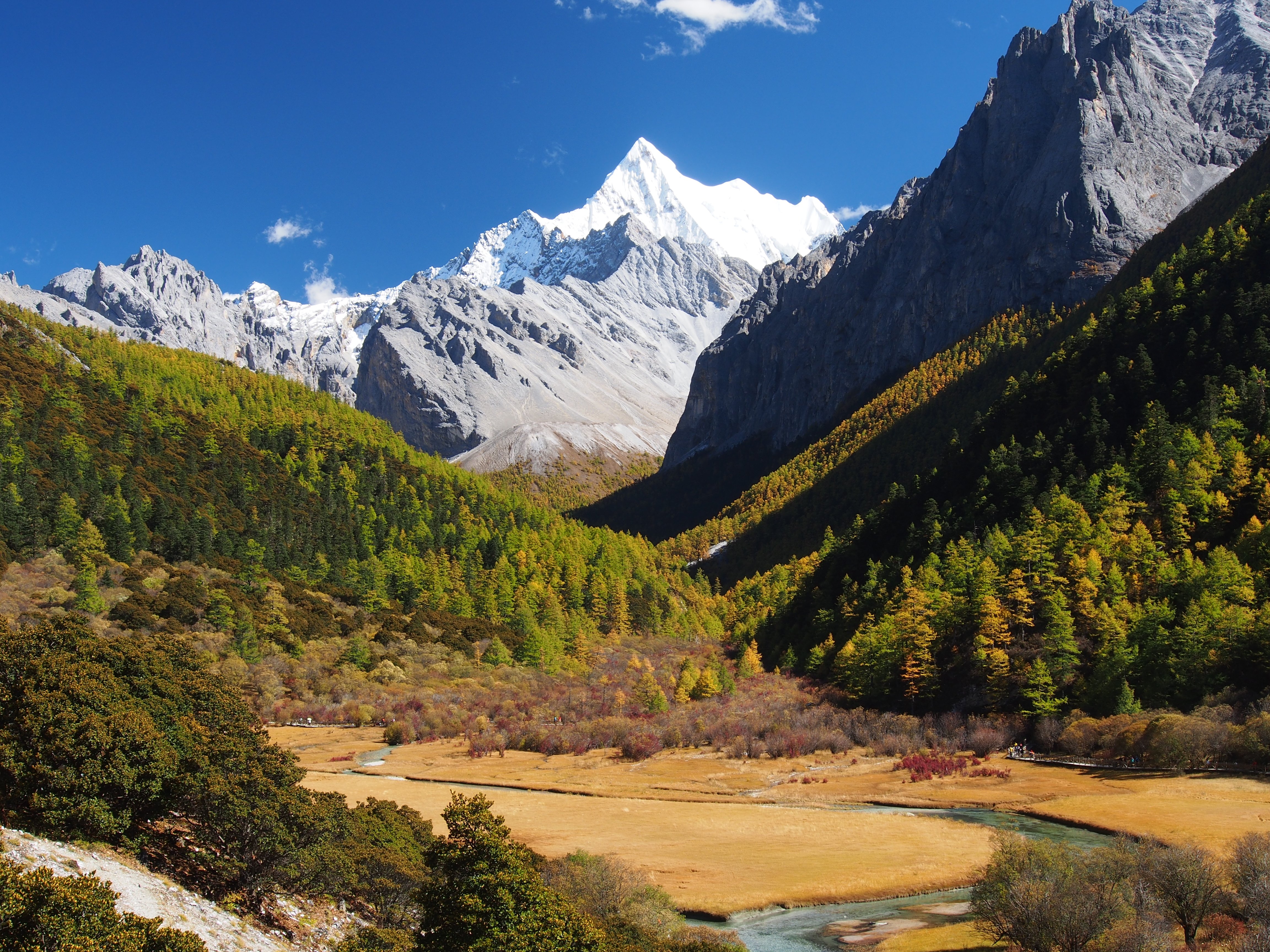
Yading is an alpine nature reserve in the remote southern reaches of Ganzi Prefecture, centred on three sacred peaks that Tibetan Buddhism has venerated for centuries as physical manifestations of bodhisattvas. Mount Chianrezig at 6,032 metres, Mount Jambeyang at 5,958 metres, and Mount Chanadorje at 5,958 metres form a triangle around a high plateau above 4,000 metres that contains more than sixty glacial lakes and terrain that most Western visitors have no frame of reference for. It is genuinely extraordinary and genuinely demanding.
The most visited circuit is a ten-kilometre round trip to Milk Lake and Five Color Lake — glacial tarns at around 4,600 metres whose colour shifts through the day with the angle of light and cloud cover. The walk involves 400 metres of elevation gain from an already high base, and altitude sickness is a serious and common issue; the entire reserve sits above 4,000 metres and the hiking terrain starts considerably higher. The more accessible Chonggu Grasslands and Pearl Lake, closer to the park entrance, are worth doing if acclimatisation is incomplete. The three sacred peaks — Mount Chianrezig, Mount Jambeyang, and Mount Chanadorje — are the defining presence of the reserve, visible from the grasslands and from the high hiking routes between them.
The nearest town is Daocheng, which has an airport serving flights from Chengdu and a growing number of hotels. Daocheng Yading Airport, at 4,411 metres, is one of the highest commercial airports in the world and the flight itself, descending into a plateau ringed by snowpeaks, is remarkable. From Daocheng, private vehicles reach the park in about an hour. The entrance fee is ¥270 and internal minibus transport adds another ¥50 to ¥90.
Yading is not recommended between December and April, when snow makes the upper trails impassable. The autumn colour — the larch and birch forest below the treeline turns gold and red in October — is spectacular and draws the highest visitor numbers. Spring and early summer are quieter and the glacial lakes are at their clearest. The difficulty of the journey, the altitude, and the cost filter out casual visitors; those who reach it tend to agree it justifies the effort.