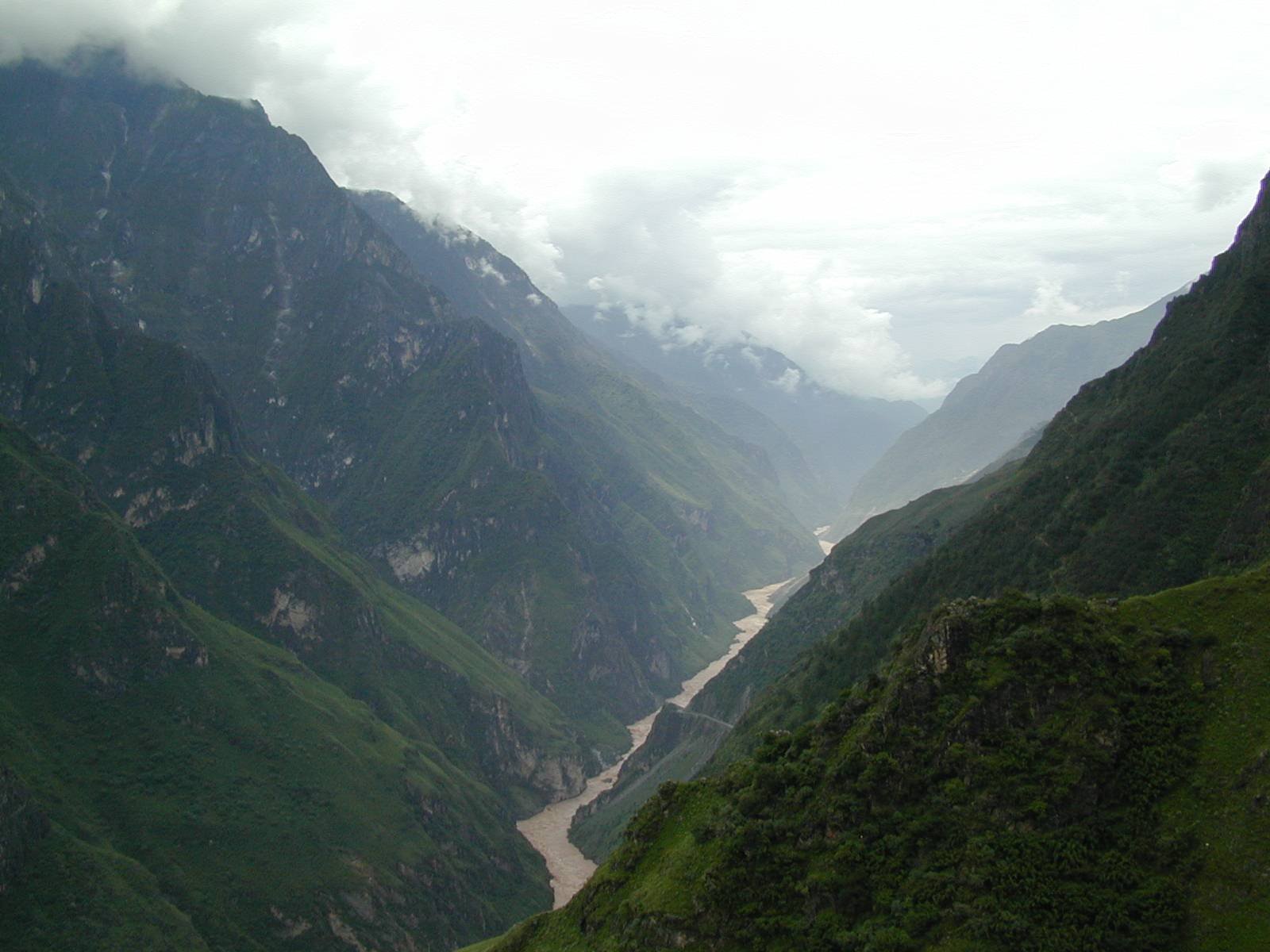
Tiger Leaping Gorge cuts between two of Yunnan's great snow mountains — Jade Dragon to the south at 5,596 metres, Haba to the north at 5,396 — with the upper Yangtze River thundering through the gap below. The gorge is among the deepest in the world by some measurements, and the two-to-three day high trail along the north rim is consistently rated among the finest walks in China. It draws serious trekkers and casual hikers alike, partly because the logistics are straightforward and partly because the scenery is relentlessly dramatic from the first hour.
The classic route runs roughly 22 kilometres from Qiaotou village (the usual starting point) to Walnut Grove, traversing the high trail that climbs to around 2,700 metres before dropping back toward the river. The path passes through a handful of small guesthouses and farmhouses where you can eat and sleep, most famously the Halfway Guesthouse. The trail involves some genuinely steep sections — the notorious 28 Bends above Qiaotou gain several hundred metres in a short distance — but nothing requiring technical skill. Summer monsoon brings landslide risk; spring and autumn are the best seasons.
The gorge is easily combined with a trip between Lijiang and Shangrila, which are at either end. Most travellers arrive at Qiaotou from Lijiang (under two hours by bus) and emerge at Walnut Grove for onward transport to Shangrila. Doing it in reverse is less common but perfectly viable. There is also a lower paved road following the river, which some people drive or take a motorcycle taxi along, but it misses the whole point — the views from the high trail are what justify the trip.
An entry ticket of ¥45 covers the gorge area. The Tiger Leaping Stone itself, a boulder in the middle of the roaring river at the narrowest point, is accessible from the lower road and makes a worthwhile short stop even for those not doing the full trek.