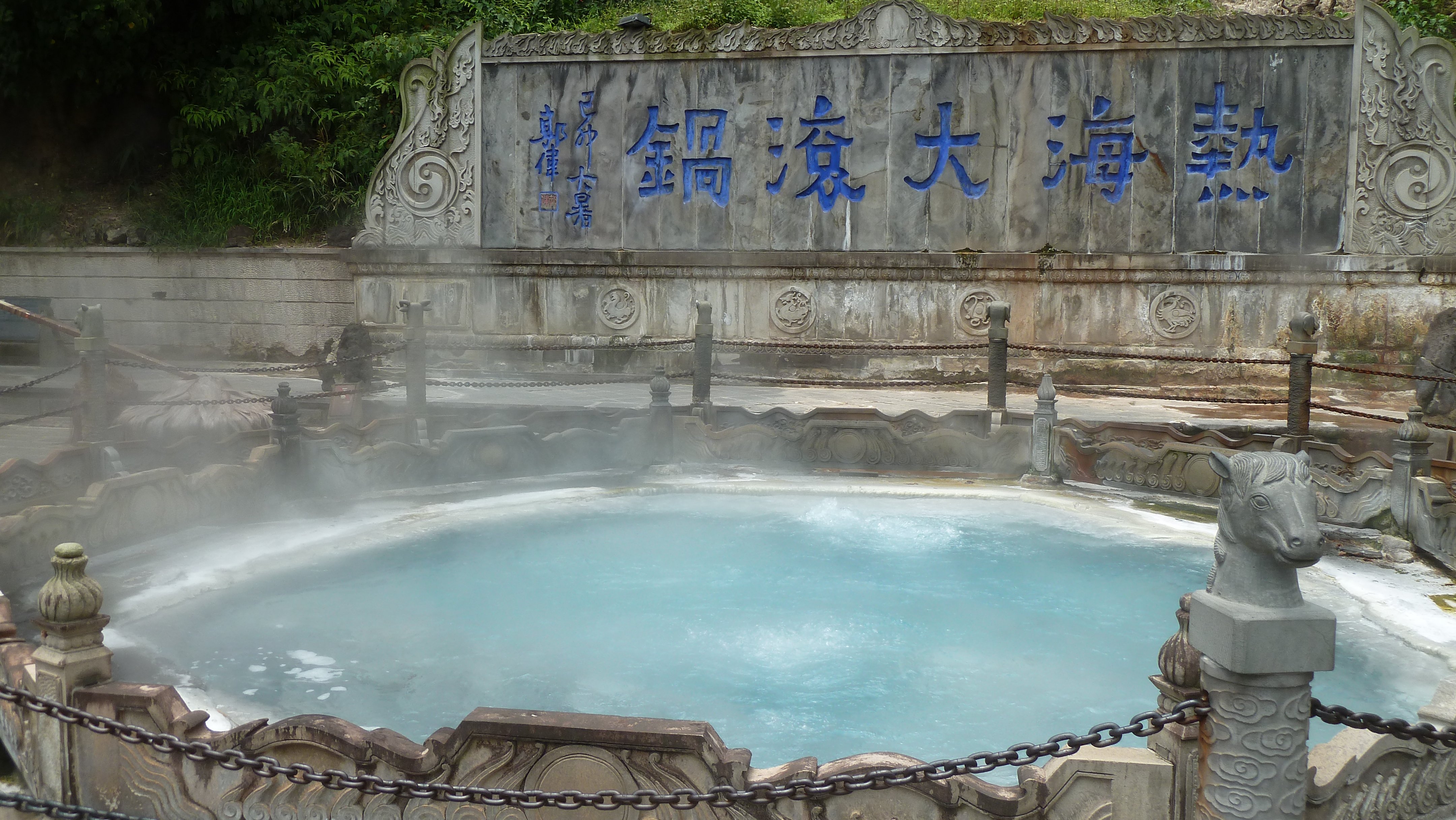
Tengchong sits in the far west of Yunnan, hard against the Myanmar border, and its isolation has given it an unusually layered identity. The town is surrounded by dormant volcanoes — around 70 of them in the nearby hills — and the geothermal forces beneath produce some of the most spectacular hot spring scenery in China. The Rehai Geothermal Area, a short drive from town, features the famous Dagunguo spring where water boils continuously at close to 100 degrees Celsius, sending columns of steam across a landscape of bubbling pools and mineral-stained vents.
The volcanic landscape extends into the hills around town. Lava flows from historic eruptions have cooled into dramatic formations, and several craters are accessible on foot. In contrast, the Beihai Wetland — a floating bog formed over an ancient lake — is an eerie, soft-surfaced landscape where the ground moves under your feet and migratory birds congregate in winter. Tengchong manages to offer geological tourism without most of the theme-park packaging that blights similar areas elsewhere in China.
Heshun Ancient Town, four kilometres outside the city centre, is the other major draw. This well-preserved Qing dynasty settlement was historically home to the "Yunnanese Jade Road" traders who carried goods between China and Burma, and the architecture reflects that prosperity — ancestral halls, guild buildings, and traditional courtyard houses that survived the twentieth century relatively intact. It is genuinely handsome rather than merely restored, and less crowded than comparable ancient towns in the province.
Tengchong saw some of the heaviest fighting of the 1944 Salween Offensive, when Chinese and Allied forces drove out Japanese troops who had held the town for three years. The National Cemetery on the southern edge of town holds thousands of graves, and the nearby Tengchong Museum documents the campaign with uncommon seriousness. For travellers who know something of the Burma Campaign, the landscape around Tengchong is unexpectedly moving.