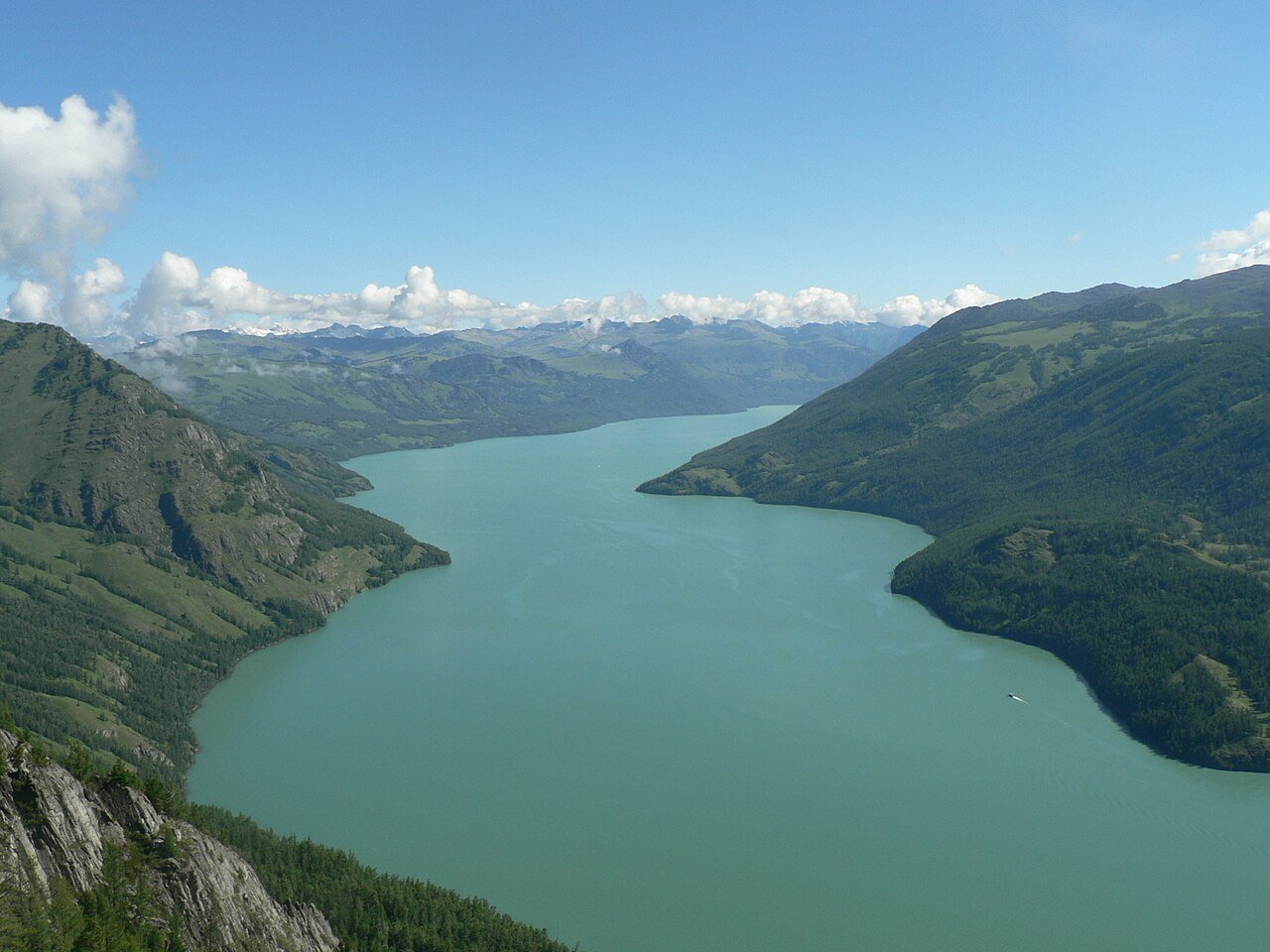
Kanas Lake (also written Hanas Lake) is one of the most striking landscapes in all of Xinjiang. Tucked into the southern Altay Mountains at 1,374 meters above sea level, the lake sits in a deep glacial valley surrounded by dense taiga forest — Siberian larch, spruce, and birch stretching unbroken to the ridgelines. The water shifts between vivid turquoise and deep blue depending on the season, fed by snowmelt and glacial runoff from the Friendship Peak area on the border with Kazakhstan, Russia, and Mongolia.
The lake has long been wrapped in local legend. Tuvan herders, the main inhabitants of the surrounding valleys, speak of a giant creature living in its depths — China's answer to the Loch Ness Monster. Whether or not you believe the stories, the lake is genuinely remote and genuinely beautiful. In summer, wildflowers carpet the surrounding meadows. In autumn, the birch and larch forests turn gold against the dark green conifers, making September and early October the most photogenic time to visit.
The drive in from Burqin follows a road lined with white birches through increasingly dramatic scenery. The Kanas Nature Reserve that surrounds the lake is one of China's most biodiverse protected areas, home to brown bears, snow leopards, red deer, and over 200 bird species. Three bays along the lake — Moon Bay, Fairy Bay, and Sleeping Dragon Bay — are the signature viewpoints, each with boardwalk trails.
Kanas village at the southern end of the lake has basic guesthouses and Tuvan-style log cabin accommodation. The nearby Tuvan settlement of Hemu, about 70 kilometers away, is worth a side trip for its traditional wooden houses and pastoral valley setting. Facilities are simple and the area is best suited to travelers comfortable with limited infrastructure. The nearest town with full services is Burqin, roughly 150 kilometers to the south.