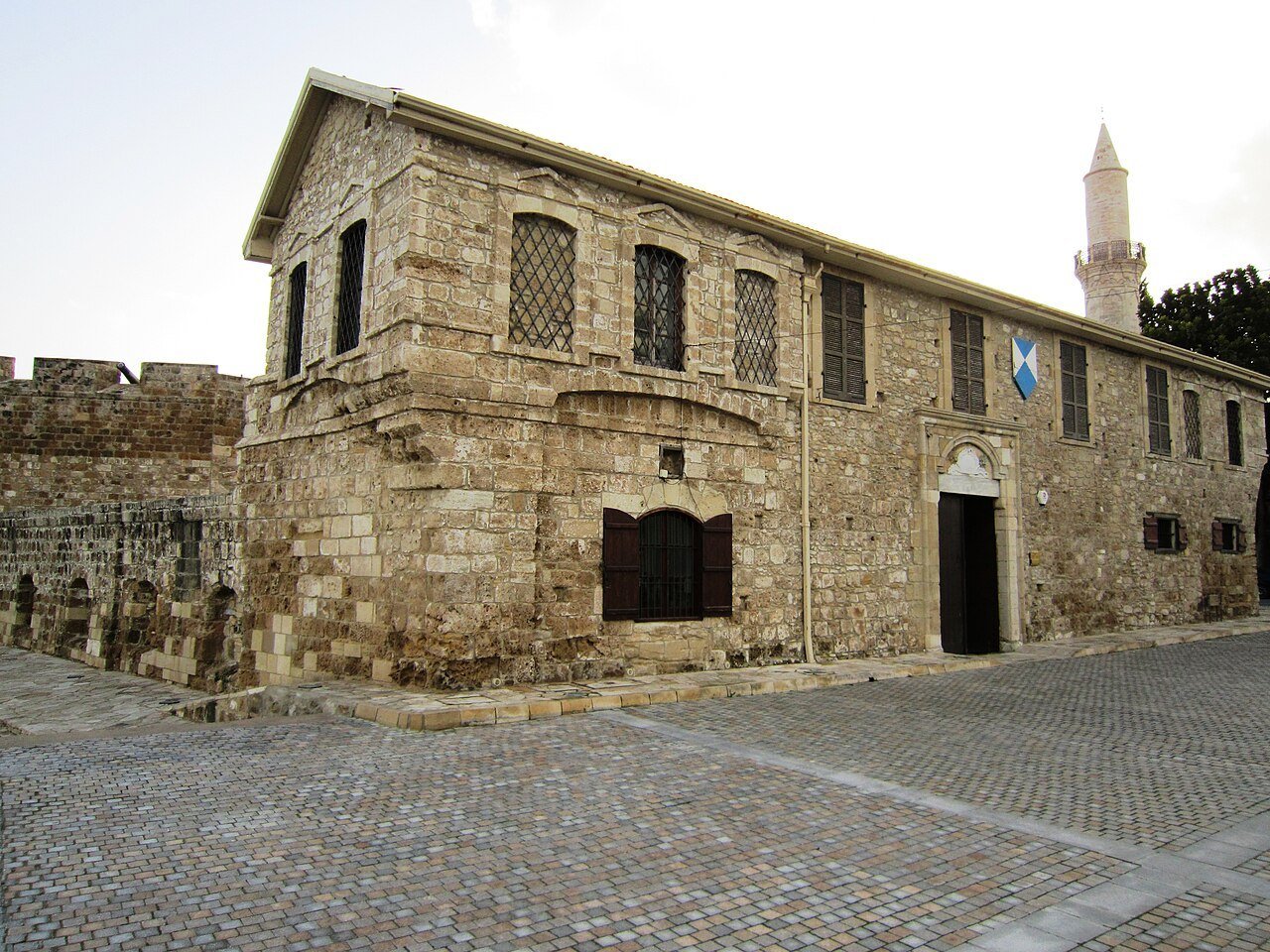
Larnaca is the main international gateway to Cyprus and the island's third city, sitting on the southeast coast about 50 kilometres from Nicosia. Most visitors pass through on their way to Limassol or the beach resorts, but those who stop find a city with more depth than its airport-transit reputation suggests. The name comes from the Greek larnax — coffin or chest — a reference to the many ancient burials unearthed here, and the city sits directly on top of ancient Kition, one of the great Phoenician and Greek city-kingdoms of Cyprus.
The seafront promenade, Finikoudes, gives the city its heart — a palm-lined kilometre running from the Larnaca Castle at the south end to the marina at the north, with cafes and restaurants along it. Behind the castle, the Skala quarter preserves the old Ottoman street pattern, including the extraordinary Church of St. Lazarus, built over the saint's tomb in the 9th century. The Pierides Museum and Larnaca District Archaeological Museum hold the best of the city's ancient finds.
West of the city, the Larnaca Salt Lake fills with thousands of flamingos from October through March, with the white domes of Hala Sultan Tekke mosque rising from the far shore — one of the most important Islamic pilgrimage sites in the eastern Mediterranean. Off the coast, the MS Zenobia wreck is one of the world's great dive sites. The Kamares Aqueduct, built in 1745 by the Ottoman governor, still stands intact on the airport road.
Larnaca was the main trade centre of Cyprus under Ottoman and British rule, losing its commercial primacy to Famagusta and then Limassol in the early 20th century. The modern city was transformed by the influx of Greek Cypriot refugees from Famagusta after 1974 and by the international role thrust on it when Nicosia airport closed. It remains a working city rather than a polished resort, which is much of its character.